When filmmakers Jamie Courville and Chris Reynolds first moved to Gowanus in 2009, they were drawn to the gritty, unpolished charm of a neighborhood on the precipice of massive change. The move came just a year before the federal government designated the murky, industrial canal winding through the area as an Environmental Protection Agency Superfund site, triggering a decades-long remediation process. At the time, the desolate, postindustrial landscape offered an unexpected visual allure. The area was filled with warehouses and defunct factories that doubled as expansive, affordable studio spaces. While residential options were sparse outside of local New York City Housing Authority (NYCHA) projects, apartments were typically spacious and inexpensive, if somewhat worn down.
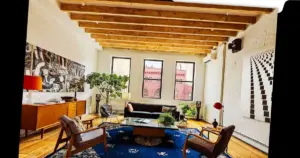
Courville and Reynolds secured a well-sized 1,100-square-foot apartment in an older residential building for roughly $2,000 a month, using a portion of the space for their creative work. While neighboring Brooklyn enclaves like Williamsburg and Long Island City were rapidly transforming into shinier, more generic versions of their past identities, Gowanus retained a mysterious, unpredictable energy. It felt raw, unfiltered, and full of raw potential, operating as a rare sanctuary for artists and creators who could tolerate the neighborhood’s rough edges.
Of course, there was a glaring, pungent reason why Gowanus remained a haven for creatives in 2009 while surrounding areas had already gentrified: the toxic, flood-prone canal running directly through its center. Chock-full of raw sewage, industrial sludge, and a staggering array of pathogens, the waterway was notorious. Longtime residents like artist Karen Gibbons, who moved to the neighborhood in the early 1980s, openly acknowledged the hazards, noting she once vowed never to raise children near the water. Yet, real estate realities often override initial hesitations. Gibbons and her husband ultimately raised three children there alongside numerous pets, drawn in by sprawling lofts—including one protected under the city’s loft law—and the irresistible, bohemian spell of the industrial enclave.
In almost any other community, a federal Superfund designation would send real estate developers running for the hills. In Gowanus, however, the label acted as an open invitation. It signaled to investors and speculators that the federal government would finally foot the bill to clean up a century-old cesspool that had long hindered large-scale development schemes.
Commercial pioneers quickly capitalized on the shifting tides. Whole Foods announced plans for a massive supermarket featuring a rooftop greenhouse on a windswept corner of Third Avenue and Third Street. Trendy businesses followed suit: Lavender Lake, a bar with a sprawling outdoor patio serving craft beer and kale salads, opened its doors in 2011, followed by Dinosaur Bar-B-Q in 2013 and the Royal Palms Shuffleboard Club in 2014. Simultaneously, developers who had quietly accumulated parcels of land for decades began filing applications for spot rezonings to construct luxury housing towers.
Recognizing that unmitigated development would erase the neighborhood’s character and displace its community, local leaders stepped in. Brad Lander, then the local City Council member, argued that if the community failed to get ahead of the sweeping changes, it would surrender its power to shape the neighborhood’s future. Drawing on his background as a community organizer and urban planner, Lander envisioned a transformed Gowanus that prioritized economic diversity. His vision included thousands of newly built affordable apartments, stabilized spaces for artists’ studios, major renovations for public housing developments, and a continuous public esplanade running alongside the remediated canal.
Lander argued that the rezoning process did not have to mirror the hyper-gentrification of Williamsburg or the sterile corporate expanse of Hudson Yards. In 2016, he spearheaded a complex, five-year legislative effort to rezone 82 blocks of the industrial neighborhood. The plan opened the door for massive residential development while securing an unprecedented package of community benefits and infrastructure commitments.
Starting in 2013, Courville and Reynolds documented the neighborhood’s evolution, filming the demolition of historic brick warehouses, the hauling of toxic sludge on barges, and the spirited community board meetings, political rallies, and neighborhood parties that culminated in the landmark 2021 City Council rezoning vote. Their archival efforts ultimately yielded more than 400 hours of footage, which informed their documentary, Gowanus Current.
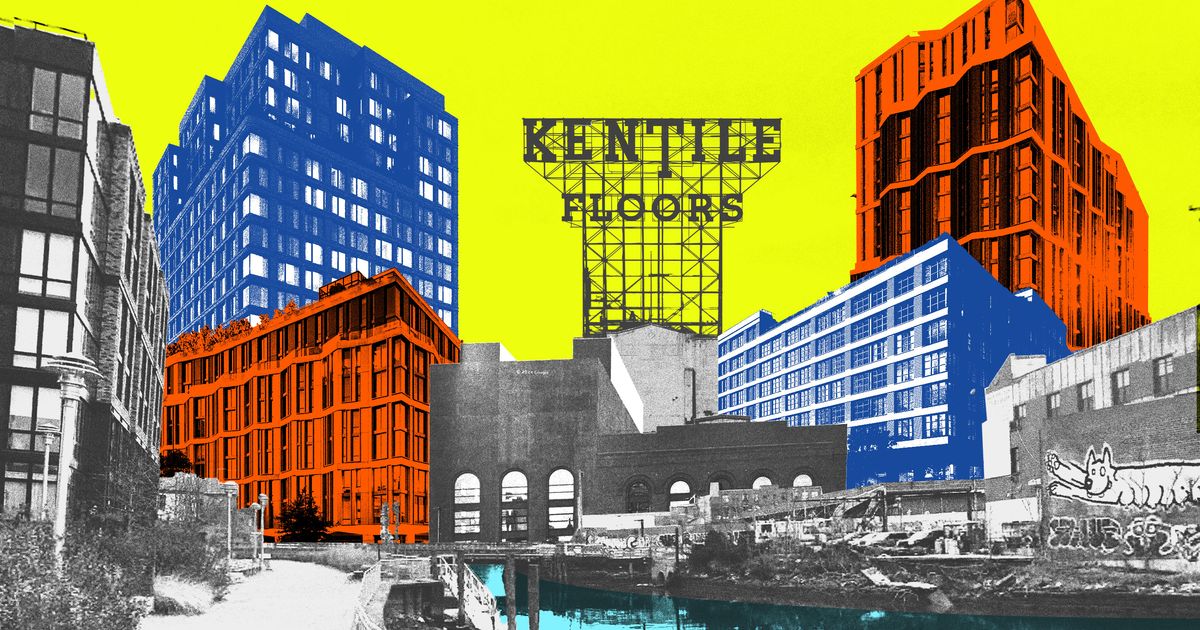
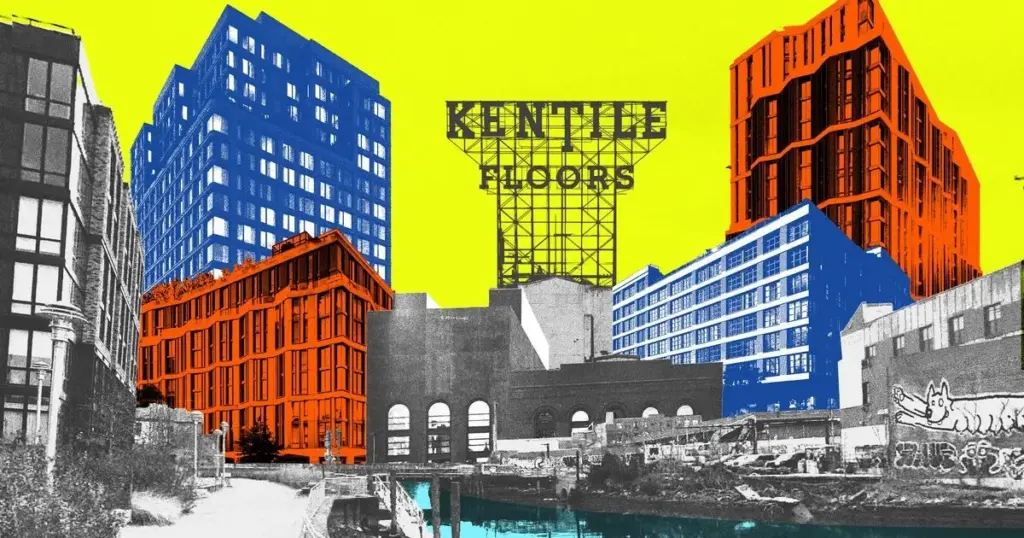
The physical transformation of the neighborhood has been staggering. Dozens of new rental buildings have opened their doors, and dozens more remain under active construction across the sprawling 82-block rezoning zone. Current projections indicate the neighborhood will absorb roughly 9,000 new residential units by the end of the decade.
While optimists envision a future where Gowanus mimics a sustainable Northern European waterfront community—with some development executives even floating the possibility of a swimmable canal—skeptics remain unconvinced. Urban transformations in New York City rarely unfold smoothly. Public benefits must be laboriously extracted from private developers through a labyrinth of bureaucratic hurdles, all while the neighborhood remains a patchwork of brownfields laden with coal tar and legacy chemical solvents.
The market appetite for luxury housing in the area, however, has proven insatiable. Among the first residential projects to debut following the 2021 rezoning was 544 Carroll Street, a luxury rental tower developed by Avery Hall on the corner of Fourth Avenue. Brian Ezra, a founding partner at Avery Hall, noted that development was inevitable given the neighborhood’s prime location sandwiched between Park Slope and Carroll Gardens. Aiming for the upper tier of the luxury rental market, the building features high-end finishes, panelized refrigerators, and marble countertops, with two-bedroom units commanding nearly $8,000 a month and duplex penthouses listing for as high as $25,000 monthly.
Environmental advocates acknowledge the complex necessity of the rezoning. Andrea Parker, executive director of the Gowanus Canal Conservancy, notes that leaving the neighborhood untouched was never a viable option because gentrification was already well underway with the arrival of axe-throwing venues and self-storage facilities in former industrial spaces. Without a comprehensive rezoning, Parker argues, the neighborhood would have seen a fragmented wave of luxury developments devoid of meaningful public infrastructure or community concessions.
The negotiated rezoning package introduced several pioneering elements to city planning. It included $200 million in direct funding for NYCHA repairs and mandated that 25 percent of all newly constructed housing units remain permanently affordable for households earning between 40 and 80 percent of the area median income. Furthermore, individual developers were legally tied to overseeing environmental cleanups at their specific construction sites, while historical polluters were slated to shoulder the broader costs of canal remediation.
Yet, the pace of the physical cleanup has consistently lagged behind the frantic construction boom. Dredging and capping operations have only been completed along the first of three distinct sections of the 1.8-mile canal, and total cleanup costs have skyrocketed from an initial estimate of $500 million to roughly $1.5 billion. Critical infrastructure projects, such as combined sewage overflow tanks designed to prevent raw sewage from spilling into the waterway, face severe delays and are not projected for completion until 2029. These delays have raised concerns that parts of the canal may require secondary dredging to clear newly accumulated contaminants.
Simultaneously, major affordable housing initiatives have faced prolonged gridlock. Gowanus Green, a planned 100 percent affordable housing complex slated to bring 957 units to a former manufactured gas plant site at Fifth and Smith streets, has been stalled for years amid complex disputes involving cleanup standards, regulatory agencies, and utility provider National Grid. Recent approvals by the New York State Department of Environmental Conservation for a phased remediation approach offer hope that construction may finally commence.
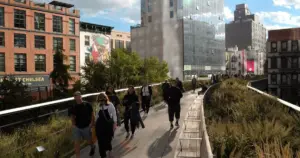
Despite the ongoing reality of a polluted waterway, residential leasing campaigns have leaned heavily into nautical branding. Developers have marketed properties with expansive waterfront views of turning basins and newly landscaped public esplanades designed by landscape architecture firm SCAPE. While early luxury projects like Lightstone’s 365 Bond were heavily mocked for idealistic renderings of residents cavorting along the industrial canal, today’s newly completed esplanades feature thriving native plantings, dog walkers, and relaxing benches that bring those early developer visions to tangible, if slightly sterile, reality.

Living through the simultaneous environmental remediation and construction boom has proven arduous for longtime residents. Communities have endured noxious odors, headaches, and nausea linked to coal tar remediation and the dredging of sludge containing naphthalene, the active ingredient in mothballs. During particularly severe odor events, municipal officials resorted to deploying tarps, odor-suppressing foam, and misting systems scented with pine and cinnamon to mask the chemical smells, though many residents reported the deodorizers only exacerbated the discomfort.
Beyond the canal itself, the rezoning process exposed legacy environmental contamination hidden beneath the neighborhood for over a century. In late 2023, public records and freedom-of-information requests revealed that toxic trichloroethylene (TCE) vapors—a carcinogenic industrial solvent used heavily in 20th-century dry cleaning and paint manufacturing—were migrating upward through the soil and pooling in the basements of several local buildings.
State environmental testing detected TCE vapor levels inside the popular Royal Palms Shuffleboard Club that exceeded state guidelines by a factor of 20, with subterranean concentrations measuring up to 10,000 times allowable limits. Similar vapor intrusions were identified at a former box factory converted into artists’ studios at 543 Union Street, as well as at a local public school, prompting concerns over a widespread underground vapor plume rather than isolated contamination spots.
Because state environmental agencies cannot legally compel private property owners of existing buildings to conduct indoor air testing without their consent, participation rates have remained low. Between 2024 and 2025, the DEC reached out to the owners of 1,604 properties in the area, but only 258 properties—roughly 16 percent—agreed to testing. This dynamic has sparked sharp clashes between local environmental activists, residents, and state regulators during public town halls regarding soil vapor intrusion and public safety.
Despite these environmental hazards, the broader Brooklyn real estate market has absorbed the new inventory with remarkable speed. Renters fleeing astronomical housing costs and vanishing inventory in adjacent neighborhoods like Park Slope have eagerly snapped up units in Gowanus towers. For many middle-income families, modern amenities like central air conditioning, second bathrooms, in-building fitness centers, and proximity to high-performing public schools outweigh concerns over temporary neighborhood construction and short-term environmental exposure, particularly for renters who do not plan to own property in a designated flood zone.
The neighborhood’s cultural fabric is also shifting, though community organizations have fought to preserve a foothold for the local creative community. Arts Gowanus successfully negotiated for the inclusion of more than 100 affordable artist studios within new development buildings, featuring sub-market rents capped at a 2 percent annual increase to protect creators from displacement. Independent music venues, vegan performance spaces like Public Records, and fabrication hubs like Powerhouse Arts continue to anchor the neighborhood’s evolving cultural identity.
As construction cranes continue to reshape the skyline and the lingering scent of industrial history slowly dissipates, Gowanus occupies a unique, contradictory space in New York City’s urban landscape. For longtime residents and incoming professionals alike, the neighborhood represents an ambitious, high-stakes experiment in transforming a toxic postindustrial wasteland into a densely populated, mixed-income community—one luxury tower and remediated brownfield at a time.