Independent 20th Century has officially launched its fifth edition, bringing its dedicated modern art fair to a striking and historically layered venue: Manhattan’s Brutalist Breuer Building. Opening on September 24, the fair occupies a complex architectural and institutional intersection. It is an art fair operating within an auction house, housed inside a building that once served as a prominent museum—a multifaceted institutional layering that serves as a fitting metaphor for the contemporary art market.
The iconic, cool, and imposing stone structure on Madison Avenue has experienced a remarkably busy few decades. Designed by architect Marcel Breuer, the building served as the long-term home of the Whitney Museum of American Art from 1966 until 2014. Following the Whitney’s departure, the space briefly housed the Metropolitan Museum of Art’s contemporary galleries under the banner of Met Breuer, and later provided a temporary home for the Frick Collection while its permanent historic home underwent extensive renovations. Most recently, the building was purchased by Sotheby’s in 2023, transforming the former cultural sanctuary into a premier destination for high-end commerce. Observing the building’s relentless cycle of institutional reinvention, one might easily conclude that the structure deserves a well-earned vacation.
Against this backdrop of corporate acquisition and institutional transit, collectors and enthusiasts have gathered to browse the offerings at Independent 20th Century. The atmosphere is charged with anticipation as the collector class explores booths packed with historically significant works, many of which are framed by gallerists and curators as "undiscovered" or under-recognized treasures of the past century.
A central focus of the fair is its stated mission to reframe the art historical canon of the twentieth-century avant-garde, often by shining a spotlight on late women artists who failed to receive adequate institutional recognition, market validation, or mainstream fame during their lifetimes. These presentations offer a fascinating counter-narrative to the dominant historical accounts of modern art, revealing a vast ecosystem of creators who worked alongside famous movements yet remained on the periphery of commercial success.
One notable example is featured at the booth of Richard Saltoun Gallery, which is showcasing the surrealist paintings of Austrian-Italian artist Manina. A former Dadaist muse who began her painting career in the 1940s after a fateful meeting with Frida Kahlo in Mexico, Manina filled her canvases with mythic and complex visions of femininity. Her technique combined minutely applied brushstrokes with explosive, vibrant color passages. During her lifetime, she exhibited alongside René Magritte at the Hugo Gallery in New York and even participated in the Venice Biennale during the 1960s.
Despite these prestigious milestones, Manina is far from a household name today. Monica King, director of Richard Saltoun Gallery, explained that the artist’s relative obscurity stems in part from personal tragedy; following the death of her only daughter, Manina was left without an estate to champion her legacy and preserve her market footprint. At Independent 20th Century, her paintings are priced between $40,000 and $160,000—a stark contrast to the towering auction records commanded by contemporaries like Magritte, whose works have reached heights such as $121.2 million.

Similar stories of overlooked brilliance and institutional redirection abound throughout the fair. At the Garth Greenan Gallery booth, visitors can encounter the painted sculptures of Pop art pioneer Rosalyn Drexler. Rendered with a charming and unpretentious sense of abandon using plaster, wood, and found objects, these sculptural works were originally shown at the Guggenheim Museum in 1965.
Drexler’s sculptures remain significantly less known than her paintings, a medium she famously pivoted to after her early representation at the Reuben Gallery closed. As Drexler later noted, she observed that her male contemporaries quickly found representation at other galleries when the space shut down, prompting her to shift mediums and explore new creative avenues. These loosely formed, slightly lumpy sculptures retain a rebellious spirit, appearing to quietly thumb their nose at conventional commercial taste and the rigid stylistic demands of the art market.
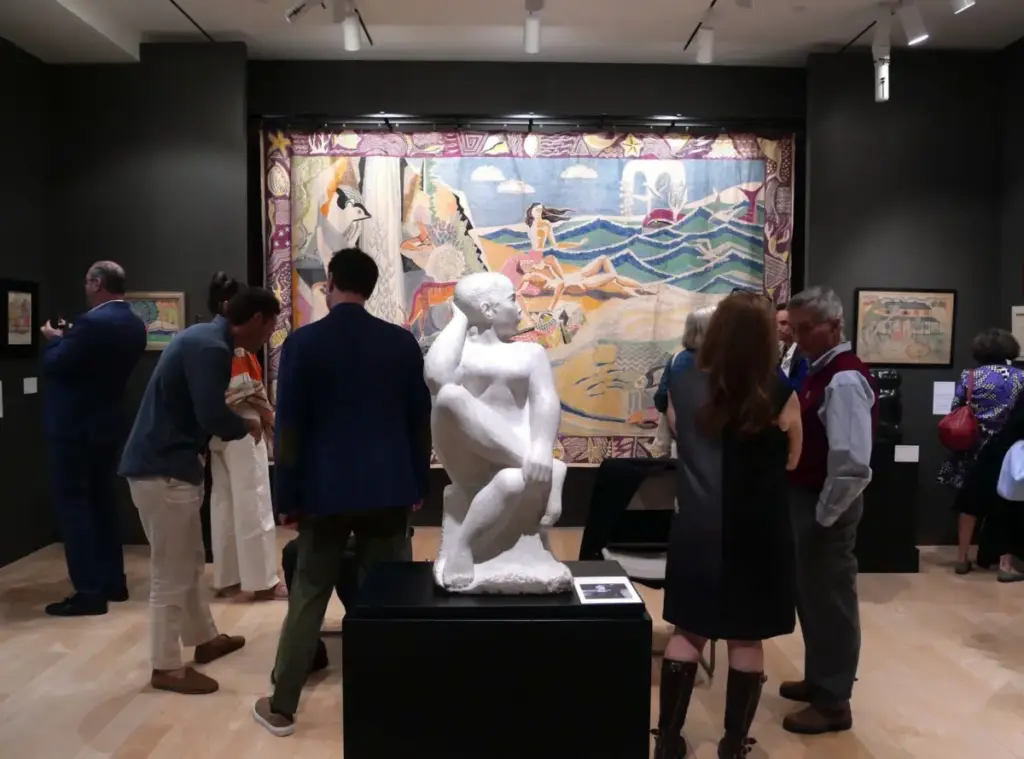
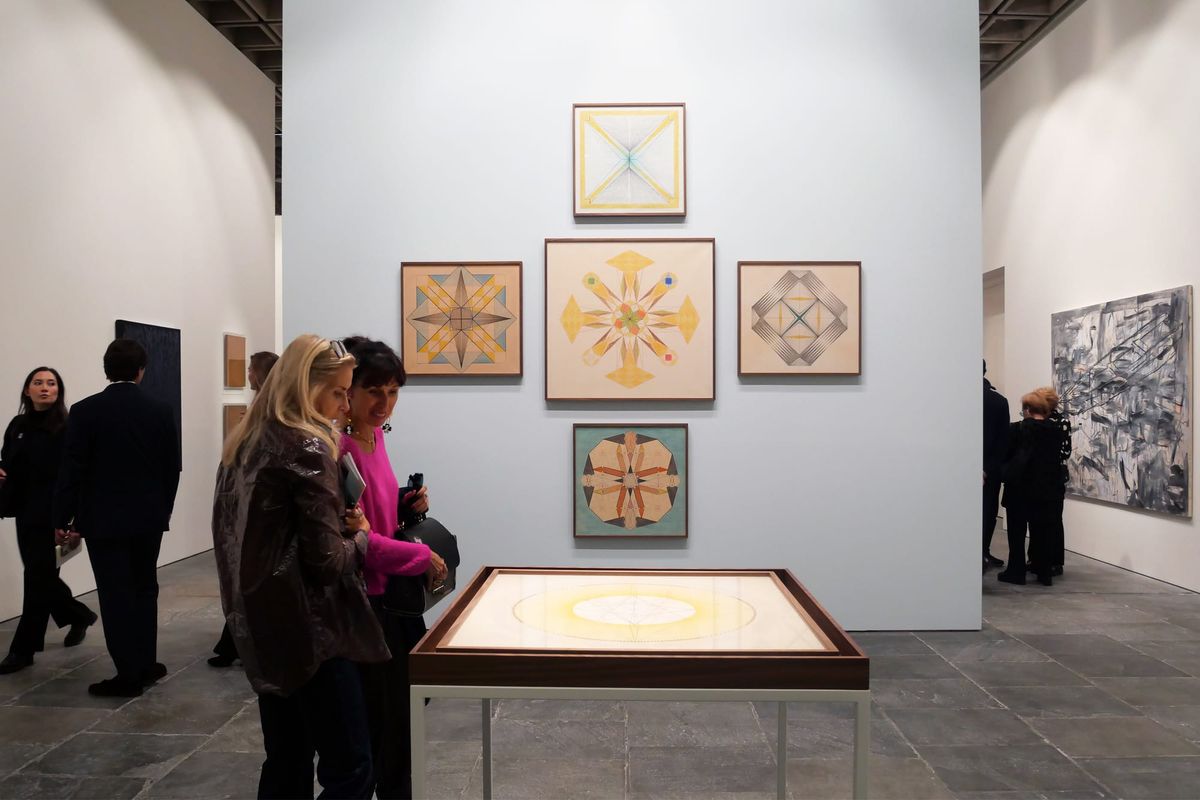
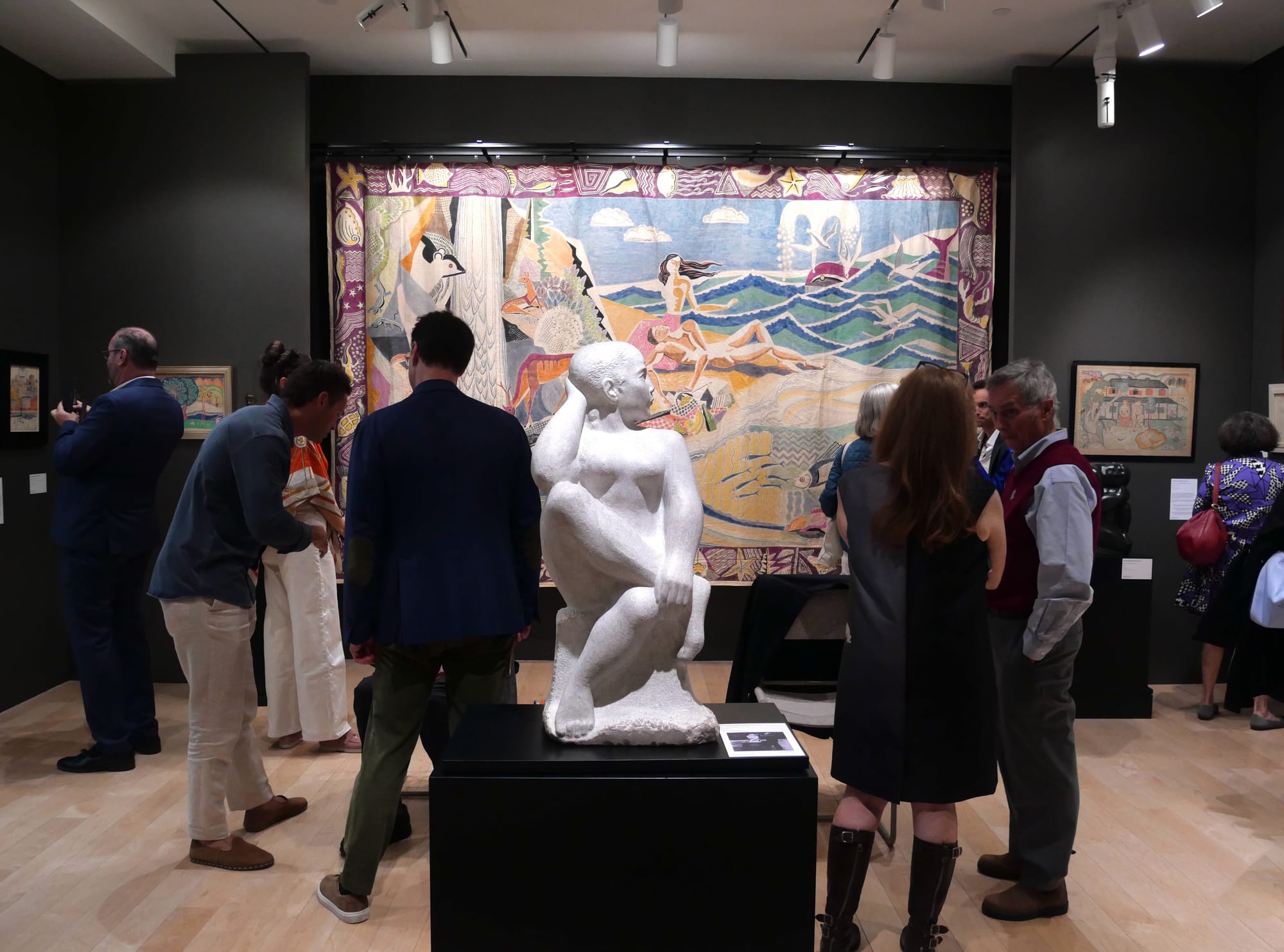
Other presentations across the fair similarly engage with the complex textures of modern art history, pairing well-known movements with archival rediscoveries. Bernard Goldberg Fine Arts has brought together works that bridge distinct artistic mediums, presenting sculptures by William Zorach alongside textiles created by Marguerite Thompson Zorach and William Zorach, highlighting the collaborative and domestic dimensions of early American modernism. Meanwhile, other major institutions and galleries, such as Hauser & Wirth, have drawn crowds with striking displays, including works by visionary figures like Emma Kunz, whose intricate geometric drawings continue to captivate contemporary viewers.
Yet, even as visitors move past booths filled with spectacular art and vital historical recoveries, the architectural and commercial reality of the venue remains difficult to ignore. At each turn, the Brutalist concrete surfaces, escalators, and open exhibition tiers serve as a quiet reminder of the building’s current incarnation. Despite the profound cultural value of the historical works on view, the transformation of the Breuer Building from a civic temple of American art into a luxury-focused art mall underscores the profound shifts reshaping the intersection of culture, commerce, and real estate in the art world today.