As increasingly frequent and intense heat waves sweep across the globe, the architectural and engineering professions are undergoing a fundamental paradigm shift in how building envelopes are conceived, designed, and constructed. Historically, the primary thermal objective of a building enclosure in temperate and colder climates has been straightforward: retaining interior heat during harsh winter months to minimize heating loads. However, the escalating reality of climate change and soaring ambient temperatures has rewritten this mandate. Today, architects and building scientists are placing equal—if not greater—emphasis on controlling solar radiation, mitigating unwanted heat gain, and strategically managing thermal performance during prolonged periods of intense heat.
Rather than treating solar shading as an afterthought, a decorative add-on, or a purely interior conditioning measure, contemporary sustainable design views it as a foundational component of passive energy efficiency. By recognizing solar protection as an integral element of the building envelope from the earliest conceptual stages of a project, designers can simultaneously achieve high levels of thermal and visual comfort while drastically reducing active cooling demands. This shift transforms the building skin from a passive barrier into a dynamic, mediating interface between the interior environment and the surrounding climate.
Shifting Priorities: From Heat Retention to Overheating Prevention
For decades, energy efficiency regulations and architectural design criteria heavily favored insulation values and airtightness designed to lock warmth inside. However, modern building typologies—particularly those characterized by expansive, uninterrupted glazed surfaces—face acute vulnerability to solar heat gain. Large glass facades, while celebrated for maximizing daylight and providing expansive visual connections to the outdoor environment, can turn buildings into thermal traps if solar radiation is left unchecked.
Consider a typical modern commercial office building featuring a sweeping west-facing glazed facade. Such a structure frequently experiences its peak cooling load between 3:00 and 7:00 p.m., precisely when low-angle, direct sunlight strikes the glass with maximum intensity. When heat is allowed to penetrate unchecked, building mechanical systems—specifically heating, ventilation, and air-conditioning (HVAC) units—must work overtime to compensate for the thermal load. By implementing an integrated solar-shading strategy, this solar heat gain can be intercepted and managed before it ever reaches the glass, relieving the burden on mechanical systems and fundamentally lowering operational energy consumption.
Solar Shading as a Foundational Design Decision
Embedding solar protection into the initial phases of architectural design requires a holistic approach. It moves far beyond selecting a standard set of blinds or shutters after the facade engineering has already been finalized. Instead, every major design parameter—ranging from site orientation and window-to-wall ratios to glass specifications, facade types, fabric selection, and structural installation details—must be coordinated. Each of these decisions directly influences the overall energy performance of the structure by dictating how the building envelope receives, filters, reflects, or transmits incoming solar radiation.
This integrated mindset reframes a critical question that should guide the entire architectural design process: rather than asking how to mechanically extract heat once it has already infiltrated the building interior, designers must ask how to prevent that thermal energy from entering in the first place.
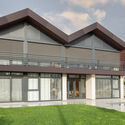
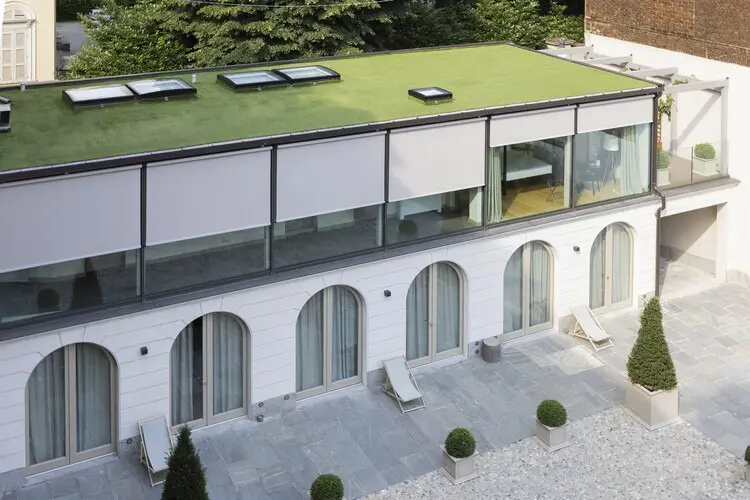
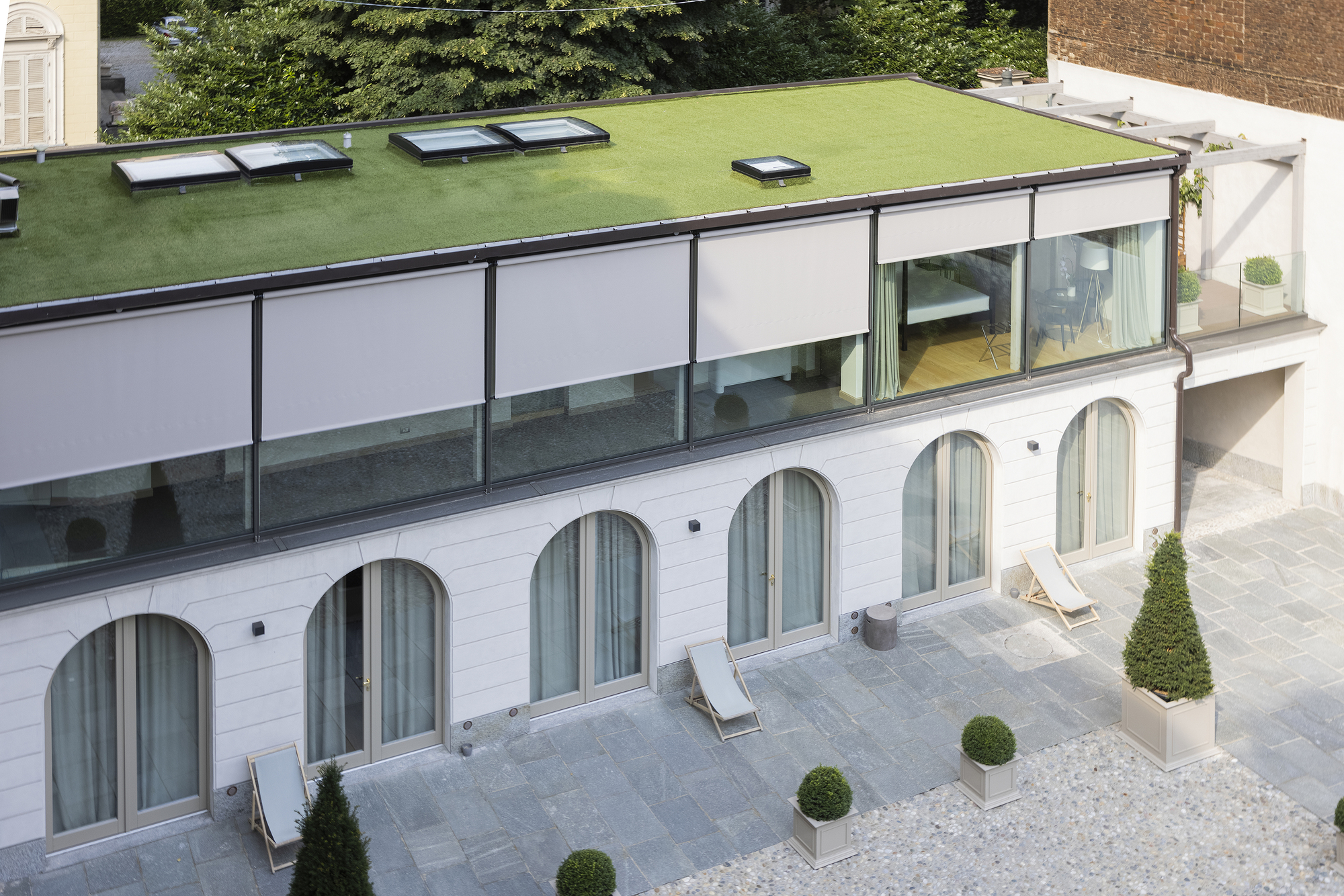
Exterior shading systems serve as the ultimate first line of defense. By intercepting solar radiation on the outside of the building envelope, these systems dramatically reduce the solar heat gain coefficient of the window assembly. To quantify this impact, energy simulations utilizing software such as ESBO—such as those conducted by industry specialist Bandalux for a standard nine-square-meter room with a south-facing orientation in Madrid—demonstrate remarkable performance metrics. In a scenario featuring 3.6 square meters of Type C glazing combined with a Screen 351 Ebony technical fabric and an exterior shading system, energy consumption associated with HVAC operations can be reduced by up to 70 percent.
Beyond Temperature: Designing for Comprehensive Indoor Comfort
While thermal efficiency is a primary driver, the implementation of a robust solar-shading strategy extends far beyond mere temperature regulation. A comprehensive design approach must also account for visual comfort, rigorous glare control, the optimization of natural daylight, the preservation of outdoor views, and the overall subjective quality of the interior living or working space.
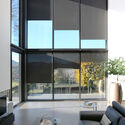
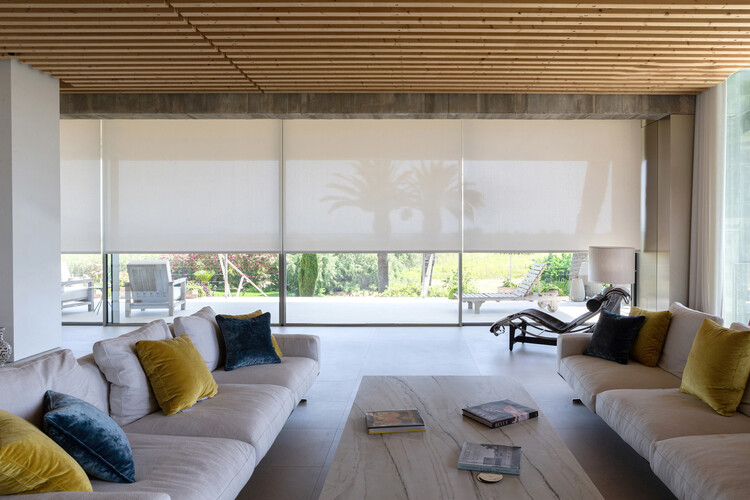
Achieving this delicate balance requires careful evaluation of both exterior and interior shading solutions. According to technical analyses conducted by Bandalux, even interior strategies can yield substantial efficiency gains; a high-performance white interior fabric, for instance, can reduce air-conditioning energy consumption by up to 30 percent. Meanwhile, specialized interior applications like cellular shades—characterized by their distinct air-cell structural morphology—provide enhanced thermal insulation benefits during both the hot summer months and the cold winter season.
The technical specifications of the shading fabric itself play an essential role in this performance matrix. Fabrics featuring a lower openness factor are highly effective at restricting the transmission of direct solar radiation and eliminating harsh indoor glare, while simultaneously boosting occupant privacy and thermal comfort. Conversely, a fabric with a higher openness factor permits a greater volume of natural daylight to flood the interior, preserving a direct, uninterrupted visual link to the surrounding landscape.
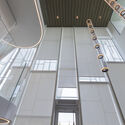
Consequently, fabric selection can never be decoupled from a building’s specific orientation, local climatic conditions, interior program, and the micro-conditions of each individual facade. Color science and solar reflectance properties are equally influential. In exterior installations, dark-colored fabrics excel at absorbing a larger proportion of solar radiation before it can reach the underlying glazing, whereas light-colored fabrics positioned on the interior possess a heightened capacity to reflect incoming radiation back outward. Furthermore, high reflectance values help minimize the amount of thermal energy absorbed directly by the shading assembly, preventing the blind or shade itself from becoming a secondary radiant heat source.
Amidst these variables, the physical positioning of the solar-shading device relative to the window glass remains the single most decisive factor governing its effectiveness. An exterior shading system functions as an immediate barrier, intercepting solar energy before it penetrates the building envelope. An interior system, by contrast, activates only after a portion of that radiant energy has already passed through the glazing and entered the room. While interior systems are inherently less effective at mitigating total heat gain, they remain invaluable tools for fine-tuning glare control, daylight distribution, and supplemental interior insulation.
Engineering the Building Envelope
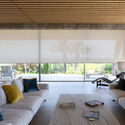
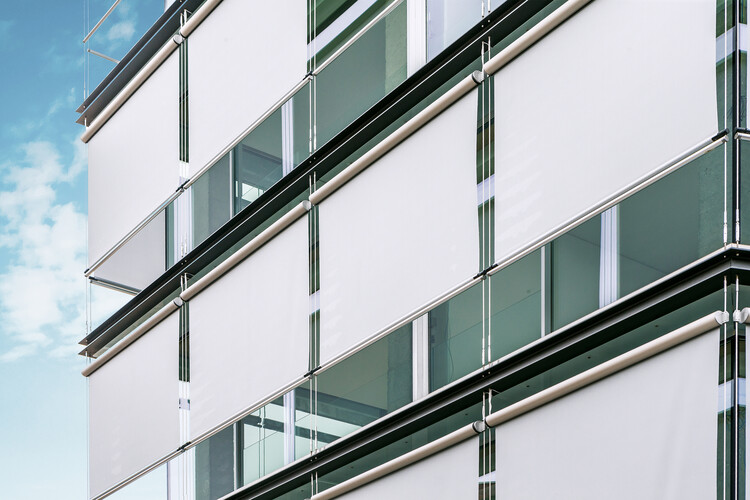
The ultimate efficacy of any solar protection system relies on much more than the fabric specification alone. Advanced hardware technology, robust movement control mechanisms, and design details aimed at eliminating lateral light gaps are critical to achieving optimal performance. Modern architectural demands are increasingly met by specialized systems utilizing ZIP-track technologies, which maintain constant fabric tension across the entire surface and offer superior wind stability. These engineering advancements enable architects to design with significantly larger glazed surfaces while ensuring reliable operation tailored to the rigorous environmental demands of each facade.
Exterior solutions equipped with ZIP guides—such as the Z-Box, Z-Box Secret, and Z-Box Solar product lines—exemplify how targeted engineering can drastically reduce thermal transmission. By cutting HVAC-related energy consumption by up to 70 percent through the proactive interception of solar radiation, these systems elevate standard shading devices into genuine, high-performance components of the building envelope. They not only enhance overall energy efficiency and occupant comfort but also prepare modern structures to withstand increasingly volatile and demanding climate conditions.
The Role of Automation and Smart Integration
The integration of smart automation exponentially expands the potential of solar protection as a passive envelope strategy. By incorporating sophisticated arrays of sensors and intelligent control systems, modern shades and blinds are no longer static architectural elements; instead, they dynamically adjust their position in real-time response to shifting environmental variables such as solar radiation intensity, outdoor ambient temperatures, wind velocities, and building occupancy schedules.
This technological evolution frees solar shading from total reliance on manual user intervention, allowing the building envelope to adapt continuously throughout the course of the day. Advanced solar sensors can automatically trigger the deployment of exterior systems as radiation levels climb; temperature sensors can react swiftly to mitigate localized indoor overheating; wind sensors can automatically retract exterior blinds when pre-set velocity thresholds are exceeded to prevent mechanical damage; and time-based scheduling systems can pre-emptively adjust shading positions based on facade orientation, time of day, and seasonal sun paths.
Seamless integration with broader building management systems takes this responsive approach to its logical conclusion. In large-scale typologies such as corporate offices, hotels, hospitals, and educational facilities, motorized shading networks can be directly coordinated with HVAC systems and intelligent artificial lighting controls. For instance, a west-facing facade can automatically deploy its solar protection during peak afternoon exposure while architectural lighting systems concurrently modulate their output to make optimal use of available filtered daylight.
Proprietary platforms like Bandalux’s Lynx application exemplify this digital integration, offering centralized management and automation for motorized solar-shading installations. By establishing customized operational scenarios tailored to the unique spatial and environmental requirements of each development, such systems optimize overall energy performance across residential, commercial, and institutional buildings, minimizing human error and fostering highly efficient resource utilization.
As the architectural community confronts an era of unprecedented climatic extremes, the integration of solar protection prompts a fundamental reassessment of traditional design timelines. The core question facing designers is no longer how to cool a building down after it has overheated, but rather at what point in the design process a structure’s thermal performance should truly begin. The answer points unmistakably to the earliest conceptual decisions shaping the building envelope.
Orientation, glazing percentages, window-to-wall ratios, material fabrics, reflectance properties, openness factors, physical positioning, and digital automation operate together as an interconnected chain of decisions that dictates how a building interacts with solar energy. Synthesizing these factors from the outset enables architects to address thermal and visual comfort in a unified manner, preempting overheating rather than attempting costly retrofits after the architecture has been finalized. By treating solar radiation as a primary design constraint, the modern building envelope transforms into an active, responsive interface capable of regulating internal environments, reducing reliance on mechanical systems, and restoring architecture’s vital role in sustainable environmental stewardship.