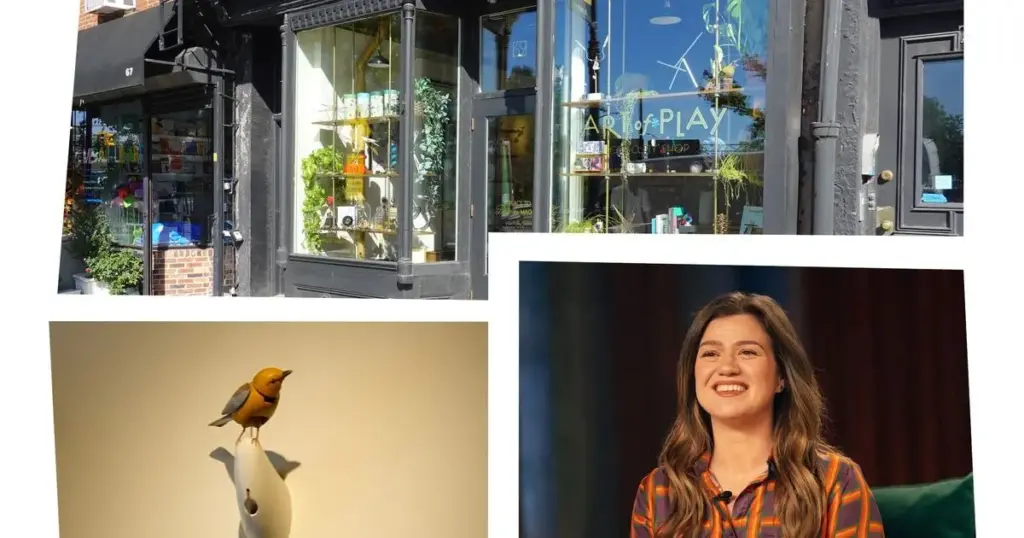
Over the past few days, a small specialty shop on Atlantic Avenue in Brooklyn has found itself at the unexpected center of a national media storm. The controversy began when pop superstar Kelly Clarkson visited the establishment, hoping to make a purchase, only to be told by a store employee that the item she wanted was not for sale. Following the interaction, Clarkson took to social media to air her grievances, sharing a harsh online review with her 8 million followers on X. In her post, she compared the experience to being treated like Julia Roberts’s character in the classic film Pretty Woman, drawing immediate, widespread attention to the independent boutique known as Art of Play.
The store, which specializes in toys, books, and magic-adjacent objects, quickly responded to the viral tweet. In a clarifying message posted to social media, representatives for Art of Play explained that Clarkson had not merely asked about buying a standard deck of cards or a small novelty item. Instead, she had inquired about “Molly,” a one-of-a-kind singing and dancing bird that is permanently attached to the wall and actively used in the magic shows performed on-site. The boutique stated that the piece, created by artisan Bliss Kolb, simply was not for sale.
However, the situation quickly grew more convoluted when internet sleuths tracked down photographs of the shop showing the same wall display accompanied by a price tag. Art of Play followed up with additional statements that only seemed to stoke further confusion, suggesting that staff had directed Clarkson to contact the artist directly or purchase a similar, much less expensive model instead. As the online discourse escalated and Clarkson offered further commentary on the platform, reporters descended upon the shop. On a Tuesday morning, Adam Rubin, one of Art of Play’s three co-owners, unlocked the front doors and faced a gaggle of journalists eager to get his side of the story.
Reflecting on the incident, Rubin described the entire ordeal as an insane misunderstanding. From his perspective, nothing that occurred inside the shop warranted Clarkson publicly scolding their employee on her way out, though he noted he was willing to let that initial friction go, acknowledging that everyone is entitled to a bad day. Everything changed, however, when the singer used her massive digital platform to attack the business, a move he characterized as asymmetrical social warfare.
When asked to walk through the actual dynamics of the interaction, Rubin emphasized that the store was far from empty at the time. It was a bustling environment, and anyone who has ever worked in retail during a busy shift knows how customer service operates under pressure. According to Rubin, when a visitor expresses interest in a unique object, a standard part of shopkeeping is to direct their attention toward something comparable or alternative that is readily available. He argued that the suggestion of a lower-priced alternative had nothing to do with condescension or price point, but rather standard retail engagement.
Rubin noted that Clarkson was inside the shop for less than five minutes. Had the ensuing tweetstorm never materialized, the staff wouldn’t even have registered the interaction as a negative one, describing the encounter as thoroughly undramatic. They treated her like any other customer passing through their doors, a standard of service that apparently failed to align with her expectations.
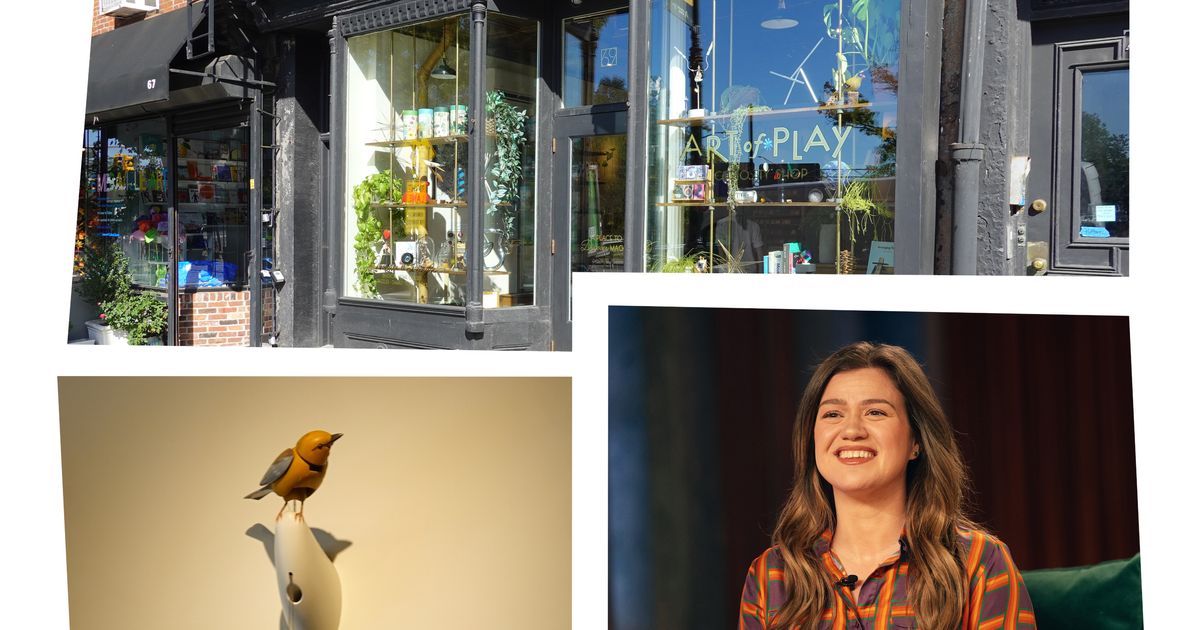
Addressing the central question of whether the disputed bird automaton was actually for sale, Rubin shed light on the nontraditional nature of their business model. Art of Play works directly with independent artisans rather than mass-market distributors. The creator of the bird, Bliss Kolb, lives remotely in the woods in a house he built with his own hands, operates entirely outside of social media, and lacks a traditional warehouse. Because his intricate mechanical sculptures take years to craft by hand, there are only two such machines in existence, with the shop’s display housing one of them. Rubin explained that while the object is treated more like a fine-art sculpture than commercial inventory, the shop would naturally reach out to the artist if a customer showed genuine, serious interest in commissioning an automaton.
Addressing the presence of a price tag on the display, Rubin clarified that because numerous visitors frequently inquired about it, a price had eventually been affixed. Yet, the underlying reality remained that securing one required direct coordination with the creator. In a nod to the sudden surge in public interest, Rubin remarked that the item’s price tag had been adjusted due to popular demand and now jokingly stood at $15 million.
Beyond the logistical confusion of the merchandise, the aftermath has taken a severe and alarming toll on the small business and its staff. Rubin stated bluntly that Kelly Clarkson has put them in danger, pointing to a wave of harassment that has left friends, supporters, and shopkeepers vulnerable to threats. While local patrons and fans rallied around the boutique—even dropping off pastries and cupcakes while the shop was closed on Monday—the digital backlash has proven overwhelming.
Detailing the behavior of the online trolls, Rubin described a relentless campaign of intimidation. Individuals have flooded the business with phone calls, emails, and review-bombing across every available platform. Anyone who mentions Art of Play positively on social media is immediately targeted by angry accounts. The hostility has even spilled out onto the physical sidewalk outside the shop, where agitators have shown up shouting accusations of racial profiling against Clarkson. When neighborhood residents witnessed the commotion and filmed the incidents, their reactions were recorded, leading to their personal information being doxxed online by followers.
The disruption has even penetrated the daily operations of the store. With the business phone turned off to stem the tide of abusive calls, hateful commentary and threats of violence have continuously flashed across the point-of-sale iPad screen while staff members attempt to ring up actual customers. Rubin expressed deep frustration that genuine patrons attempting to contact the store are entirely blocked by the wall of digital hostility.
Despite the chaotic storm brewing online and on the digital airwaves, the atmosphere inside the physical shop remained relatively calm. Rubin emphasized a stark division between online perception and physical reality, noting that not a single person who has actually visited the store in person has taken Kelly Clarkson’s side in the dispute.
When pressed for further clarification regarding the alternative, more affordable bird model—the $2,000 piece that a clerk may have originally pointed Clarkson toward—and whether it was kept in-house or required a special order, Rubin indicated that enough had been said on the matter. Asked whether the unexpected national spotlight had translated into a massive influx of orders and genuine interest for the alternative item, Rubin acknowledged the spike in attention before firmly asking the assembled reporters to leave.