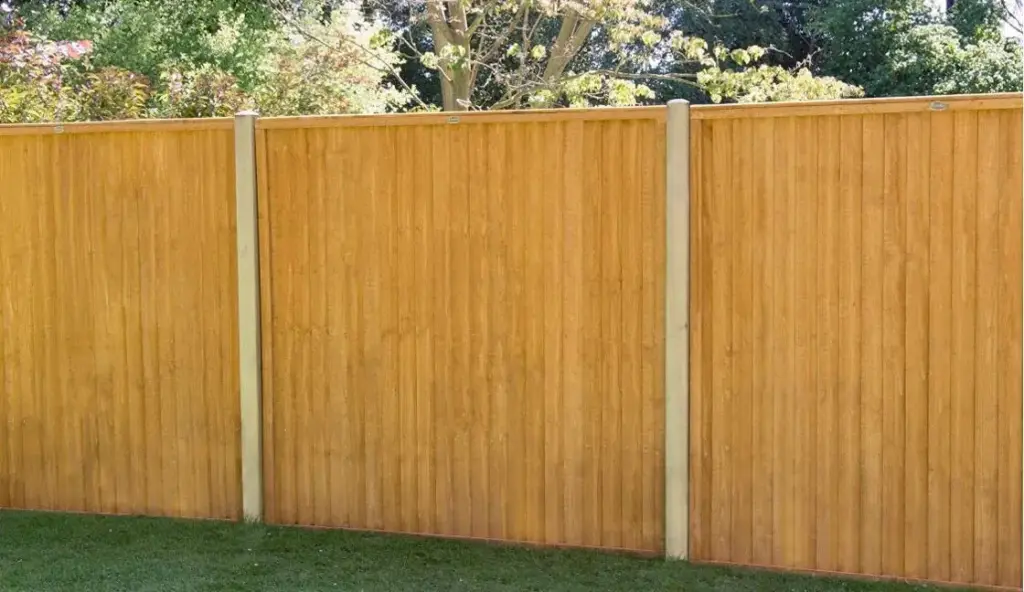
When it comes to framing a property, securing a boundary, or enclosing a garden, the longevity of a fence relies entirely on the integrity of its foundation. Industry professionals and seasoned property owners have long debated the merits of various anchoring methods, yet setting wooden posts directly in concrete continues to emerge as the definitive approach for structural strength and long-term durability. While alternative methods such as metal post spikes offer speed and convenience—particularly in dense clay or undisturbed terrain—they frequently fall short when subjected to shifting ground, high winds, and loose or light soils. Concreting provides a far firmer, more resilient footing that anchors the entire wooden structure against the relentless pressures of nature.
However, opting for a concrete-set foundation requires a shift in project management and scheduling. Property owners undertaking boundary installations must factor in several additional days of project completion time. Unlike rapid mechanical alternatives, concrete requires adequate curing intervals to achieve its maximum compressive strength. Rushing this critical phase compromises the stability of the entire boundary line, making patience an essential component of the installation process.
To execute the project effectively, builders and property owners require a specific suite of tools and materials. Essential equipment includes a narrow spade or large trowel for precision excavation, a reliable spirit level to ensure vertical alignment, and the core raw materials comprising gravel, sand, and cement. Additionally, applying a quality wood preservative is widely recommended to protect vulnerable timber from subterranean moisture.
Choosing and Treating Wooden Fence Posts
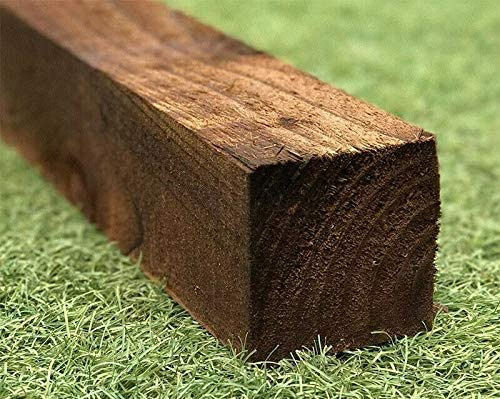
Before a single shovel breaks the earth, the focus must shift to the selection and preparation of the timber itself. The ultimate lifespan of a fence is inextricably linked to the quality of the wood used for its vertical supports. Industry recommendations strongly favor pressure-treated softwood for outdoor projects, as the industrial treatment process forces preservatives deep into the cellular structure of the timber, guarding against rot, insect infestation, and fungal decay.

For those seeking maximum longevity, timber sourced from the heartwood—the denser, inner portion of the tree—is preferred over sapwood. Although heartwood posts command a higher price point, their natural resistance to decay significantly outperforms younger, outer wood layers. Dimensioning is another critical consideration that dictates structural integrity. Standard garden fences typically measure six feet in height, requiring support posts that extend at least twenty-five percent deeper into the ground. Consequently, an above-ground fence height of six feet necessitates posts measuring approximately eight feet in total length to accommodate the subterranean anchor point.
Regardless of the timber grade selected, preventative measures must be taken to combat moisture ingress at the ground line. The lower section of the post—the portion designated for burial beneath the soil and concrete line—should be thoroughly coated with a specialized wood preservative and allowed to dry completely prior to installation. Many builders also take this opportunity to treat the bottom edges of adjoining fence panels, creating a unified defense against dampness and rot.
Digging The Fence Post Holes
With the timber selected, measured, and treated, attention turns to the excavation phase. The spatial layout of the project is dictated primarily by the dimensions of the fence panels being installed. Standard manufactured panels typically span six feet, establishing the precise distance required between consecutive post holes. Accurate measurement of the panels before digging ensures that the structural framework aligns seamlessly with the infill sections, preventing costly alignment errors later in the process.
Excavating the holes demands physical precision. The diameter and depth must accommodate both the post and a substantial collar of concrete to anchor it securely. In loose or light soils, wider and deeper excavations become even more critical to distribute the load and prevent the posts from leaning under lateral wind pressure. The narrow spade or trowel serves as the primary instrument for carving out clean, vertical earth walls that will contain the aggregate mix without unnecessary over-digging.
Mixing the Concrete for the Post Holes
When it comes to securing the posts within the excavated earth, installers generally choose between two primary methods: ready-mixed post concrete or traditional hand-mixing. For small-scale repairs or projects involving only one or two posts, specialized post-mix products offer unmatched convenience, as they can often be poured dry into the hole and activated with water. However, for larger perimeter installations involving numerous holes, mixing raw ingredients on-site proves far more economical and practical.
Traditional concrete preparation relies on a precise ratio of raw materials. A standard structural mix consists of one part cement, two parts sand, and three parts aggregate, commonly referred to as a one-to-two-to-three mix. Whether utilizing a mechanized cement mixer for larger volumes or preparing the batch manually within a wheelbarrow or on a mixing board, the consistency of the mixture is paramount. Contrary to popular assumption, the concrete should be mixed to a relatively dry consistency rather than a sloppy, fluid state. A drier mix provides immediate structural support to the wooden post while it hardens, preventing the timber from shifting out of plumb during the initial curing phase.
Setting the Fence Posts in Concrete
The culmination of the preparation phase involves placing and plumbing the posts within their excavated berths. While a single person can complete the task, having an extra set of hands to hold the post steady or manage the shovel significantly streamlines the process. The post is positioned in the center of the hole, surrounded gradually by the concrete mixture while being continuously monitored with a spirit level. Maintaining absolute vertical alignment is critical, as even a slight tilt in an initial post will compound down the fence line, resulting in crooked panels and structural weakness.
As the concrete is tamped down around the timber to eliminate air pockets, the spirit level is checked repeatedly from multiple angles. Once the post is locked securely in position and the concrete surface is sloped slightly away from the wood to encourage rainwater runoff, the installation enters its crucial waiting period. By allowing the concrete sufficient time to cure undisturbed, property owners ensure that their newly fortified fence will withstand the elements for years to come.