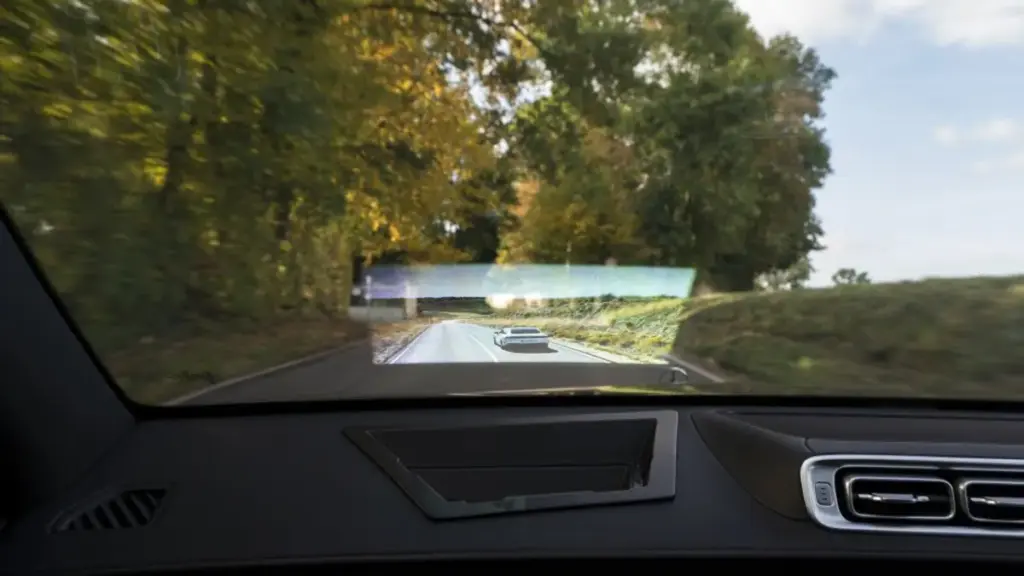
Mercedes-Benz has once again pushed the boundaries of automotive interior design and digital integration, finding yet another innovative surface to transform into a high-tech display. The esteemed German luxury marque, which earlier this decade disrupted the industry by introducing the sprawling Hyperscreen that spans the entire width of the dashboard, has just announced a breakthrough technology designed to turn a vehicle’s windshield into an interactive screen. Perhaps most impressively, the sophisticated equipment remains virtually invisible to the naked eye when not actively in use, preserving the clean, uncluttered aesthetic that luxury car owners have come to expect.
Officially dubbed the Holo Display by the automaker’s engineering teams, the new system represents a significant leap forward from conventional head-up displays and traditional dashboard panels. The technology relies on two primary hardware components working in tandem: a precision projector seamlessly integrated into the vehicle’s dashboard and a specialized, highly transparent film laminated directly onto the interior surface of the windshield. This advanced film utilizes specialized holographic optical elements designed to selectively reflect specific wavelengths of light emitted by the dashboard-mounted projector. When the system activates, these elements capture the projected light and refract it to create a sharp, luminous image that appears to float naturally within the driver’s or passenger’s field of view.

One of the most persistent complaints regarding current-generation head-up displays and projected interfaces is their tendency to wash out or become entirely illegible under harsh, direct sunlight. Mercedes-Benz has specifically engineered the Holo Display to overcome this limitation, utilizing a high-output projection system and advanced optical filtering capable of producing an image robust and bright enough to be viewed clearly even under intense, glaring daylight conditions. This ensures that critical driving data remains instantly legible regardless of external weather or lighting circumstances, enhancing both convenience and driving safety.
Mercedes envisions the Holo Display being utilized primarily to deliver essential navigational cues, speed metrics, and vital vehicle telemetry directly into the driver’s line of sight, allowing them to monitor crucial information without ever needing to look away from the road ahead. However, the system’s design also incorporates thoughtful safeguards to ensure that this wealth of visual data does not become an overwhelming distraction. While the driver’s perspective is strictly curated to display only driving-related information and safety alerts, the passenger side of the windshield can support a much wider array of multimedia content.
Thanks to directional optics and specialized viewing angles, the visuals produced by the Holo Display are restricted to specific vantage points. This means that the driver cannot see what the passenger is viewing on their side of the glass, and vice versa. While the person piloting the vehicle concentrates purely on the journey, the front-seat passenger has the potential to access a rich variety of supplementary images, including text details highlighting points of interest along the route, interactive maps, or even streaming films during stationary periods or in autonomous driving modes. Furthermore, because the technology is fundamentally transparent and non-emissive when inactive, the display vanishes completely into the glass, leaving no bulky plastic bezels, black screens, or dead pixels to disrupt the cabin’s sophisticated ambiance.

The introduction of the Holo Display is part of a broader, comprehensive initiative by Mercedes-Benz to rethink how vehicles communicate with both their occupants and the outside world. Alongside the interior windshield technology, the automaker has been heavily developing advanced LED display elements integrated directly into the side and rear windows of the vehicle. This secondary innovation, which the company has named Intelligent Display in Glass, is engineered to allow the car to broadcast messages and visual signals to its surrounding environment.
According to the German manufacturer, the Intelligent Display in Glass system can be utilized to project important warning signs, pedestrian safety symbols, and various traffic-related communications onto the exterior glass panels. This enables the vehicle to act as an active communicator on crowded city streets or highways, warning nearby pedestrians, cyclists, or other motorists of impending maneuvers or potential hazards. Much like the interior Holo Display, these exterior LED elements are designed to be completely invisible when powered down, blending seamlessly into the vehicle’s greenhouse glass without altering its traditional profile or exterior styling.
As automotive interiors continue to evolve into sophisticated digital living spaces, these advancements highlight Mercedes-Benz’s ongoing commitment to merging cutting-edge consumer electronics with timeless automotive elegance. By utilizing transparent films, holographic optics, and hidden projection hardware, the brand is successfully reducing physical clutter while simultaneously expanding the digital capabilities available to drivers and passengers alike. While commercial rollout timelines and specific model availability for the Holo Display and Intelligent Display in Glass have yet to be finalized, these developments signal a clear direction for the future of luxury vehicle interfaces.