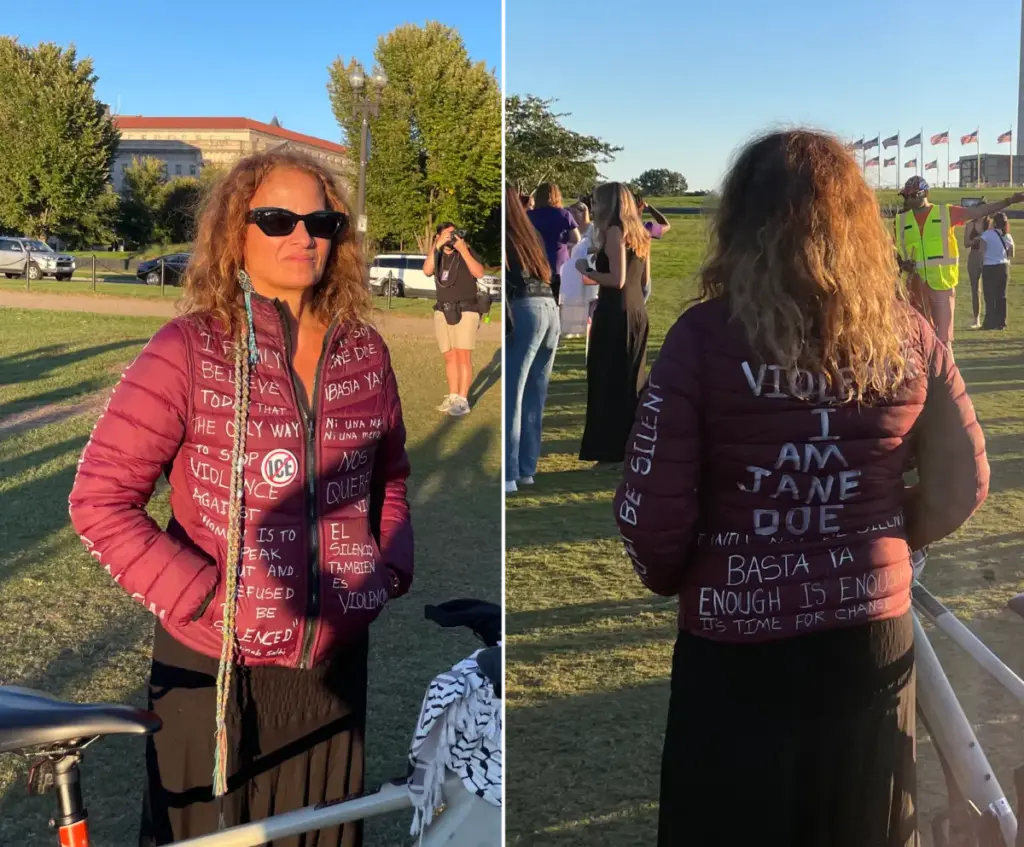
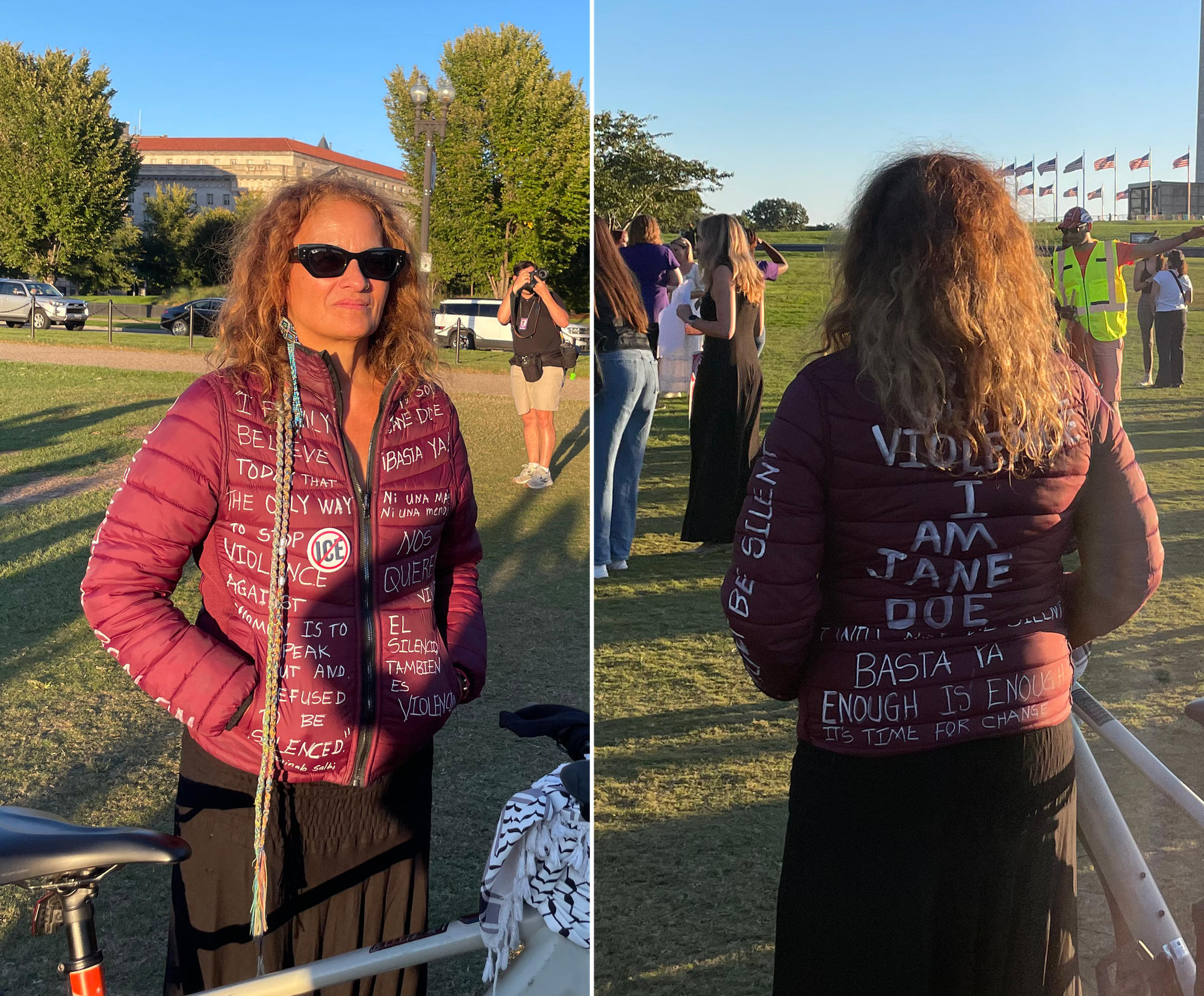
WASHINGTON, DC — Amid a growing national reckoning over systemic responses to sexual violence, approximately 250 protesters gathered beside the Washington Monument on the National Mall on October 8 as part of a National Day of Action. The event served as a collective call for justice, institutional accountability, and systemic reform, drawing artists, activists, and survivors into a unified front.
The demonstration in the nation’s capital was just one of more than a dozen "I Am Jane Doe" rallies held across the country last week. As described by the Women’s March, these coordinated actions spanned "from the frat house to the White House," reflecting widespread anger over how institutions—ranging from elite universities to federal authorities—handle allegations of sexual misconduct and protect powerful perpetrators.
The nationwide mobilization was largely organized in direct response to a deeply controversial case at Cornell University. Seven male students, now widely referred to in public discourse as the "Cornell 7," were accused of gang-raping a female student and allegedly advertising the assault within a fraternity Snapchat group. When the survivor, identified in legal proceedings as Jane Doe, reported the horrific incident to university administrators two years ago, the institution’s disciplinary response drew fierce national criticism. Only two of the accused men were expelled, while the remaining individuals were reportedly instructed to write essays as a form of remediation.
Discontent with the university’s handling of the case intensified over the subsequent two years, culminating in a new lawsuit filed by Jane Doe’s attorney amid ongoing concerns regarding campus safety and the climate surrounding Greek life. Days earlier, on October 5, hundreds of Cornell students staged a powerful campus rally against the Ivy League school’s administration. Demonstrators expressed solidarity with Jane Doe and openly condemned what many students and faculty members view as a deeply entrenched, toxic, and overtly sexist fraternity culture within higher education.

The ripple effects of the Cornell case quickly transcended campus boundaries, catalyzing a broader movement against institutional apathy. In Washington, DC, the choice of the National Mall as a focal point for the October 8 demonstration carried profound symbolic weight. Protest organizer Riley Reed explained to Hyperallergic that organizers deliberately sought to position survivors and advocates against the backdrop of the capital’s most recognizable civic and political landmarks.
"It’s a big statement [that] we will not accept sexual abusers in the White House, and we have one currently in the White House," Reed said, pointing to the multiple historical sexual assault allegations leveled against President Trump. "We want to hold the leaders at the top accountable for their actions, and this is a pretty poetic and powerful spot between the Monument and the White House, which are symbols of power."
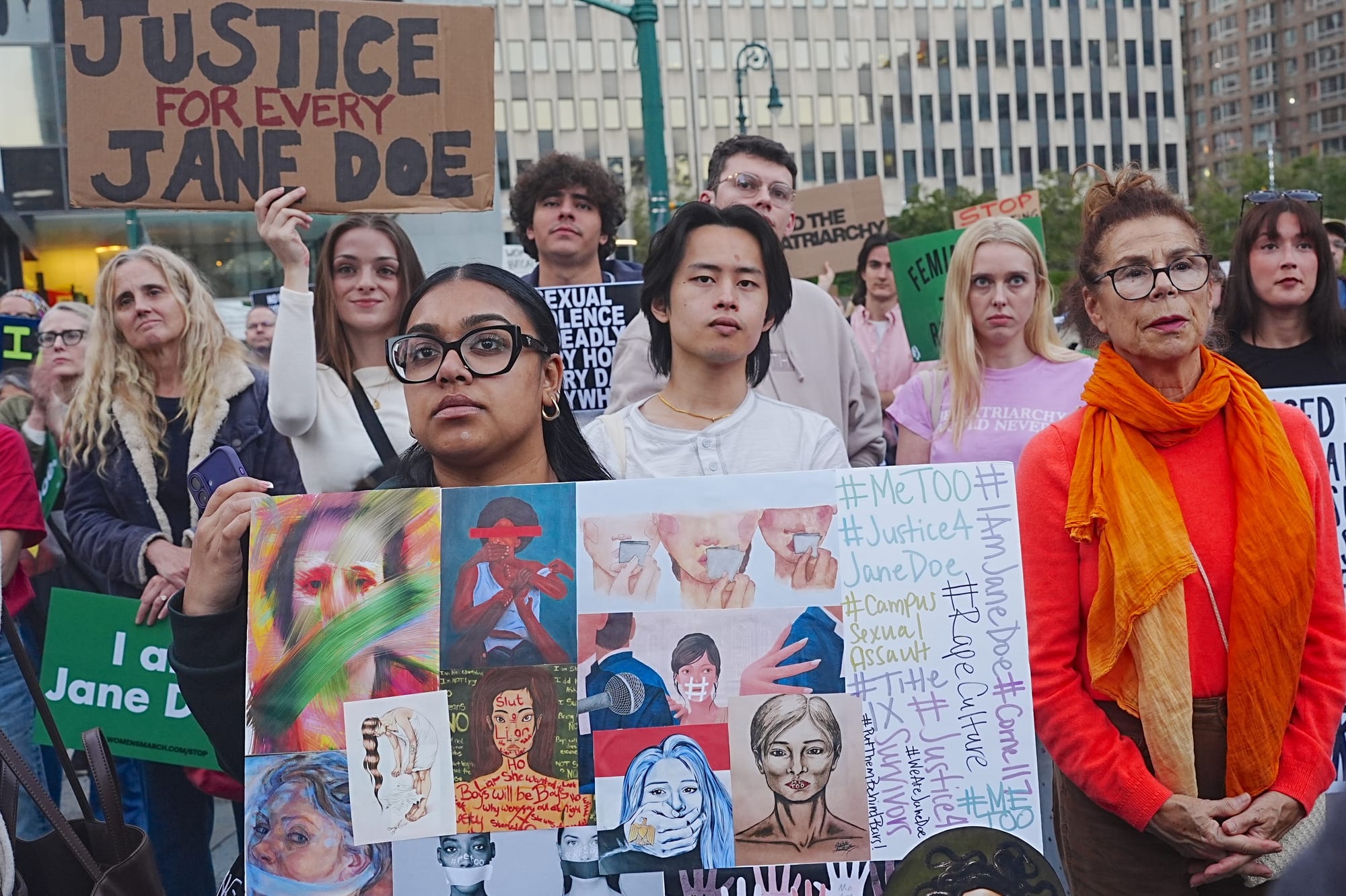
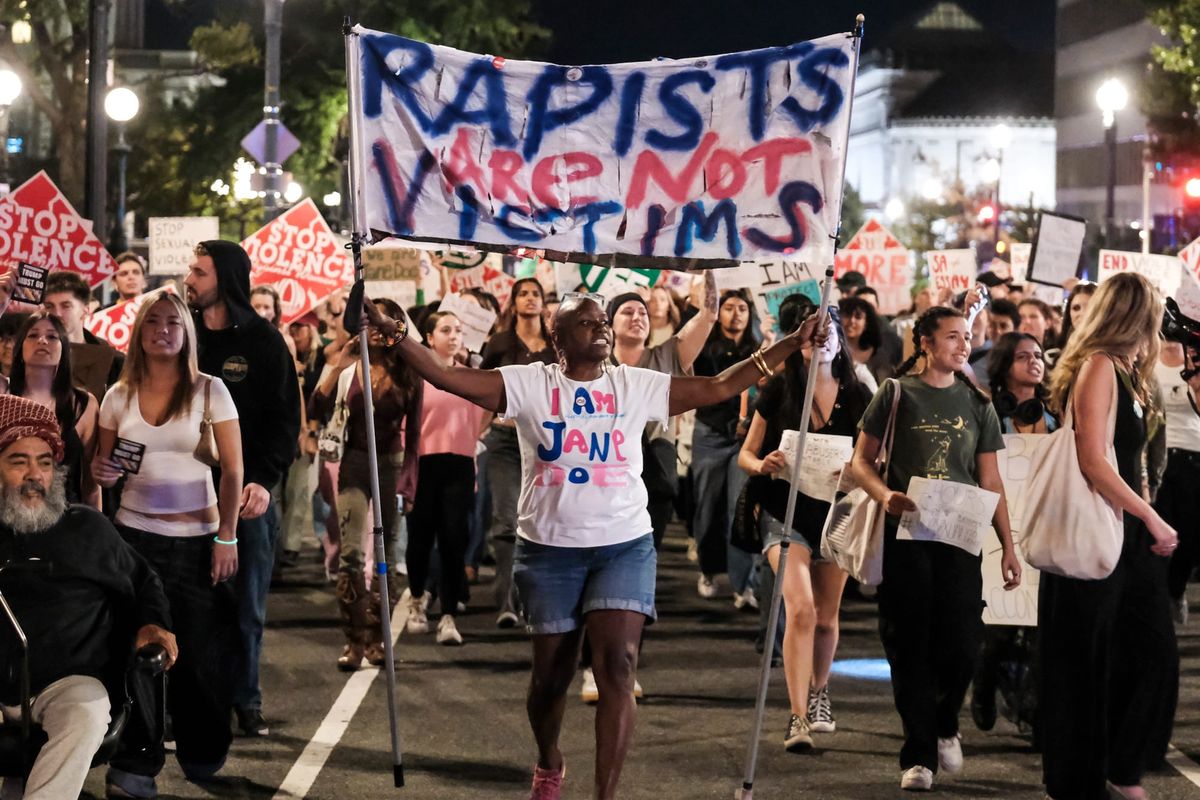
The atmosphere on the National Mall was charged with emotion, defiance, and solidarity. Protesters carried an array of hand-painted signs and banners with stark, evocative messages, reading "History Has Its Eyes on Us" and "Give Me Back My Girlhood, I Had It First."
The rally featured a lineup of prominent speakers who took to the microphone to demand legislative action and institutional reform. Dani Bensky, a vocal Jeffrey Epstein survivor and victims’ rights advocate, addressed the crowd, declaring that society is living through a critical moment of reckoning. She was joined by other notable figures, including Alva Johnson, a former 2016 campaign staffer who publicly accused Trump of sexual assault, and Claire Barnett, a Juris Doctor candidate and president of Advocates Against Sexual Violence at Georgetown Law.
Among the diverse crowd of demonstrators was artist and curator Nadine Seiler, a figure well-known for her dedicated work protecting and preserving artworks at the Black Lives Matter memorial fence in Washington, DC. Seiler held a striking poster bearing the words "I Am Jane Doe" spray-painted on one side, while the reverse side read "rapists are not victims."
Seiler crafted the sign as a direct rebuttal to public pushback from the Cornell 7 and their defenders, who had argued that the accused men’s lives and reputations were unfairly disrupted when their names and photographs were circulated online during grassroots calls for justice. Speaking with Hyperallergic, Seiler expressed profound offense at these defensive narratives.
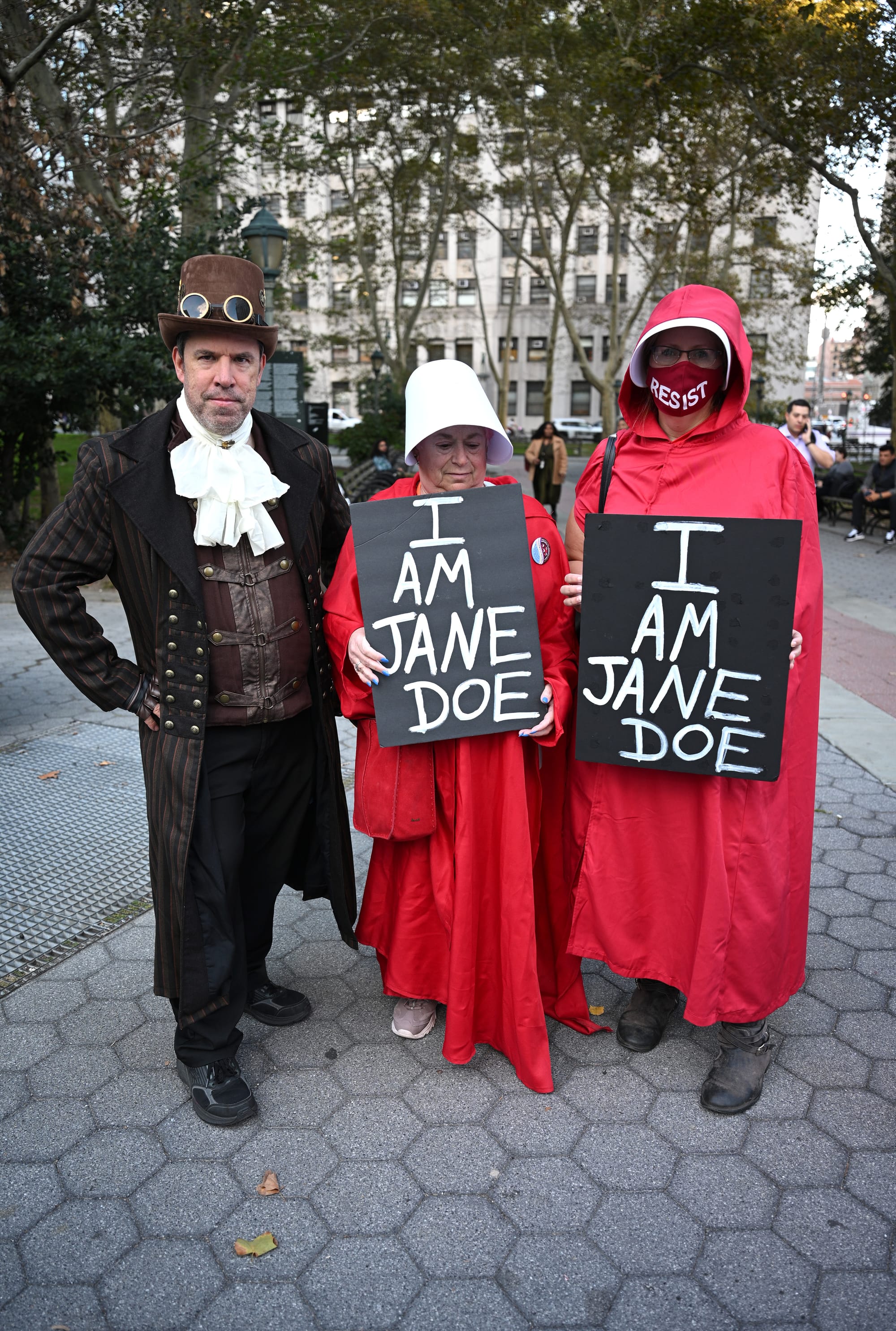
"I am a victim of sexual assault, and so are many people. Our experiences are important and life-changing," Seiler said, adding that the enduring cultural excuse of "boys will be boys" is an obsolete defense that must be entirely dismantled.
Similar sentiments echoed across other major American cities. In New York City, protesters gathered at Foley Square, where participants dressed in crimson costumes reminiscent of characters from The Handmaid’s Tale and carried signs calling out pervasive, systemic violence against women. In Boston, demonstrators assembled at the Boston Common, holding placards that directly criticized Cornell University’s lenient disciplinary measures and demanded systemic transparency.
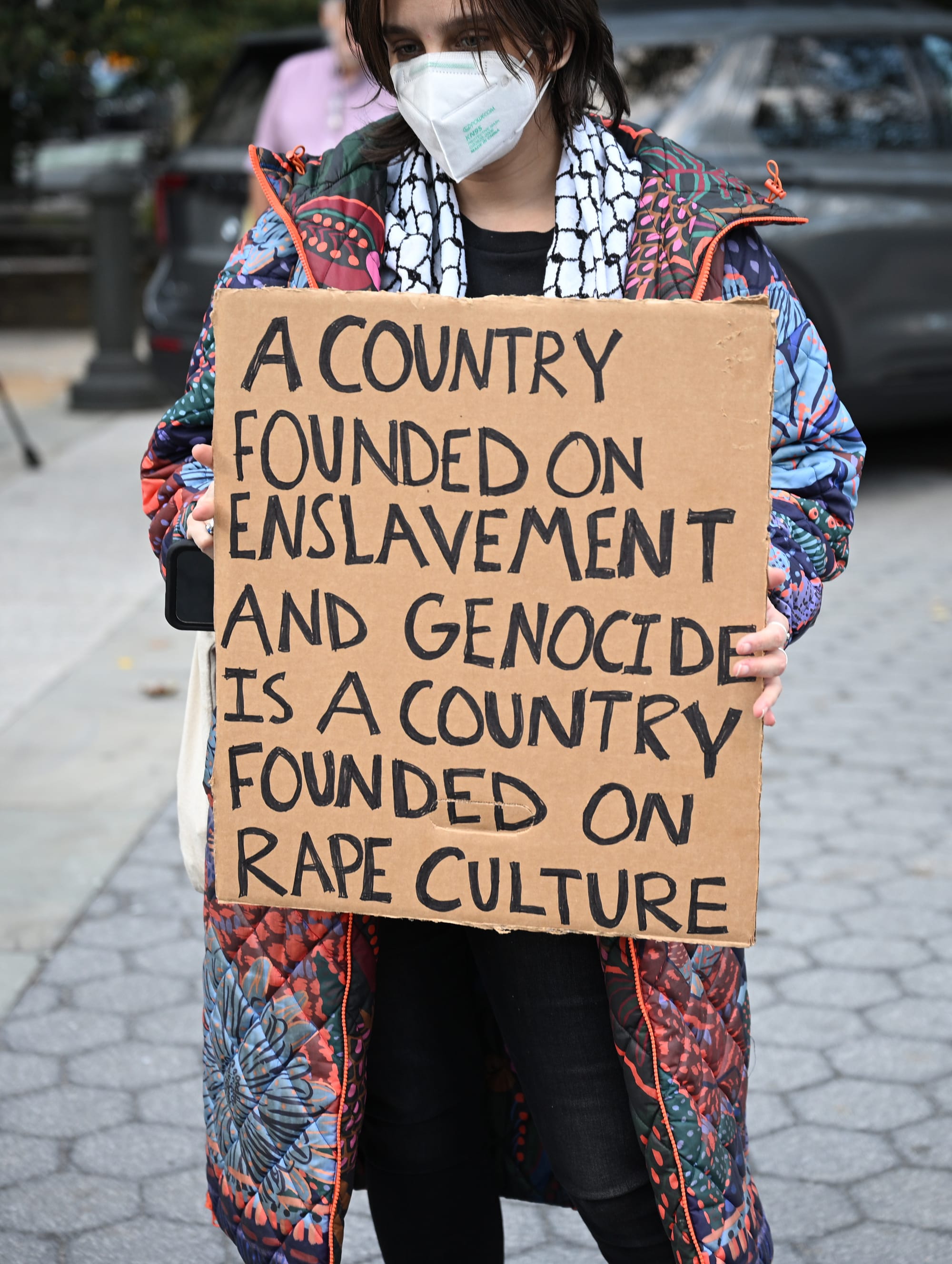
Back on the National Mall, the two-hour protest combined fervent speeches, call-and-response chants, and musical performances. Two acoustic guitarists performed songs that urged citizens, in Alva Johnson’s phrasing, to "vote the rape regime out of office."
As the demonstration concluded, protesters began marching toward the perimeter of the White House before dispersing into the afternoon. As the crowd melted away into the city streets, Johnson’s parting words remained hanging in the air, capturing the resolute spirit of the nationwide movement: "I am not afraid. They feed off fear, so we starve them with courage."