The art market cycle of late 2025 and early 2026 has revealed a striking bifurcation in collector behavior, one that reflects a broader tension between the allure of the secondary market’s headline-grabbing records and the stability of the primary gallery ecosystem. As major international auction houses report record-setting prices for blue-chip works, the mid-market collector is increasingly finding that the path to a significant collection lies not in the high-stakes, volatile auction room, but in the strategic cultivation of relationships with primary-market institutions.
This divergence is not merely a matter of price, but one of access and long-term strategy. While secondary market benchmarks continue to demonstrate institutional durability, the sheer intensity of competition for foundational postwar works has led many seasoned and emerging advisors to pivot. They are searching for viable, vetted primary channels that offer works which are historically aligned with the movements currently dominating the auction floor. By bridging the signal of the secondary market with the accessibility of retail gallery inventory, collectors are finding a way to maintain aesthetic pedigree without falling victim to the inevitable price surges that accompany high-profile public sales.
The Surge in South Asian Modernism
The current climate for South Asian Modernism is perhaps the most vivid illustration of this trend. Recent auction cycles have been defined by a historic momentum that shows no signs of cooling. The Bombay Progressive Artists’ Group, which fundamentally reshaped the trajectory of Indian art in the 20th century, continues to see its influence reflected in escalating valuations.
Francis Newton Souza, a co-founder of the group and a titan of the genre, dominated the headlines in late September 2025. His 1962 landscape, Houses in Hampstead, reached a staggering $7.5 million at Sotheby’s London, a figure that underscored the international appetite for his evocative, expressionistic work. Similarly, his 1955 drawing suite, Six Gentlemen of Our Times, achieved $2.3 million at Saffronart, establishing a new global record for a South Asian work on paper. These results have acted as a catalyst, drawing fresh capital into the segment and forcing collectors to look beyond the top-tier names to understand the full breadth of the subcontinent’s modernist canon.
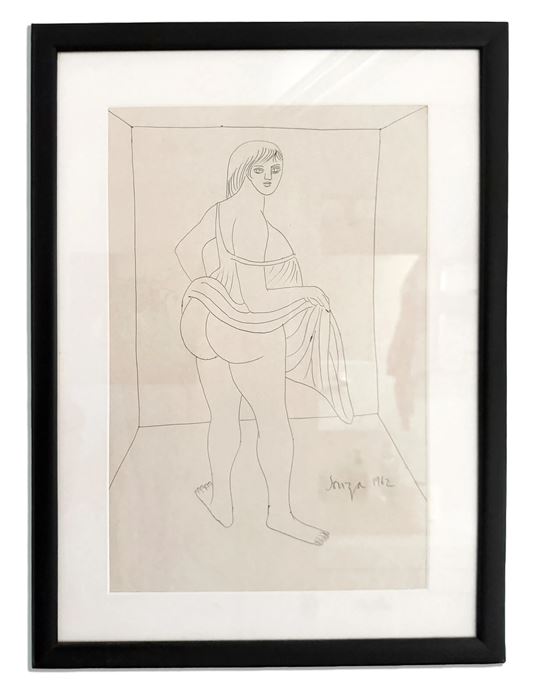
As the spotlight on Souza intensifies, collectors are increasingly turning their attention to artists who operate within the same pastoral and narrative traditions. K. Laxma Goud, a deeply respected figure in modern Indian art, serves as a prime example of this movement. Trained in the rural landscape of Andhra Pradesh, Goud’s practice—which spans intricate line work, detailed etchings, and bronze casting—is rooted in the folklore and pastoral realities of his homeland. His tactile, rhythmic approach to material is not merely a stylistic choice but a continuation of the mid-century modernism that defined the subcontinent’s post-independence art scene.
For those looking to secure high-quality works by artists like Goud, the primary market offers a refreshing alternative to the frenzy of the auction block. Galleries such as Sanchit Art, which have built their curatorial programs around the preservation and promotion of these modern masters, provide a vetted, transparent pathway for acquisition. Inventory availability through these channels is remarkably diverse, with works on paper starting at approximately $1,500 and sculptural works reaching up to $18,000. This access allows collectors to build a historically rigorous collection while avoiding the unpredictable premiums often attached to high-profile auction lots.
The Evolution of European Informalism
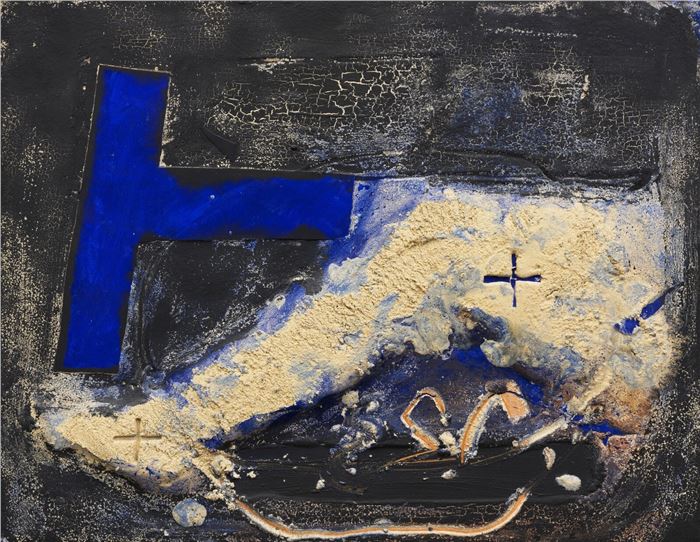
While South Asian Modernism is experiencing a moment of global reassessment, European Informalism remains a pillar of postwar art history. The movement’s emphasis on materiality and the raw, unmediated gesture of the artist continues to command institutional respect, with major exhibitions—such as the current retrospective for Antoni Tàpies at MACBA Barcelona—solidifying the movement’s place in the canon.
Tàpies, the master of the tactile, whose work often incorporates sand, clay, and found materials into the painted surface, remains the anchor of the Informalist market. His auction record, set by Gran ocra amb incisions at $2.8 million, is supported by a cumulative market turnover of over $69 million since 1998. The fact that his work is held by institutions as significant as the Guggenheim Bilbao suggests that the appetite for "gesture-first" abstraction is not a passing trend, but a foundational commitment for serious collectors.
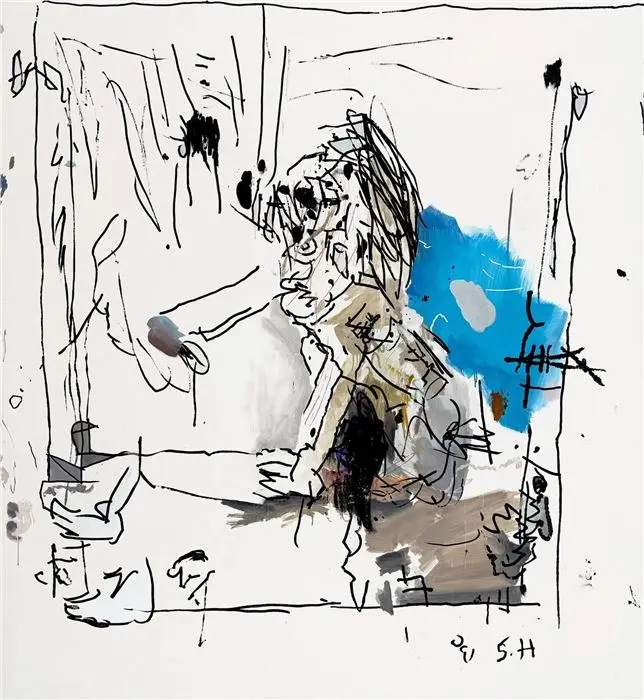
This legacy is being actively carried forward by a new generation of painters who prioritize the physical trace of the creative act. Secundino Hernández, a Madrid-trained artist with a global footprint, embodies this contemporary evolution. His work is characterized by dense surfaces, deliberate layering, and a visible, aggressive use of abrasion that recalls the material innovations of his predecessors. By exploring the tension between the structured line and the explosive, chaotic application of color, Hernández provides a bridge between the historical Informalism of the mid-century and the contemporary avant-garde.
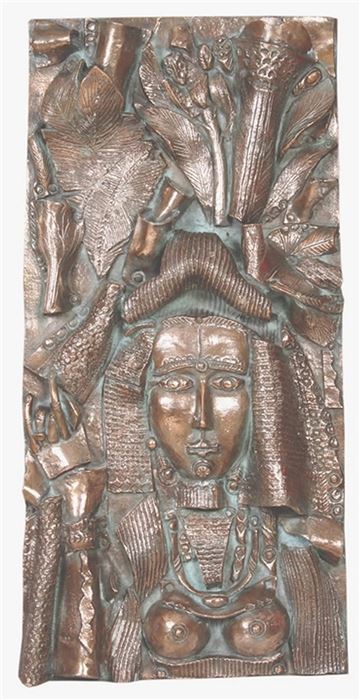
Galeria Jordi Pascual, which represents Hernández, serves as a crucial partner for collectors seeking to integrate this living tradition into their holdings. By prioritizing process and texture, Hernández’s works serve as a vital, energetic counterpart to the postwar masters. The gallery’s primary inventory for his work, currently structured between $12,000 and $60,000, offers a clear, stable point of entry into a market that is increasingly focused on the preservation of these material traditions.
Volatility and Value in the Editions Market
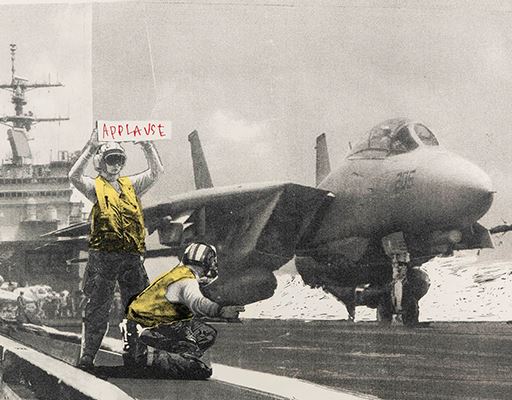
Perhaps the most volatile sector in the current market is that of street art and limited-edition prints. The recent Sotheby’s March 2026 Prints & Multiples sale served as a cautionary tale for the unwary. During this auction, the screenprint Applause by Banksy realized £96,000 ($127,885), a price that eclipsed its historical trading range of £20,000 to £30,000 by a factor of three or four. Similarly, a print of the iconic Girl With Balloon soared to £115,200 ($153,462), significantly higher than its usual valuation of £50,000 to £65,000.
Market analysts have been quick to temper expectations regarding these figures. While the results demonstrate a renewed and intense collector appetite for iconographic street art, they are widely viewed as a short-term momentum signal rather than a permanent, durable repricing of the artist’s entire market. For the collector, navigating these spikes at the peak of secondary market volatility is fraught with risk. The desire for a blue-chip name can often lead to overpayment, especially when provenance and condition are not as thoroughly vetted as they are in a dedicated gallery environment.
This is where the role of specialized galleries becomes indispensable. Andipa, a gallery that has operated at the forefront of the Banksy market since 2006, offers a controlled, expert-led channel for the acquisition of authenticated prints and multiples. By working with a gallery that specializes in the verification of these works, collectors can bypass the "sharp edges" of public auction spikes, securing pieces backed by rigorous provenance and market expertise. Andipa’s inventory, which ranges from $15,000 to upwards of $500,000 depending on the rarity, edition size, and signing status, provides a spectrum of entry points that are far more predictable than the unpredictable outcomes of a competitive public sale.
The Strategic Imperative
For the modern collector, the lesson of the 2025–2026 cycle is clear: secondary market data should serve as a compass, not a constraint. Understanding the structural connections between auction momentum and primary gallery availability is essential for building a collection that is both intellectually rigorous and financially sound.
Whether the objective is to acquire the pastoral modernism of K. Laxma Goud, the gestural abstraction of Secundino Hernández, or the street-art editions of Banksy, the most successful collectors are those who leverage auction data to inform their primary acquisitions. By inquiring directly with representing partner galleries through networks like MutualArt, collectors gain access to more than just art; they gain access to pricing transparency, complete provenance documentation, and a long-term relationship with the curators and dealers who shape the market’s future. In an era where the market can shift with the fall of a gavel, the stability provided by these direct connections is, perhaps, the most valuable asset of all.