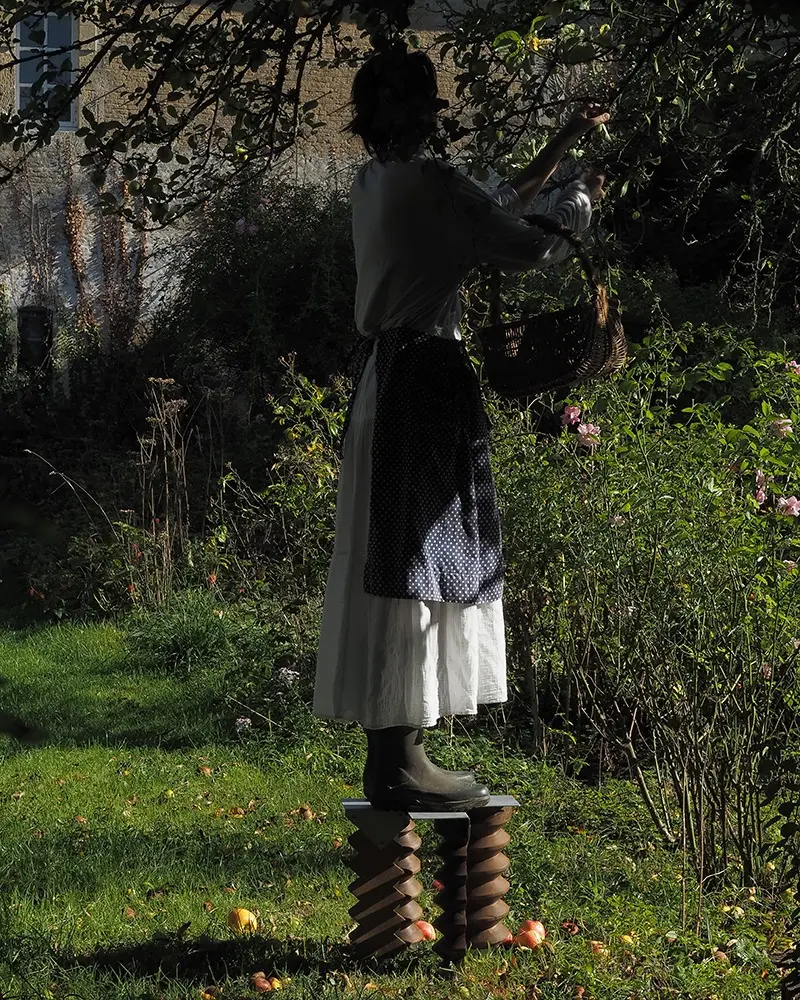
The boundary where agricultural heritage meets contemporary industrial design has yielded a striking new collectible object. Titled LE PRESSOIR, a sculptural stool developed by Studio Jumel in collaboration with creative Ariane Ronot, breathes new life into a 1930s French cider press. Rooted deeply in the apple-growing and cider-making traditions of Normandy, the design reinterprets an obsolete piece of rural machinery, transforming its raw history into a refined seating piece that bridges past utility with modern craftsmanship.
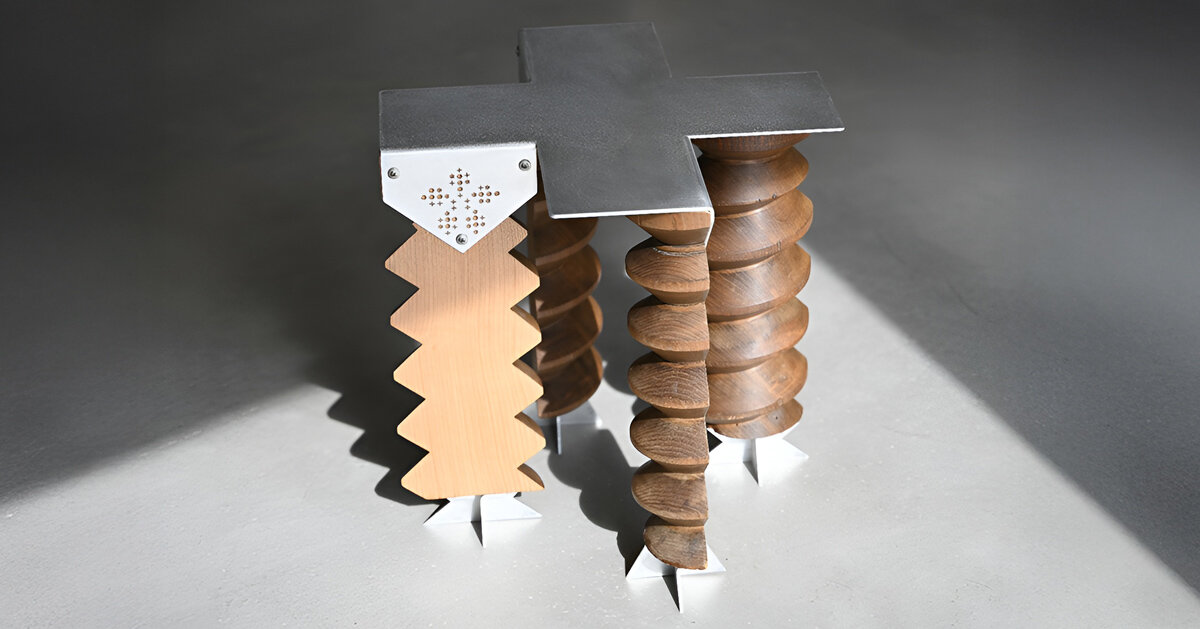
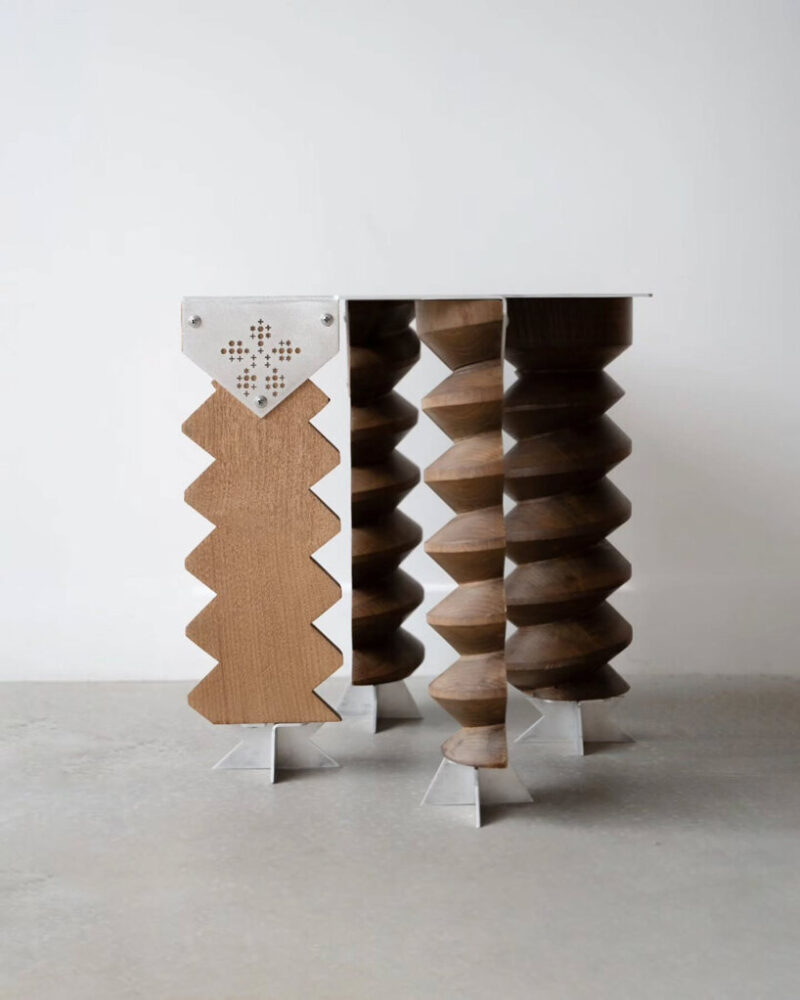
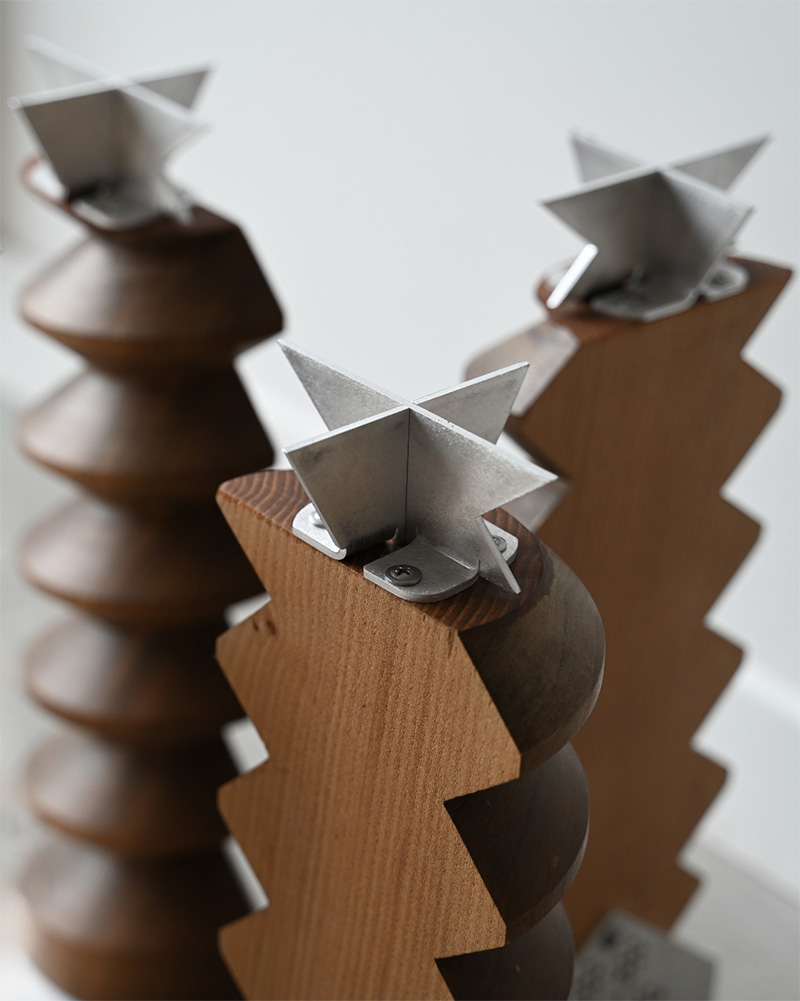
At the core of the design is the original wooden screw mechanism of the historical cider press. Rather than discarding or heavily altering the timber, the creators chose to repurpose this central component directly, utilizing the aged screw structure to form the four legs of the stool. This decision preserves the physical traces, weathered textures, and unique surface irregularities that accumulated through decades of agricultural use. Every dent, grain variation, and sign of wear tells a silent story of manual labor and rural heritage, turning what was once utilitarian workshop equipment into a sculptural artifact for contemporary interiors.
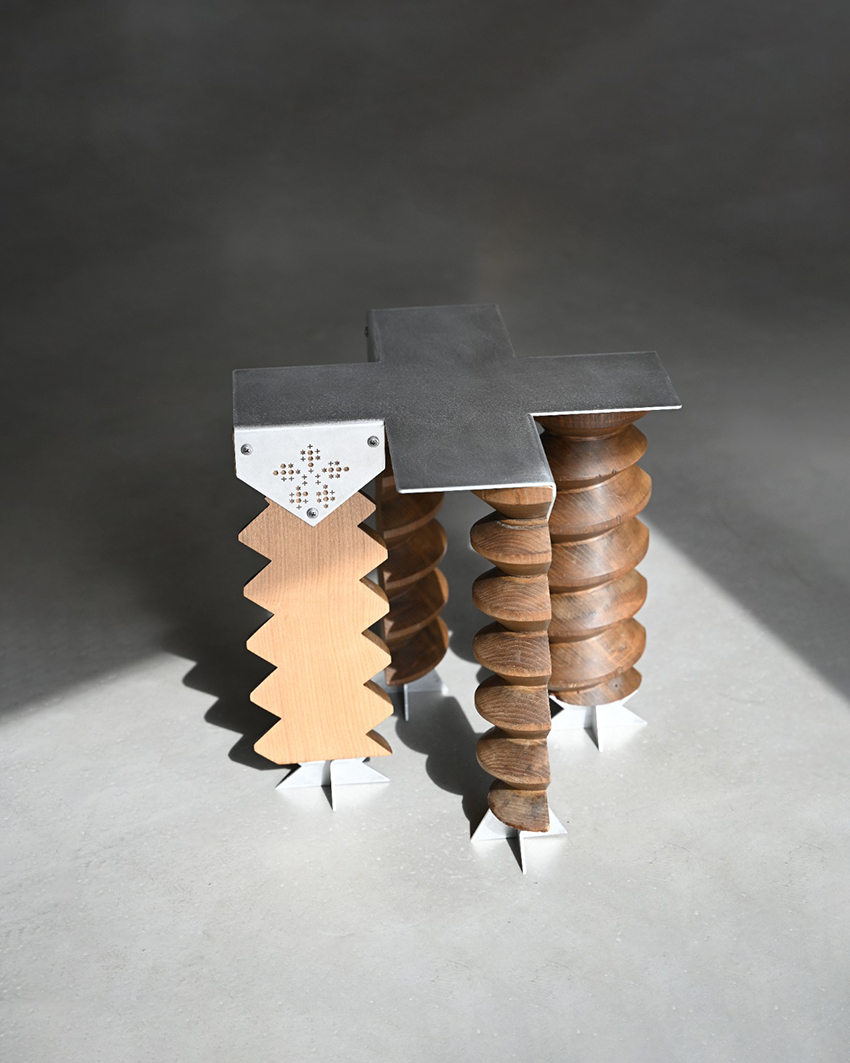
To complement the rich, organic nature of the reclaimed wood, Studio Jumel and Ariane Ronot integrated newly fabricated components crafted from 3 mm-thick aluminum. This metal element serves as a structural bridge, featuring a cross-shaped arrangement that securely connects the timber legs while establishing a deliberate material contrast. The precision of the machined aluminum meets the weathered, time-worn patina of the 1930s timber, creating a dialogue between old and new, industrial refinement and rustic authenticity.
Brushed Aluminum Meets Weathered Timber in LE PRESSOIR
The collaboration between Studio Jumel and Ariane Ronot focuses heavily on the tactile qualities of the materials used in LE PRESSOIR. The aluminum components undergo a specialized brushed and vibrated finish, imparting a soft, matte texture that harmonizes with the rough grain of the historical wood rather than clashing against it. This careful surface treatment ensures that the metal feels integrated into the piece, echoing the subtle weathering found on the decades-old timber elements.
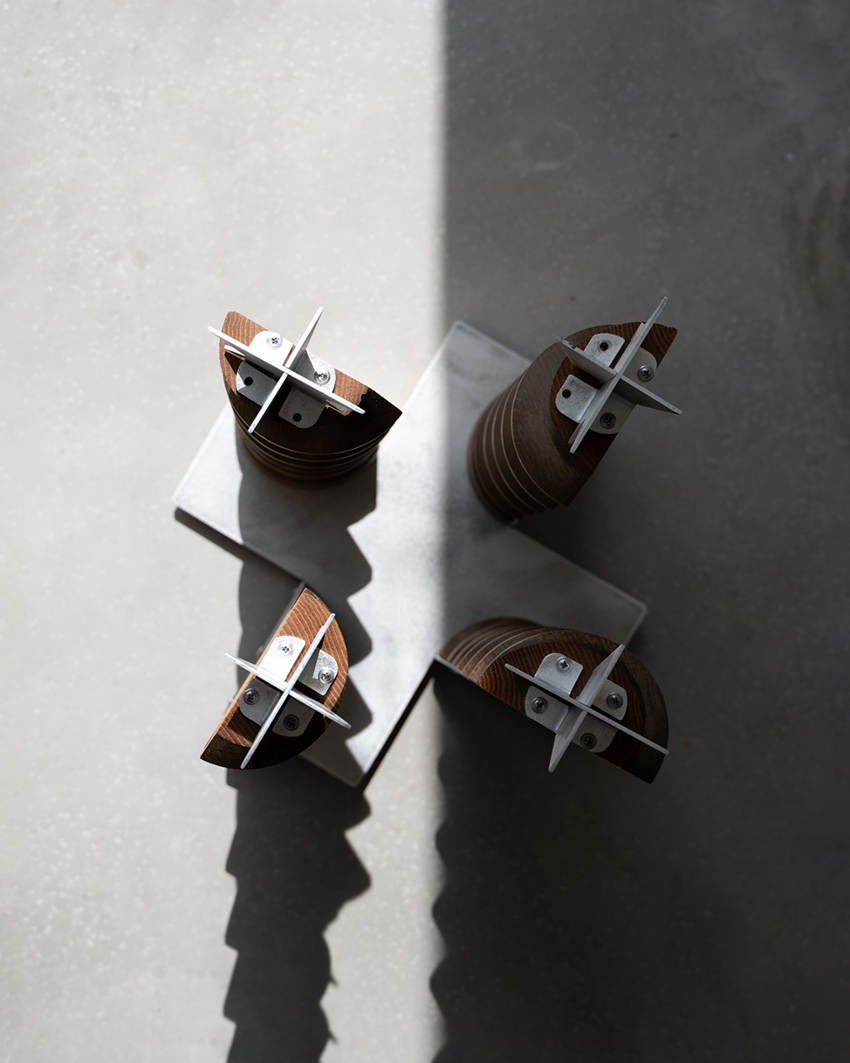
Measuring 45 centimeters in height and 42 centimeters in both width and depth, the stool maintains proportions that balance everyday furniture functionality with a distinct sculptural silhouette. Despite its artistic presentation, LE PRESSOIR remains a fully usable seating object. The openwork form of the aluminum structure introduces botanical references, subtly recalling the shape of apple blossoms as a nod to the object’s regional origins. Meanwhile, the upper seating surface features a helical profile whose geometry directly references the spiral threads of the original wooden screw mechanism below.
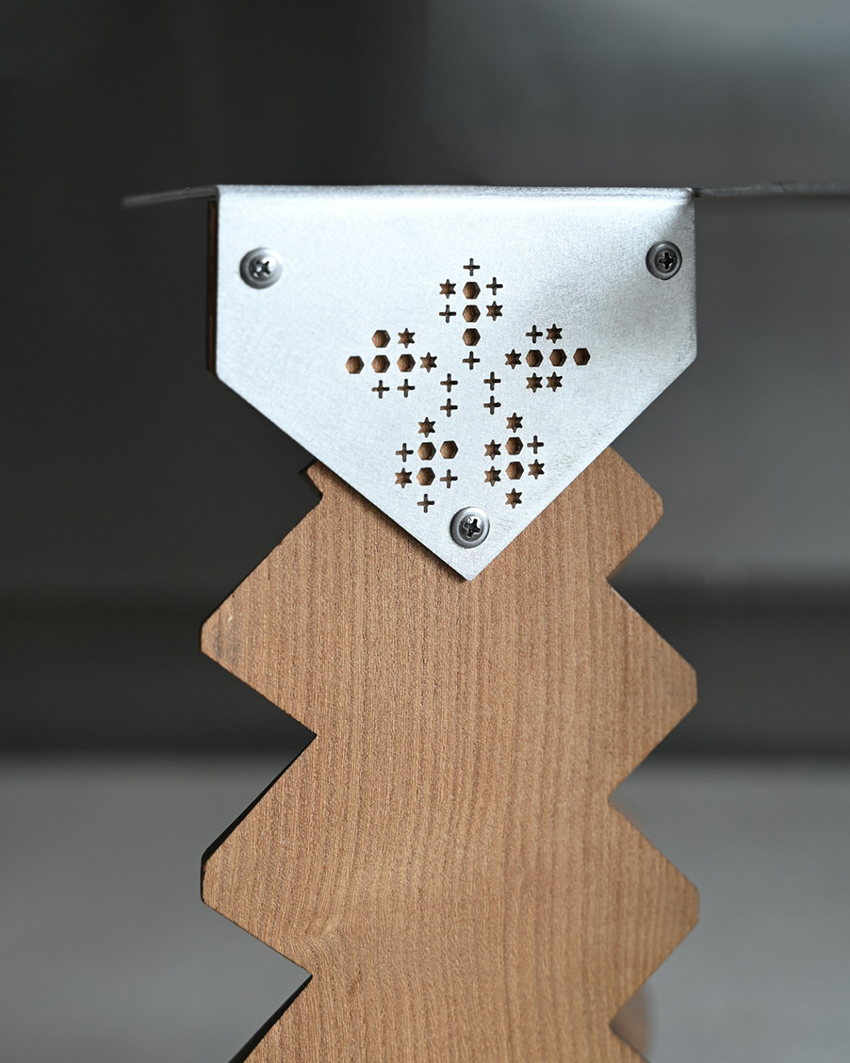
This thoughtful detailing ensures that the design language remains cohesive from top to bottom. The spiral contour of the seat mirrors the helical grooves of the agricultural screw, creating a visual rhythm that ties the entire object together. By maintaining the physical character of the original cider press, the designers avoid sterile minimalism, opting instead for a narrative-driven approach to furniture design where historical identity is preserved and celebrated.
The realization of LE PRESSOIR highlights a growing interest among contemporary designers in upcycling heavy industrial and agricultural artifacts. By rescuing components that might otherwise be discarded or left to deteriorate, studios like Studio Jumel are able to produce limited-edition and collectible pieces that carry genuine historical weight. Through precise metalworking and a deep respect for raw timber, the project successfully transitions a 1930s French cider press from the orchard workshop into the realm of modern collectible design, securing a second life for an artifact of rural history.