For the majority of living memory, we have existed in a world defined almost exclusively by functionality. When "new construction" arrives in your city or town, the odds are slim that you envision a red-brick library, a soaring, ornate cathedral, or a charming, human-scaled event hall. Instead, the mind defaults to the familiar, uninspired silhouettes of our era: a sterile, metal-clad high-rise, an over-optimized grocery warehouse, or a sprawling, windowless data center. These structures prioritize efficiency, cost-cutting, and maximum square footage, often at the total expense of the human experience.
In the Chicagoland area, for instance, residents have recently been forced to reckon with the long-delayed completion of the Obama Presidential Center. Billed as a vital resource for the local community, the structure instead looms over the historic Hyde Park neighborhoods—a gray, imposing monolith conglomerated from a series of awkward, sharp angles. It is a building that feels fundamentally detached from its surroundings, possessing a scale and aesthetic so alien that it is difficult to imagine a pedestrian feeling truly welcome within its shadow. It is the kind of architecture that demands submission rather than participation, leaving many to wonder how we allowed our public spaces to become so cold.
This shift has been so pervasive that we have begun to view any effort to beautify our environment with deep-seated suspicion. When a developer or a city council proposes an aesthetic flourish, our collective reaction is often cynical: Is this a marketing ploy? Is this a political diversion designed to distract us from rising costs? Are we being manipulated by a superficial coat of paint? At best, we view such attempts as quaint, nostalgic efforts to recover the loose, frayed threads of a historical tradition that we assume is dead. We have relegated beauty to the realm of the novelty or the private luxury, something to be enjoyed in one’s personal home but considered entirely impractical, or even wasteful, on a larger, civic scale.
We are likely not the first culture in human history to prioritize shelter over style, or utility over form. Yet, we are arguably the first to do so with the full, sophisticated knowledge and the immense technological capacity to make our environments otherwise. We are the first society to spend our days trekking down endless, soul-numbing aisles of fluorescent-lit big-box stores, surrounded by overstimulating packaging designed specifically to part us from our money, all while ignoring the physical reality of our surroundings. We have become a society that spends more time meticulously curating an "online aesthetic"—a digital projection of beauty—than we do cultivating the real-world spaces we inhabit every day.
The Decline of Architectural Ornament
In a society that bows to its economy above all else, it has become self-evident that anything not directly in service of profit should be cast aside in the pursuit of that great, singular pearl. Efficiency is the god of the modern age, and decoration is its greatest heresy. Yet, for most of human history, that was not the case. For the vast majority of civilizations, advancements in science and engineering did not exist in a vacuum; they went hand in hand with advancements in aesthetic complexity. This synthesis resulted in some of the greatest structures the world has ever seen: the geometric precision of the pyramids of Egypt and Mesoamerica, the engineering marvels of the Colosseum and St. Peter’s Basilica in Rome, and the ethereal beauty of the Hagia Sophia and the great cathedrals of France and Germany.
In these historical eras, decoration was not incidental to the work; it was an essential, foundational element of the craftsmanship. Practically, these embellishments served to project wealth and status, reinforce political or religious power, and encourage social cohesion through the use of shared motifs and cultural stories. On a deeper, more philosophical level, these beautiful spaces reflected the hearts and minds of the communities they served. They acted as a tangible testament to the quality of the construction and, more importantly, a focus on the people who would actually occupy the space.
A small American church, for instance, might hold a special collection for years to fund stained-glass windows imported from Munich, ensuring that everyone in the congregation had something lovely and transcendent to look at while they prayed. A town might invest its collective budget into an elaborately carved fountain for the main square, providing not just drinking water, but a social anchor—a place to sit, to chat, and to watch the world go by. Cities once vied to build the most magnificent train stations, the better to impress visitors and instill a sense of pride in those returning home.
Today, there is a growing movement of grassroots organizations and urban planners beginning to notice the void left by our sterile architecture. From neighborhood-level beautification projects to city-wide initiatives, there is an increasing demand for walkability, accessible green spaces, and architecture that facilitates human connection rather than hindering it. In every city one visits, a form of intentional community atmosphere is slowly taking hold. There is hope, but to truly reclaim our environments for people rather than for cars and corporations, we must first recall what the world looked like before the reign of utility.

The Victorian Romantics and Art Nouveau
During the century leading up to World War II, the Western world underwent a dizzying series of design evolutions. As industrialization accelerated, the world began to speed up, and, much like today, increasing social alienation led people to turn to the past for inspiration. What emerged were styles that drew heavily upon history while retaining the most emblematic aspects of their contemporary lives.
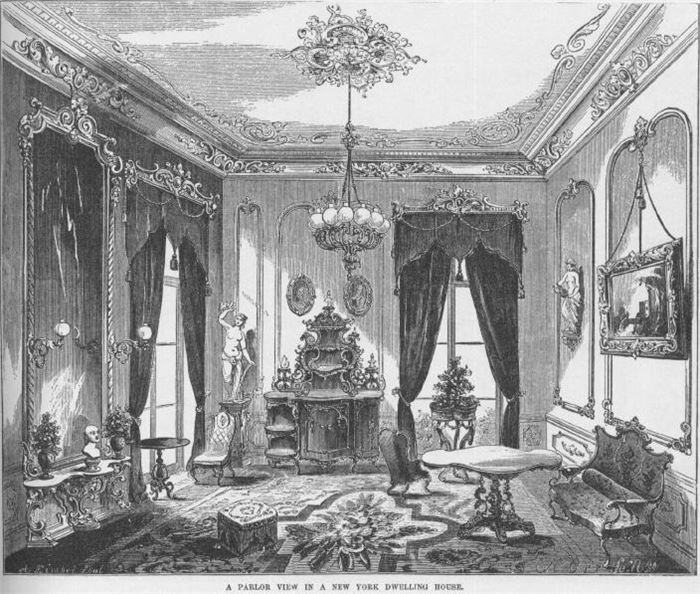
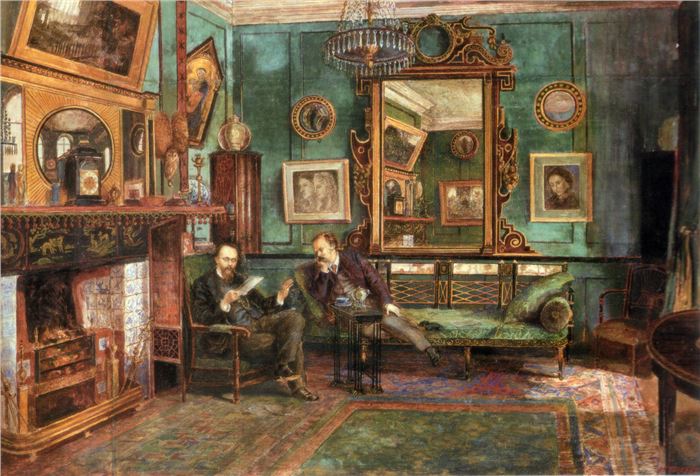
The Victorian period, for example, was defined by heavy luxury, deep sentimentality, and an embrace of domestic clutter. Home windows were draped in rich, heavy fabrics, and every available shelf and table was laden with knickknacks and mementos. Larger-scale construction drew from the quirks of Gothic architecture, utilizing asymmetrical towers and elaborate, often mass-produced decorative elements. This style reflected a romanticization of a perceived "charmed" medieval past—a time when the world seemed easier to comprehend—but it also suggested a quiet, persistent optimism regarding the role the individual or the family could play in crafting a better, more comfortable world.
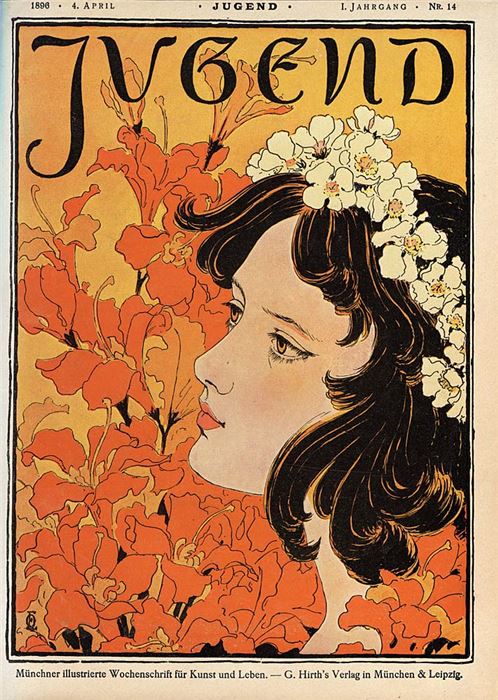
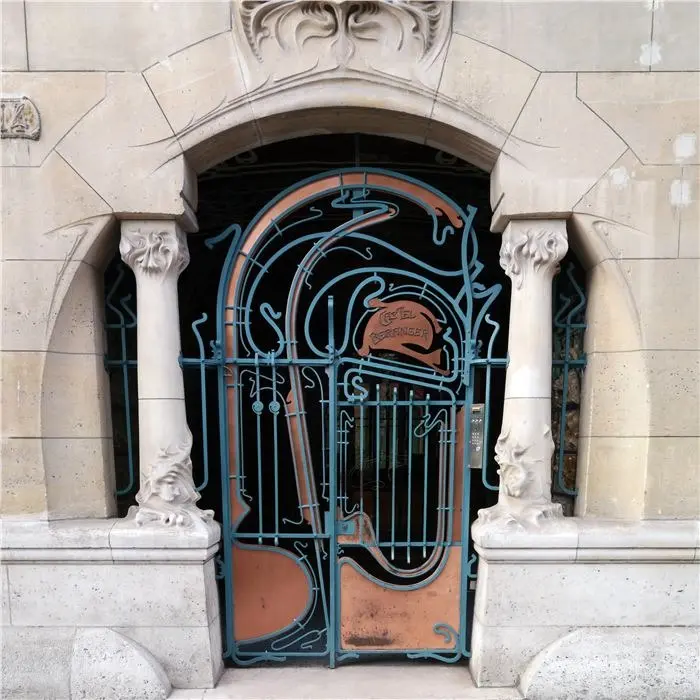
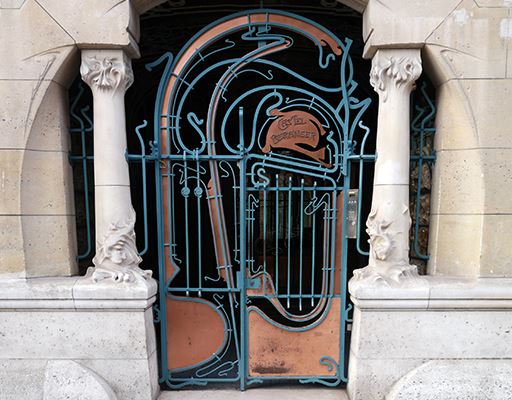
As the political landscape began to shift and the inevitable collapse of the aristocracy loomed, other movements gained traction. Art Nouveau sprouted across Europe like a series of wildflowers at the turn of the 20th century. Eschewing the traditional, rigid distinctions between "high" and "low" art, the movement took the stolid asymmetry of Victorian design and contorted it into a style defined by ever-flowing lines, organic natural forms, and complex, fluid compositions. In Germany, it was known as Jugendstil, or "Youth Style." It was bright, hopeful, and unabashedly young—a deliberate reaction against the growing industrial machine that threatened to dominate and flatten individual expression.
Art Deco and the Modern Disconnect
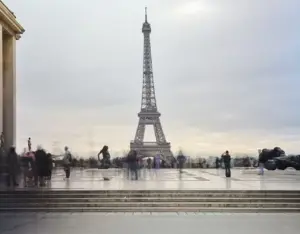
After the devastation of World War I, it became significantly harder to maintain that youthful, organic hope. The generation that had endured the trenches, and the women who had supported them, saw the world through a harder, more cynical lens. Beginning in Paris in 1925, the Art Deco movement changed tactics. It did not retreat from the industrial machine; instead, it attempted to transpose those pre-war hopes onto the machinery itself. With bold geometry, sharp, calculated symmetry, and a heavy emphasis on sleek, modern materials, Art Deco co-opted ancient styles into a new visual language. In this language, technology was not a monster to be feared, but a force that could sweep humanity ever upward toward a modern heaven.

However, that optimism was fragile. Since the end of World War II, architectural styles have stayed closer to the earth, even as our buildings have extended farther into the sky than ever before. Corporate modernism, expressionism, and brutalism have often resulted in buildings that feel sterile, cold, or even actively hostile to human use. As we have wrestled with the long-term aftermath of the 20th century’s greatest tragedies, it is as if our collective capacity for creativity—the very thing that should make our spaces welcoming and humane—has turned against us. We see the fallout of this decline today in our profound social disconnection, in our lack of shared aspirations outside of the mere accumulation of goods, and in our increasing radicalization during a time when we are, technologically speaking, closer than we have ever been.
If we wish to heal our communities, we must rediscover the lost art of decoration—not merely as an exercise in domestic interior design, but as a public necessity in our cities and towns. Quality decoration is a sign of excellent craftsmanship and, more importantly, a sign of pride in one’s work. It sets an example for the community, signaling that the structure was built in service of the people who use it. Paradoxically, while decoration may seem like the most extraneous element of design, it may in fact be the most like life itself. A functional space provides convenience, but a beautiful one provides a gift that continues to give.