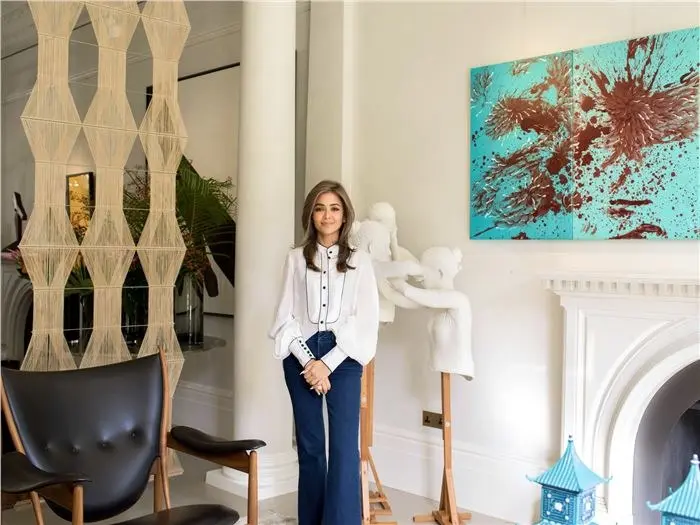
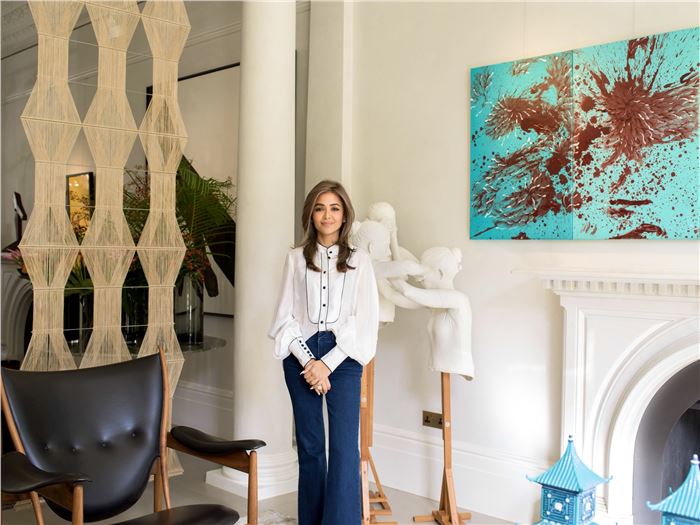
In the high-velocity world of international art collecting, where the clamor of auction houses and the race for the next "big thing" often dictate the rhythm of the market, Aarti Lohia stands apart. A London-based collector and philanthropist, whose discerning eye has earned her a place on the prestigious ARTnews Top 200 list, approaches the cultural landscape not with the frantic energy of a speculator, but with the measured, deliberate focus of a strategist. For Lohia, the true value of philanthropy lies in its capacity for long-term impact rather than immediate gratification.
Through the SP Lohia Foundation, her work has quietly but effectively spanned the disparate yet interconnected worlds of art, chess, and film. Her recent efforts include a major commitment to supporting the acclaimed artist Amar Kanwar, whose solo exhibition at Serpentine North—running from September 23, 2026, through January 31, 2027—has become a focal point for those interested in the intersection of contemporary practice and social conscience. In a wide-ranging conversation with Daria Borisova, Lohia explores the philosophies of patience, strategic decision-making, and the profound responsibility that comes with being a patron of the arts in a fragmented age.
The Converging Paths of Culture, Chess, and Film
When asked how such seemingly distinct disciplines as fine art, competitive chess, and documentary filmmaking coalesced into a single philanthropic mission, Lohia points to the evolution of her own life and interests. "They came into my life in different decades," she explains. Chess was the earliest pillar, becoming a deeply personal family pursuit through her son, Sohum, who discovered the game at age five. Her involvement with the art world preceded her relocation to the UK, while her interest in film is a more recent development—a hobby that blossomed into a formal pursuit driven by a desire to champion authentic storytelling.
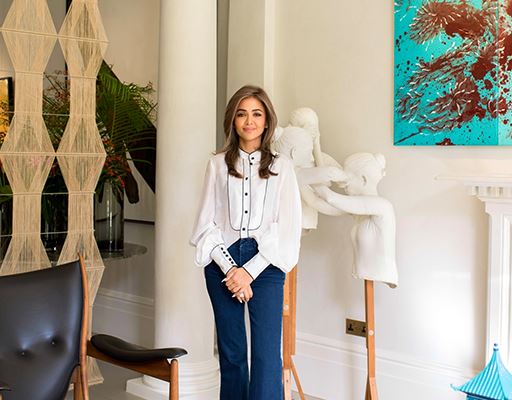
Despite their differences in medium, Lohia sees a singular, unifying thread: the ability to force a clearer perspective on the human condition. "An artist can change how we look at the world. Chess can give a child confidence in their own thinking. A film can bring us close to a life we might otherwise know only through a headline," she notes. For Lohia, these three fields serve as catalysts for deep attention, demanding that we confront the consequences of our decisions and re-examine our entrenched beliefs. This commitment to challenging the "easy version of the truth" is a cornerstone of her philanthropic identity.
Defining the Foundation’s Mission: Integrity and Impact
The SP Lohia Foundation operates with a clarity of purpose that distinguishes it from institutional behemoths. As a family foundation, it serves as an extension of the values held by the Lohia family. When evaluating potential projects, Lohia’s criteria are centered on the human element. "I look at the people behind a project or the leadership of an institution," she says. "Are they leaders with integrity? Are they deeply committed to the work, and do they understand the people they hope to serve?"
For Lohia, the vetting process is both rigorous and personal. She is less concerned with the prestige of an institution and more focused on the tangible outcomes of her support. She seeks an honest, transparent relationship with those on the ground, favoring a willingness to take risks on bold ideas over the safety of vague, corporate-style promises. This approach requires a level of engagement that transcends the mere act of financial contribution; it demands a partnership based on mutual trust and a shared understanding of what success actually looks like.
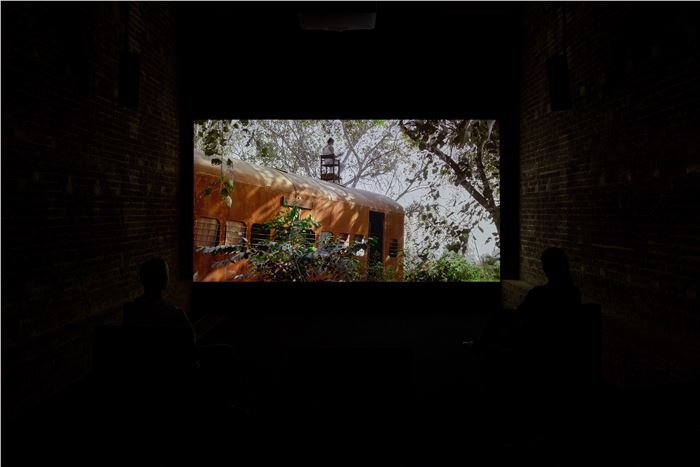
Championing Amar Kanwar at the Serpentine
The decision to support Amar Kanwar’s solo exhibition at Serpentine North was not a sudden impulse, but the result of years of following the artist’s trajectory. Kanwar’s work is noted for its meditative depth and its refusal to offer simple, digestible narratives. By engaging with difficult histories and complex human experiences, his practice creates a space for the kind of reflection that Lohia finds increasingly rare.
"I felt it mattered that an artist like Amar, from South Asia, could be encountered in the heart of London, on the scale and with the attention his practice deserves," Lohia explains. Supporting this exhibition is, for her, an investment in the conversations that such work is capable of sparking. It represents a commitment to providing a platform for voices that challenge, rather than merely decorate, the contemporary cultural dialogue.
The Value of Patience in Artistic Process
In an era of instant output, supporting an artist like Kanwar—whose projects often take years to gestate—is a deliberate act of resistance. Lohia views this patience as a necessary condition for meaningful work. "It means trusting an artist’s process without demanding that everything be explained in advance," she says. Work that is allowed the time to evolve contains layers of doubt, research, and transformation that would be stripped away by a more rigid timetable.
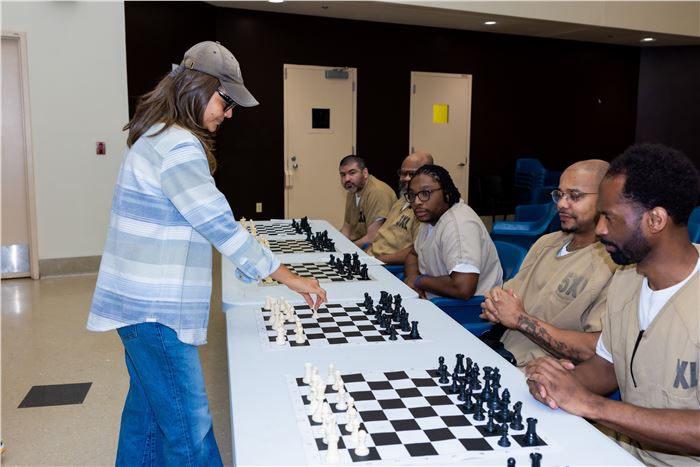
Drawing a parallel to her experience as a "chess parent," Lohia emphasizes that giftedness alone is insufficient; the capacity for sustained, patient effort is where true excellence is forged. As a patron, she believes it is her duty to protect that time for artists. The reward for such patience is not found in the opening night gala, but in the way the work continues to reveal itself to audiences long after the exhibition doors have closed.
Chess as a Tool for Empowerment
The SHIKHAR initiative, a chess program recently launched in six schools in Himachal Pradesh, India, serves as a testament to the transformative power of the game. Having witnessed the benefits of chess on her son’s cognitive and personal development, Lohia wanted to provide similar opportunities to children in regions where such resources are scarce.
The program is starting as a pilot, reflecting Lohia’s disciplined approach to scaling social impact. Her goal is not just to produce competitive chess players, but to cultivate independent thinkers who have the confidence to live with their decisions and the resilience to learn from their mistakes. By specifically focusing on schools where girls may not always be encouraged to participate, the initiative aims to level the playing field, ensuring that the confidence gained through the game is accessible to all.
Strategy and the Philanthropic Move
Chess has fundamentally influenced Lohia’s approach to philanthropy. She draws a sharp distinction between a "good position" and a "good result." In both the game and in charitable giving, a proposal may appear excellent on paper, but its ultimate value depends on the execution and the agility to adapt when circumstances shift.
This mindset also informs her definition of patience. She is careful not to conflate patience with mere delay or inaction. "Sometimes you need to give a project time," she explains. "Sometimes you need to recognize that an approach is not working and make a different move." It is this strategic flexibility that defines her leadership at the Foundation.
Redefining the Role of the Modern Patron
Reflecting on the current state of the art world, Lohia identifies a concerning trend: the tendency for the social ecosystem surrounding art to become more prominent than the work itself. She observes that while there is no shortage of brilliant work being created, the distribution of attention and resources remains profoundly uneven. Support is often funneled toward the already visible, leaving artists whose work requires deep research or unconventional methods to struggle in the shadows.
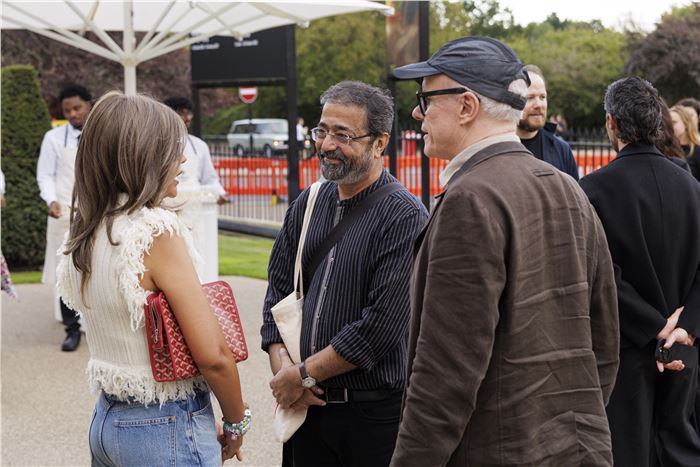
Lohia challenges her peers to be more curious about the systems of patronage they participate in. "Writing a cheque is only one part of patronage," she asserts. True support involves listening, making key introductions, and remaining engaged even when a project becomes difficult. She finds hope in a new generation of artists and patrons who are moving between disciplines with greater fluidity and are more interested in understanding the core of the work than in performative public recognition.
Looking twenty years into the future, Lohia’s vision for the Foundation is one of continuity and care. She hopes to be remembered for supporting people and ideas that have outgrown their initial scope, whether that be a student whose life was changed by a chess lesson or an artist whose career was sustained through a critical period of development. "I hope it remains open to new ideas, curious enough to change its mind, disciplined enough to learn from its mistakes and willing to commit to work whose full value may take years to become clear," she says. For Aarti Lohia, the long game is the only game worth playing.