The global art market and the museum sector have faced a whirlwind of activity over the past seven days, marked by significant developments in provenance research, governmental intervention in cultural heritage, and internal institutional crises. From the multi-million dollar auction of a restituted Kandinsky to the sudden cancellation of a major fashion retrospective at the Metropolitan Museum of Art, the following report details the most pressing headlines shaping the art world this week.
A Masterpiece Reclaimed: Kandinsky’s "The Colorful Life" Headed to Auction
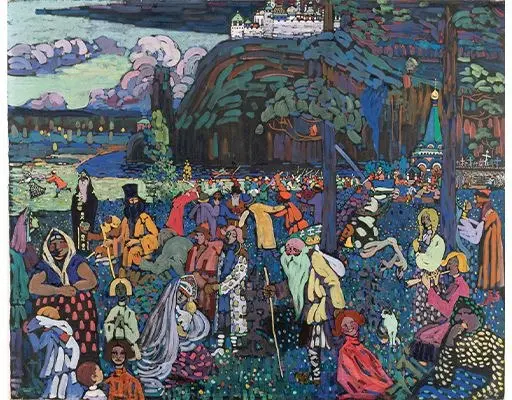
One of the most anticipated events in the upcoming autumn auction season is the sale of Wassily Kandinsky’s 1907 masterpiece, The Colorful Life (Das bunte Leben). The painting, a vibrant and pivotal work from the artist’s early period, has recently been returned to the heirs of its original Jewish owners by a German museum. This act of restitution marks the conclusion of a complex legal and historical journey for the work, which had been caught in the crosshairs of Nazi-era art looting.
Christie’s, the auction house tasked with handling the sale, has expressed significant confidence in the painting’s market appeal. Estimates suggest that The Colorful Life will draw bids exceeding $30 million when it hits the block in October. The painting is widely considered one of the most important works by the Russian abstract pioneer to appear on the market in recent memory. Its return to the market is a testament to the ongoing, rigorous efforts by institutions and families alike to rectify the injustices of the mid-20th century, ensuring that provenance remains a central pillar of the art trade.
UK Government Intervenes in Rembrandt Export
While restitution efforts seek to return art to its rightful owners, the United Kingdom continues to assert its authority over cultural heritage through the use of temporary export bars. This week, the UK government placed a freeze on the export of a Rembrandt painting valued at £71 million (approximately $97 million). The move is designed to prevent the Dutch Golden Age masterpiece from leaving British shores, at least temporarily, while domestic institutions are given a chance to raise the necessary funds to acquire the work for the nation.
The export bar serves as a "stay of execution" for the painting, highlighting the delicate balance between the rights of private owners to sell their assets and the desire of nations to preserve significant art historical treasures within public collections. The high valuation of the work underscores the continued fervor for blue-chip Old Masters, even as global economic conditions fluctuate.
Fashion and Controversy: The Met Cancels Galliano Exhibition
In a striking development within the fashion and museum sectors, the Metropolitan Museum of Art has announced the cancellation of an upcoming major exhibition dedicated to the work of designer John Galliano. The decision followed a wave of public backlash and internal deliberation regarding the designer’s history.
Galliano, once a titan of the fashion world, faced significant professional fallout following a 2011 conviction for making antisemitic remarks. Despite his attempts at professional rehabilitation and his recent tenure as creative director at Maison Margiela, the prospect of an institutional retrospective at the Met proved too contentious. The museum’s decision to pull the show reflects the increasingly complex pressures faced by cultural institutions today, where curators must navigate the tension between celebrating artistic influence and acknowledging the personal conduct of the figures behind the work.
Shifts in Museum Leadership and Collections
The institutional landscape has also seen notable upheaval, ranging from the removal of controversial sculptures to leadership transitions. At the Kennedy Center, a prominent "Blue" sculpture—previously gifted by an artist—has been removed from the campus. The artwork, which had been a fixture since 2019, was slated for elimination following the takeover of the center by the Trump administration, highlighting how political shifts can directly influence the aesthetic and curatorial environment of major cultural venues.
Conversely, the New Orleans Museum of Art has received a major boost to its collection with the donation of Isamu Noguchi’s monumental sculpture, Mississippi Fountain. Originally commissioned for an office tower near the river through a collaboration with the renowned architect Gordon Bunshaft, the sculpture is a significant addition to the museum’s holdings. Plans are currently underway to install the piece at the museum’s Beaux Arts entrance this autumn, providing a permanent home for a work that bridges the gap between modernist sculpture and urban architectural history.
In Stockholm, the National Museum has bolstered its historical collection through the acquisition of a rare altarpiece by the Italian Mannerist painter Lavinia Fontana. As one of the most successful female painters of the 16th century, Fontana’s work is increasingly sought after as institutions look to rectify historical imbalances in their collections. The acquisition is a significant win for the museum, further elevating the profile of an artist whose contributions to the Mannerist movement have historically been overlooked.
However, not all institutional news has been positive. In Australia, Lisa Havilah has stepped aside as the chief executive of Powerhouse Parramatta. Her departure comes amidst new allegations and follows reports that investigations into the museum’s governance and procurement processes are being finalized. The situation has cast a shadow over the much-anticipated opening of the new Western Sydney cultural institution, leaving observers waiting to see how the leadership transition will affect the museum’s future operations.
Recognition and Innovation: Awards in the Art Sector
Despite the various controversies and administrative challenges, the art world continues to celebrate innovation and artistic achievement. The Serpentine in London has announced the recipients of its inaugural fellowship, a program specifically designed to explore the intersection of art and emerging technologies. Four artists were awarded £10,000 grants each, with the program focusing on how artificial intelligence is currently reshaping cultural production, the role of the artist, and the function of the institution itself. This initiative reflects a broader trend within the art world to engage critically with the rapid integration of machine learning and digital tools into the creative process.
Meanwhile, the Japanese composer and visual artist Ryoji Ikeda has been named the recipient of the prestigious Nam June Paik Prize. Celebrated for his immersive, data-driven installations and minimalist soundscapes, Ikeda was described by the jury as a "visionary" whose work challenges the boundaries of sensory perception. The prize, which includes a £27,000 award, will be formally presented to Ikeda at a ceremony scheduled for September 8th. The recognition of Ikeda’s work underscores the continued importance of interdisciplinary practices that combine sound, technology, and visual art, cementing his place as a leading figure in contemporary global art.
As the industry moves forward, these events collectively highlight the volatile, evolving nature of the art world. Whether through the ethical complexities of provenance, the shifting political priorities of public spaces, or the ongoing struggle for institutional transparency, the events of the past week serve as a reminder that art is never produced or displayed in a vacuum. It remains deeply embedded in the social, economic, and political currents of the time.