
For homeowners, gardeners, and builders embarking on outdoor projects, choosing the right timber is a foundational decision that impacts everything from aesthetic appeal to structural longevity. Over the past two decades, however, the North American lumber market has witnessed a quiet shift with the arrival of imported wood products from Asia. Sold under various monikers such as "China Fir," "Chinese Cedar," or simply "Cedar," these imported softwoods have increasingly found their way into residential backyards, garden sheds, and landscaping kits.
While these imported alternatives often mimic the look of traditional North American cedar at first glance, they differ significantly in their botanical classification, natural durability, and long-term performance under outdoor conditions. This divergence has sparked growing confusion among everyday consumers and DIY builders who believe they are investing in genuine cedar, only to discover later that the material behaves quite differently when exposed to the elements. As global supply chains continue to evolve, the distinction between true native cedars and their overseas counterparts has become a central topic of discussion within the building and construction community.
Understanding the Roots: What Is Chinese Fir?
At the center of this market shift is Chinese Fir, scientifically known as Cunninghamia lanceolata. Native to China and various regions of Southeast Asia, this fast-growing softwood species has been utilized locally for generations. Around the mid-2000s, commercial shipments of Chinese Fir began making their way into North America in substantial quantities, frequently utilized by manufacturers of outdoor furniture, play structures, and prefabricated garden kits.
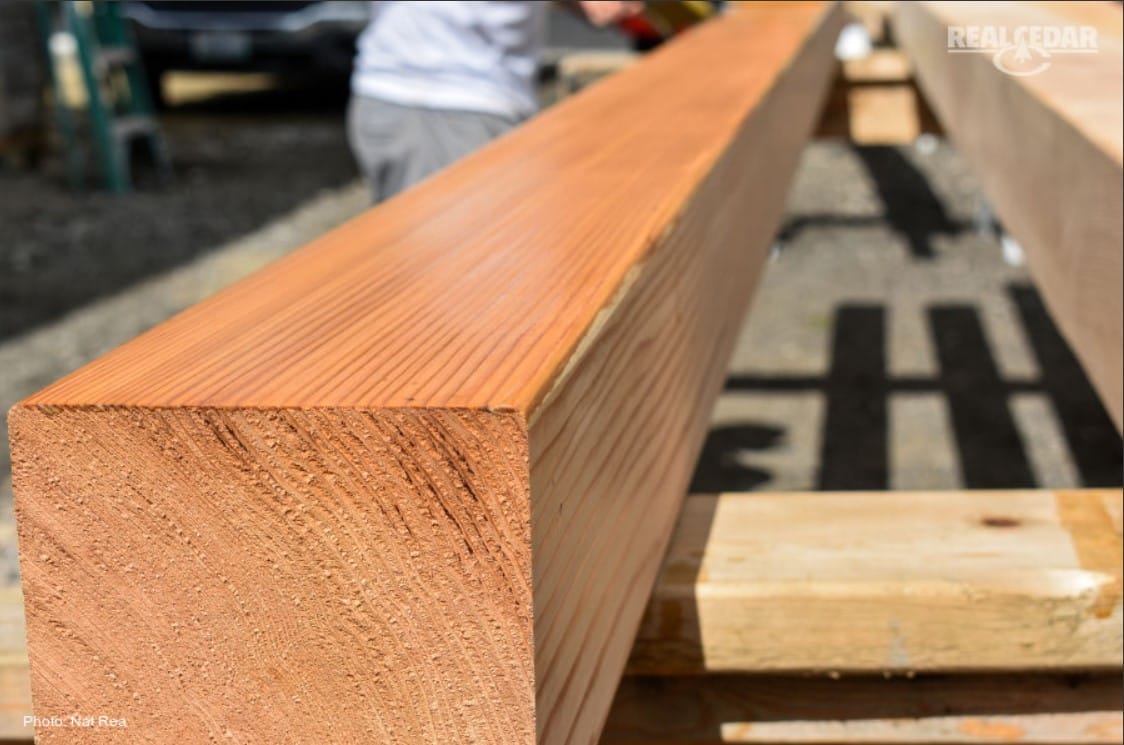
To make the imported timber more attractive to a North American consumer base already familiar with the stellar reputation of native cedars, some international suppliers and domestic distributors began marketing the species under alternative names. Terms like "China Fir," "Chinese Cedar," or broad labels reading simply "Cedar" began appearing on retail packaging and product descriptions.
This marketing terminology inadvertently fostered a widespread misconception that Chinese Fir shares a direct botanical or performance relationship with Western Red Cedar (Thuja plicata). In reality, Chinese Fir belongs to a completely different botanical family and does not inherit the same natural defenses, density, or weathering characteristics that have made North American cedar a gold standard for outdoor structures.
The Evolution of Import Trends and Labeling Practices
The trajectory of imported softwoods in the North American market can be traced across distinct phases over the last twenty years. Between 2005 and 2015, the influx of bulk shipments of China Fir introduced a new tier of affordable lumber to big-box retailers and specialty distributors. Initially, these products were often transparently labeled as China Fir, allowing informed buyers to weigh the cost benefits against potential trade-offs in durability. Over time, however, manufacturers and resellers increasingly leaned toward broader descriptors, adopting the term "Chinese Cedar" to bridge the gap in consumer recognition.
By the early 2020s, a new trend emerged within retail packaging: many imported wood products began shedding their geographic qualifiers altogether. Items were increasingly sold simply as "cedar," frequently omitting critical details such as the specific wood species, the country of origin, or standard lumber identification markings.
This lack of explicit labeling has created a challenging landscape for buyers. When a product lacks clear species identification, consumers are left unable to make fully informed purchasing decisions. For indoor applications or short-term decorative uses, the distinction may carry little consequence. However, when the intended application involves permanent outdoor exposure—where moisture, temperature fluctuations, and pest resistance dictate the lifespan of the build—the omission of species data can lead to premature wear and unexpected maintenance challenges.
A Closer Look at Species Characteristics and Performance
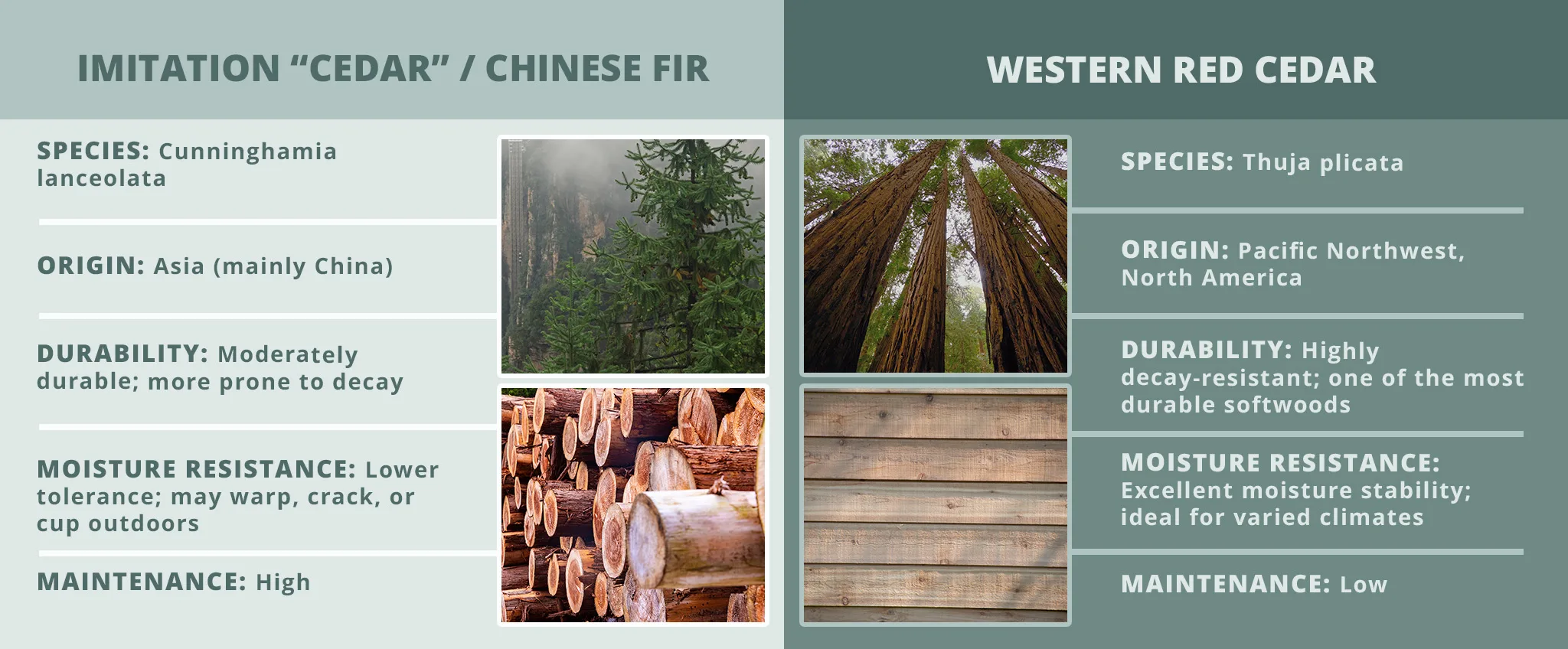
To understand why labeling and identification matter, industry experts frequently point to the fundamental biological and physical differences between Chinese Fir and authentic Western Red Cedar. While both are softwoods used extensively in construction and landscaping, their natural properties diverge sharply.

Western Red Cedar, harvested from the sustainably managed forests of the Pacific Northwest, has centuries of documented use in North American architecture. Botanically classified as Thuja plicata, the tree produces wood that is naturally rich in chemical extractives, specifically thujaplicins and other natural oils. These compounds render the heartwood exceptionally resistant to decay, rot, and insect infestations without the immediate need for heavy chemical treatments. Furthermore, Western Red Cedar possesses a low density and a fine, straight grain that grants it remarkable dimensional stability. It resists warping, cracking, and cupping even when subjected to wide swings in humidity and temperature, making it a premier choice for exposed applications such as siding, decking, pergolas, and fencing.
In contrast, Chinese Fir (Cunninghamia lanceolata) originates from a different ecological environment and exhibits moderate durability under controlled conditions. While it can serve adequately in sheltered areas or interior spaces, it generally displays a lower tolerance for continuous moisture exposure. Left unprotected in a damp outdoor climate, Chinese Fir is more prone to absorbing water, which can lead to swelling, warping, cracking, and accelerated decay compared to its North American counterpart. It lacks the same robust concentration of natural insect-repelling oils, meaning that outdoor structures built from Chinese Fir typically demand more frequent applications of sealants, stains, and protective coatings to maintain their structural integrity over time.
Aesthetically and structurally, the two woods also present distinct profiles. Western Red Cedar typically features a warm reddish-brown coloration that gracefully ages to a silvery patina when exposed to sunlight, coupled with a tight, uniform grain. Chinese Fir tends to display a paler white to light-yellow hue with a coarser grain structure.
The Broader Implications for Buyers and Builders
The ongoing discussion surrounding timber labeling touches on larger questions of consumer protection, supply chain transparency, and sustainable forestry. Proponents of clear labeling argue that accurate species identification is essential for maintaining trust in the marketplace. When consumers purchase outdoor products under the assumption that they are getting the legendary weather resistance of native cedar, they may inadvertently take on a maintenance burden they did not anticipate.
At the same time, the availability of diverse wood species serves a practical economic function. Chinese Fir remains a viable and cost-effective material for specific applications, particularly where budget constraints are paramount and the wood will not face harsh weathering, or where items are destined for indoor use or fully sheltered environments. The challenge for the market does not lie in the existence of these imported softwoods, but rather in how they are represented to the end user.
As builders and homeowners continue to navigate their options for outdoor living projects, the emphasis remains on looking beyond generic marketing terms. By verifying the exact wood species and understanding the inherent performance traits of materials like Western Red Cedar versus imported alternatives, buyers can better align their material choices with the demands of their specific projects, ensuring that their outdoor investments stand the test of time.