The contemporary art market in 2026 is undergoing a profound structural shift. As the novelty of purely digital, ephemeral, and speculative art assets begins to wane, a definitive trend has emerged among high-net-worth buyers and institutional acquisitions committees: a prioritized demand for high-tactility surfaces, organic assemblage, and rigorous physical handcraft. This movement away from the "digital-first" aesthetic represents a desire for art that possesses a tangible, grounded presence—a physical hedge against the increasingly frictionless, screen-based nature of modern life.
Across primary galleries and secondary market channels, this return to materiality is more than a fleeting stylistic preference; it is a recalibration of collector behavior. Buyers are increasingly seeking out works that demand a physical engagement, favoring labor-intensive practices that emphasize the "human touch." From hair embroidery to lacquered composites and relief-sculpted oils, the contemporary art landscape is witnessing a resurgence of the artisanal, challenging the hegemony of digital flattening and mass-produced imagery.
This aesthetic direction has been validated by a series of major institutional retrospectives and high-profile gallery acquisitions across North America, Europe, and Latin America. Market data suggests that sell-through rates for material-focused practices remain exceptionally robust, even as broader economic indicators fluctuate. Pricing dynamics for both established historical masters—whose work anticipated these material concerns—and mid-career innovators demonstrate consistent, long-term strength. By bridging the gap between non-traditional industrial textiles, organic forms, dynamic optical abstraction, and subverted artisanal methodologies, the following featured works offer collectors compelling, high-conviction entry points across diverse price segments.
Anne Wilson: The Ritual of Repair
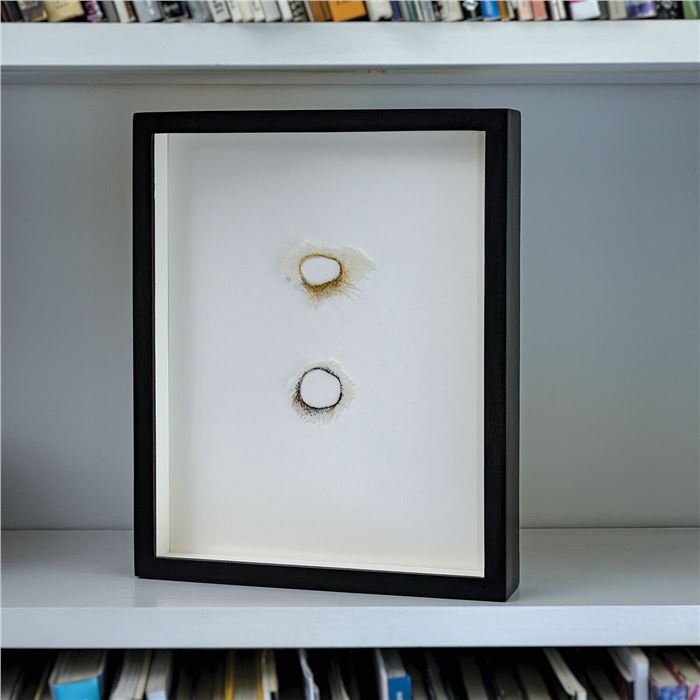
American artist Anne Wilson has long commanded a formidable reputation within the sphere of conceptual fiber arts. Her work, which is held in the permanent collections of prestigious institutions such as The Metropolitan Museum of Art, the Art Institute of Chicago, and the Museum of Contemporary Art Chicago, serves as a cornerstone for those interested in the intersection of domestic labor and high art. Represented by browngrotta arts, Wilson’s practice is a rigorous investigation into the themes of physical fragility, the passage of time, and the ritualistic nature of manual craft.
Central to her body of work is the transformative power of the "found" object. Her piece, Areas of Disrepair (1997), serves as a poignant example of this philosophy. By utilizing vintage cloth as a foundation, Wilson integrates delicate strands of human hair and meticulous thread embroidery to interrogate the shifting boundaries between bodily identity and structural decay. At a price point of $4,000, Areas of Disrepair offers collectors a unique opportunity to acquire a piece that carries the weight of significant museum prestige. Given the ongoing institutional re-evaluation of post-minimalist fiber art, Wilson’s primary market inventory is increasingly viewed as an essential acquisition for those looking to build a collection rooted in historical and conceptual depth.
Sigalit Landau: Organic Assemblage and Survival
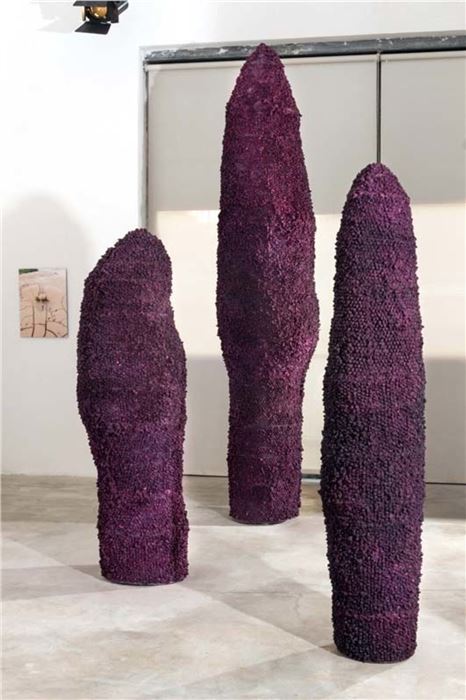
The Israeli sculptor and video artist Sigalit Landau, represented by Gallery Har-El, occupies a central position in the international contemporary art scene. Her work is renowned for its site-specific ambition, particularly her long-standing exploration of Dead Sea salt-crystallization projects. Having represented Israel at the Venice Biennale in 2011 and exhibited at global powerhouses including the Centre Pompidou, MoMA, and the Brooklyn Museum, Landau’s market presence is defined by both institutional legitimacy and artistic daring.
Her featured sculpture, Zbib El Ard (2015), is a striking manifestation of her interest in the natural world. Drawing its title and scarlet-hued form from the rare, parasitic Mediterranean plant Cynomorium coccineum, the work is a feat of material transformation. Constructed from dark purple papier-mâché layered over a complex chicken-wire frame, the piece explores profound themes of survival, landscape, and the resilience of organic forms. With its variable-dimension installation, Zbib El Ard (offered between €12,000 and €15,000, or approximately $13,900 to $17,400 USD) provides a centerpiece opportunity for collectors. It serves as a prime example of how contemporary sculpture can subvert traditional materials to create something deeply evocative and structurally significant.
Karolina Wysocka: Industrial Textile Innovation
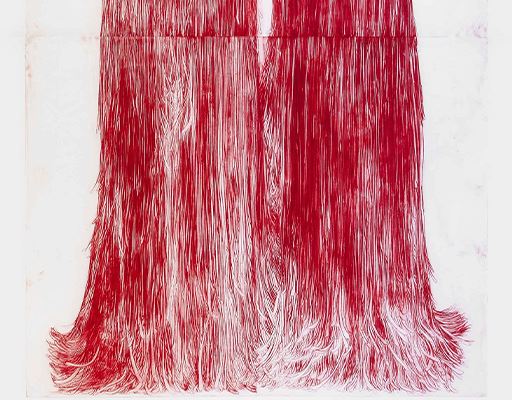
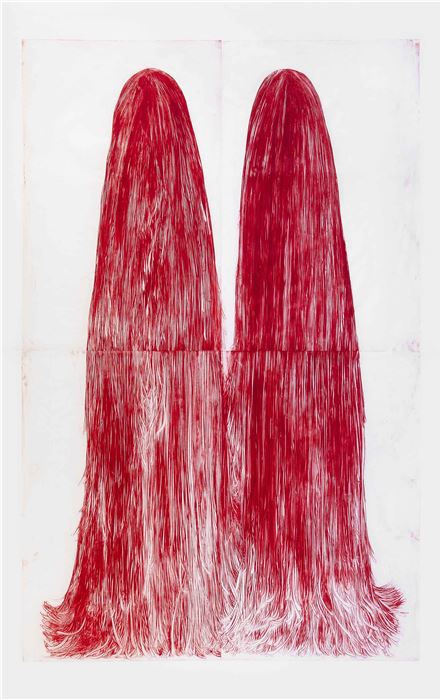
Polish artist Karolina Wysocka exemplifies the current trend of fusing fine art printmaking with non-traditional industrial materials. Represented by HOS Gallery, Wysocka’s work pushes the boundaries of what is considered a "print," effectively moving the medium off the paper and into the realm of architectural textile. Her monumental drypoint work, Othering (2023), serves as a case study for this material evolution.
By executing traditional drypoint techniques directly onto industrial non-woven fabrics, Wysocka creates expansive, ethereal abstract sheets that challenge the viewer’s perception of touch and vulnerability. Her focus on industrial materiality—the very fabrics that often constitute the hidden infrastructure of our world—positions her work firmly within the current institutional movement toward examining the intersection of social norms and physical matter. For primary market collectors, Wysocka represents an early-stage opportunity to acquire a rising European talent whose work is already gaining traction for its conceptual rigor and its ability to reconcile the industrial with the deeply personal.
Brooke Major: Sculpting with Paint
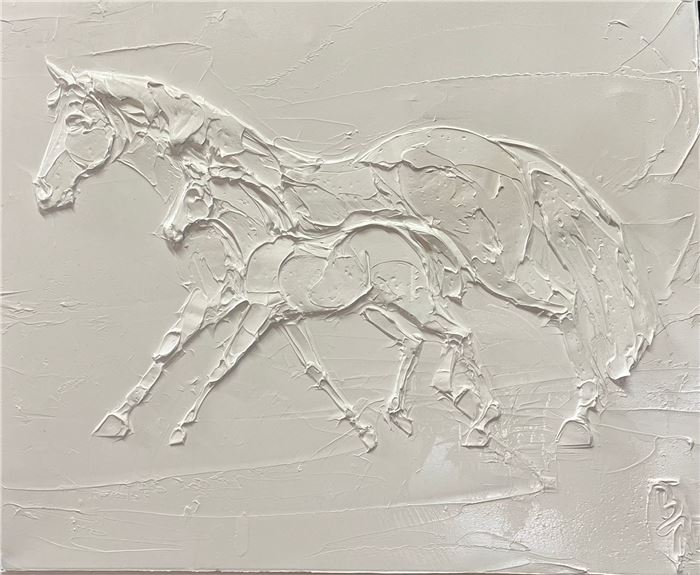
American painter Brooke Major, represented by Art & Horse Racing Gallery, brings a unique, sculptural quality to the canvas. Her work is characterized by a tactile aesthetic that relies heavily on the physical accumulation of oil paint, resulting in compositions that function as much as low-relief sculptures as they do traditional paintings.
Her featured piece, Vega and Prince (2026), priced at £3,200 ($4,000), demonstrates her signature technique: the application of dense, relief-like layers of white and beige oil paint using palette knives. This monochrome impasto creates a dramatic play of light and shadow, transforming classic equestrian subject matter into a study of form and texture. Major’s approach appeals to a specific subset of the collector market—those who seek the richness of traditional figurative subjects but demand the intellectual and visual stimulation of contemporary textural abstraction. The work is a testament to the fact that even within established genres, a shift in material application can reinvigorate the viewing experience.
Alejandro Otero: The Kinetic Legacy
While the current market shows a preference for new materiality, it simultaneously acknowledges the historical masters who laid the groundwork for these developments. Venezuelan artist Alejandro Otero (1921–1990) remains a towering figure of Latin American Kinetic Art and geometric abstraction. His influence is undisputed, with his works held in the permanent collections of the Museum of Modern Art in New York and the Museum of Fine Arts, Houston.
Represented by MLA Gallery, Otero’s work continues to be a focal point for those interested in the intersection of spatial rhythm and visual perception. His Serigraph in Black and Yellow (1980), available for $2,700, provides a rare, accessible entry point into the work of a modernist master. The sharp geometric bands of yellow and black create a dynamic optical vibration that feels remarkably contemporary, even decades after its creation. Otero’s work serves as a reminder that the current interest in "tactile" and "vibrant" surfaces has a long lineage, and his graphic works represent a high-conviction value for collectors seeking to anchor their holdings with historical Latin American significance.
Olivier Polmanss: The Elegance of Fracture
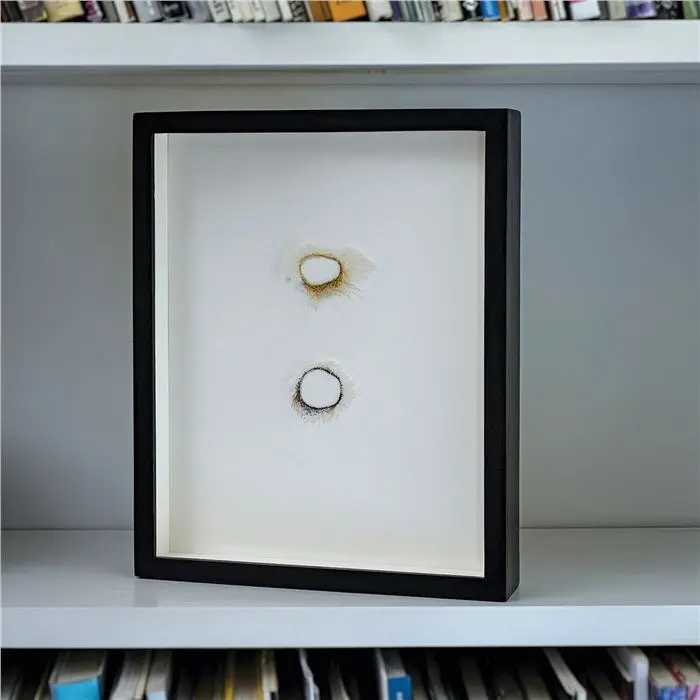
French artist Olivier Polmanss, represented by Art Gallery PDC, explores the philosophical dimensions of structure and repair. His work, which frequently draws upon traditional Japanese craft techniques such as Kintsugi, highlights the beauty inherent in the "damaged" or "repaired" state.
In his piece Kintsugi K01, priced at €2,800 ($3,250), Polmanss intentionally fractures a sleek composite panel before mending the fault lines with gold leaf and metallic lacquer. By choosing to highlight, rather than conceal, the structural damage, he creates a work that serves as a meditation on resilience and elegance. As the contemporary market continues to favor works that tell a story of labor and transformation, Polmanss’s growing collector base suggests a steady momentum in the European art scene, particularly for artists who can successfully bridge the gap between ancient philosophy and modern material practice.
The Outlook for 2026 and Beyond
The contemporary art market’s pivot toward tactile surfaces, organic assemblage, and material integrity is indicative of a broader, more sustainable evolution in collector preferences. As both private and institutional collections recalibrate their focus toward physical handcraft and structural depth, the market for these works is likely to see sustained interest. Whether through the lens of historical masters like Otero or contemporary innovators like Wilson, Landau, and Wysocka, the emphasis on the "real" and the "tangible" is creating a distinct cultural moment.
For active collectors, these developments provide a unique opportunity to engage with art that is not only visually compelling but also structurally significant. Those interested in exploring these works, requesting condition reports, or obtaining further pricing details are encouraged to reach out to the representing partner galleries through MutualArt. As the market continues to prioritize works that possess a physical presence, these artists remain at the forefront of a shifting, and increasingly material, landscape.