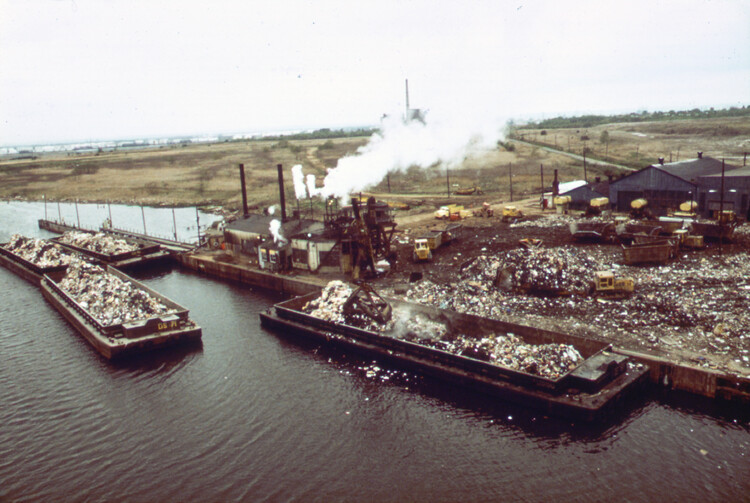
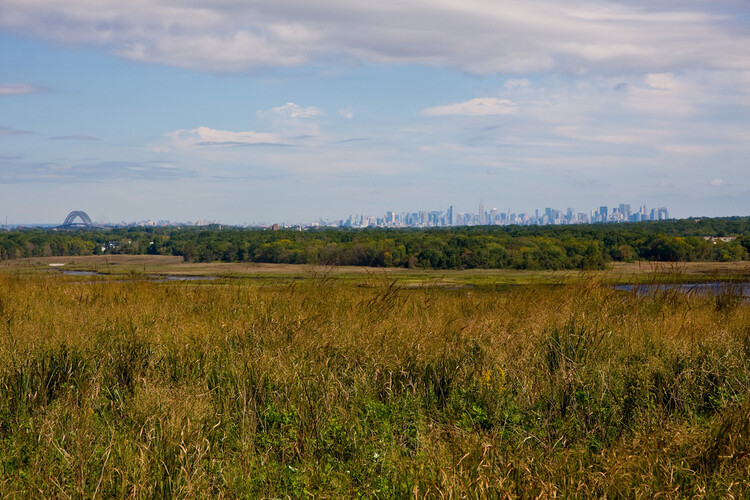
In 1948, urban planner Robert Moses established the Fresh Kills Landfill on the western shore of Staten Island. Chosen for its remote marshland and inexpensive land value, the site was originally intended to be a temporary solution for New York City’s mounting refuse. However, by 1955, it had rapidly expanded to become the largest landfill in the world, receiving up to 29,000 tons of refuse per day at its 1991 peak. By 2001, after more than half a century of continuous operation, Fresh Kills covered a staggering 2,200 acres—roughly three times the area of Central Park—and was infamously visible from space. When operations first began, Moses did not necessarily set out to design a conventional dump, but rather to construct a colossal new landform featuring four artificial hills rising up to sixty meters above sea level, built entirely from the accumulated residue of millions of daily lives.
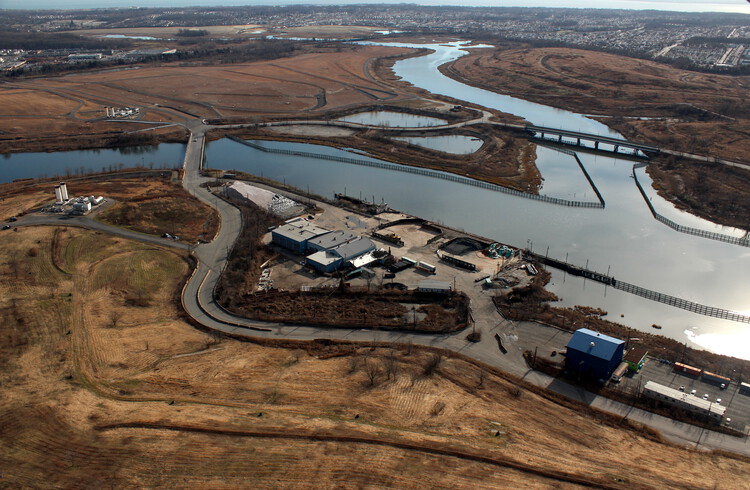
That monumental landform is now slowly being transformed into a public park. James Corner Field Operations won an international design competition launched by the city in 2001, producing a master plan titled Lifescape that spans a projected thirty-year completion timeline. The landfill’s four massive mounds are currently being capped, planted, and gradually opened for public use. Methane gas generated by the decomposing waste underneath is successfully captured and fed into local energy systems, while surrounding wetlands are restored to health around these engineered hills. This long-term project serves as both a feat of ecological engineering and an act of institutional memory management, slowly reshaping New York’s most visible reminder of its massive consumption into a landscape that appears as though it were always meant to be natural parkland.
Globally, humanity generates roughly two billion tonnes of municipal solid waste per year, a figure that projections indicate will climb to three and a half billion tonnes by 2050. A significant portion of this global volume inevitably ends up compressed, layered, and graded directly into the earth at the peripheries of cities. In this sense, the sanitary landfill stands as one of the most common acts of territorial production in the modern world—an engineered, deliberate landform constructed from the discarded remnants of daily existence. While architecture has traditionally dedicated immense intellectual energy to studying what cities build upward into the sky, it is becoming increasingly clear that the profession must also critically examine what cities construct beneath the surface of the earth.
The Ground
A modern landfill represents one of the very few construction projects where the structural material and the structure itself are fundamentally the same thing. The engineering behind a contemporary sanitary landfill operates entirely from the bottom up. It begins with a sophisticated liner system composed of compacted clay and high-density polyethylene, which prevents leachate—the hazardous liquid produced by decomposing waste—from seeping downward and contaminating regional groundwater supplies. Above this, an intricate network of pipes collects landfill gas, primarily methane, enabling energy recovery or controlled burning, while comprehensive drainage systems manage stormwater across carefully engineered slopes designed to shed water rather than absorb it.
Yet, this sophisticated layer of engineering often conceals the fundamental territorial act that landfilling represents. A landfill is far more than a mere destination for unwanted materials; it is an explicit political decision concerning urban planning and the evaluation of which parcels of land are deemed worthy of hosting waste. Historically, this geopolitical calculus has consistently directed waste toward land that is inexpensive, geographically peripheral, and inhabited by populations lacking the political agency to refuse or contest the imposition.
At Fresh Kills, managing the environmental fallout required a 525-acre landfill gas collection system, geocomposite layers, geomembranes, drainage nets, and protective fill, all because Robert Moses designated the expendable marshlands of Staten Island for the task. In stark contrast, across much of the Global South—where the vast majority of the world’s landfills are currently located—local communities are rarely consulted, and these protective security layers are largely absent. According to World Bank data, over ninety percent of municipal solid waste in low-income countries is disposed of in open dumpsites or openly burned in the air.
In his seminal 1990 work Dumping in Dixie, sociologist Robert Bullard meticulously documented how hazardous waste facilities, landfills, and industrial sites were disproportionately sited within African American communities across the American South. He demonstrated that this pattern was not accidental, but rather the result of consistent regulatory and planning decisions that treated specific neighborhoods as more available for environmental burdens than others. Bullard’s research effectively established the field of environmental justice, and his central thesis—that the geography of waste disposal mirrors the geography of societal inequality—has since been validated by studies across dozens of countries, providing a theoretical foundation for political movements long familiar with these disparities.
Developing countries currently account for roughly eighty to ninety percent of the world’s mismanaged waste, despite generating significantly less waste per capita than wealthy nations. For instance, the United States, representing just four percent of the global population, generates twelve percent of the world’s municipal waste. While the domestic infrastructure to manage that waste safely exists, is heavily regulated, and is properly maintained within wealthy nations, what consistently falls short is the political will to confront the true cost of domestic consumption at home, rather than externalizing those burdens onto territories with limited capacity to push back. Consequently, the modern landfill functions as one of the most legible maps of global inequality: one only needs to locate the dumpsite to find the community whose civic and public power has been systematically suppressed.
The Trade
Since the 1980s, wealthy nations have increasingly relied on international commerce to export growing volumes of waste to lower-income nations. Globally, approximately five million tonnes of plastic waste are traded internationally each year, with seventy-one percent originating from just ten high-income countries, seven of which are in Europe. A 2023 analysis published by Grist revealed that official United Nations trade data undercounts this massive flow by an estimated 1.8 million metric tonnes annually due to "hidden" plastics embedded within textiles, contaminated paper bales, and miscategorized materials. The European Union alone ships more than three million kilograms of plastic waste to the Global South every single day. This systemic transfer of environmental costs from the producers to those without the political standing to refuse it is widely known as "waste colonialism."
A parallel economic logic operates within global carbon markets, where affluent nations and major corporations purchase offset credits generated in developing countries, thereby externalizing the financial and environmental cost of compliance toward regions with less negotiating power. The voluntary carbon offset market has expanded dramatically from two billion dollars in 2020 toward a projected valuation of two hundred and fifty billion dollars by 2050. The primary sources for carbon credit generation are heavily concentrated in developing countries, where forests, soils, and vast tracts of land are acquired by corporations based in the Global North as a mechanism to bypass domestic emissions reductions. Researchers have documented severe consequences, including land grabs, the displacement of Indigenous communities, and stringent restrictions on traditional land access, as recurring byproducts of offset projects across Kenya, Tanzania, Uganda, and sub-Saharan Africa—projects that generate, on average, a mere 0.08 jobs per hundred hectares of land involved.

The Basel Convention, adopted in 1989, represented the international community’s regulatory response to a series of egregious waste-dumping scandals. These included the 1988 Koko incident in Nigeria, where European companies illegally dumped 3,800 tons of hazardous waste, burying drums of toxic chemicals in a local farmer’s backyard in exchange for a nominal monthly payment, and the infamous Khian Sea affair, in which a ship carrying incinerator ash from Philadelphia was rejected by multiple ports before unlawfully dumping its cargo off the coast of Haiti. The convention aimed to regulate and eventually restrict the cross-border trade of hazardous waste from wealthy nations to developing states.
However, its primary goals remain largely unfulfilled. Notably, the United States never ratified the Basel Convention, and in the year following the introduction of stricter international rules in 2021, the U.S. still dispatched more than 800 million pounds of plastic waste to destinations including Mexico, Malaysia, India, and Vietnam.
This displacement of the global waste trade accelerated sharply after 2018, when China enacted its National Sword policy, abruptly halting the importation of foreign plastic waste. For over twenty years, China had served as the world’s primary importer of waste plastics, processing materials that affluent nations classified as recyclable but could not economically sort or sell domestically. Once Chinese ports closed to these shipments, the trade immediately rerouted to Malaysia, Indonesia, Vietnam, Thailand, and the Philippines. According to data compiled by the nonprofit Basel Action Network, Malaysia received 1.4 billion kilograms of plastic waste annually between 2021 and 2023, while Vietnam and Turkey each absorbed nearly a billion kilograms. Concurrently, Ghana receives approximately 150,000 tonnes of imported electronic waste annually, compounding a domestic e-waste stream estimated at 215,000 tonnes per year.
Agbogbloshie, a neighborhood situated along the Korle Lagoon in Accra, Ghana, has frequently been cited in international media as the world’s largest e-waste dump, processing millions of tons of discarded electronics originating from Europe and North America. However, subsequent academic studies have substantially contested this characterization, finding that the local scrapyard actually processes between 10,000 and 13,000 metric tons of e-waste annually. While significant, this figure is far lower than the sensationalized numbers circulated in global media campaigns.
More importantly, framing Agbogbloshie purely as a passive victim of Northern waste obscures the complex economic realities and internal political economy of the site. Scholars Alice Mah and Grace Akese have argued that informal recycling at Agbogbloshie provides vital livelihoods for an estimated 8,000 migrant workers, organized through autonomous governance structures, intricate labor hierarchies, and established market relationships.
When the Greater Accra Regional Minister forcibly demolished the scrapyard in 2021 under the banner of a sanitation and beautification initiative titled "Let’s Make Accra Work," urban researchers immediately drew parallels to nineteenth-century colonial logics of urban hygiene. Geographer Neil Smith famously defined this phenomenon as "urban revanchism"—the aggressive reclamation and pacification of urban space from marginalized populations in the name of order, development, and civic cleanliness.
The Future
A landfill functions, fundamentally, as a stratigraphic archive of human consumption, preserving the physical evidence of what a city produced, utilized, and discarded across decades. Archaeologists have long understood this dynamic; William Rathje’s Garbage Project, launched at the University of Arizona in 1973, spent decades systematically excavating landfills to analyze what citizens actually threw away, contrasting these physical findings with self-reported survey data. Rathje discovered that newspaper, rather than food waste, was the dominant material filling American landfills, and that supposedly environmentally conscious decades frequently left behind more durable waste than less conscious eras. The landfill, he argued, provides a far more accurate record of daily life than any census or sociological survey. Yet, the global geography of waste disposal demonstrates that the true physical and environmental cost of that consumption is rarely borne by those who consume.
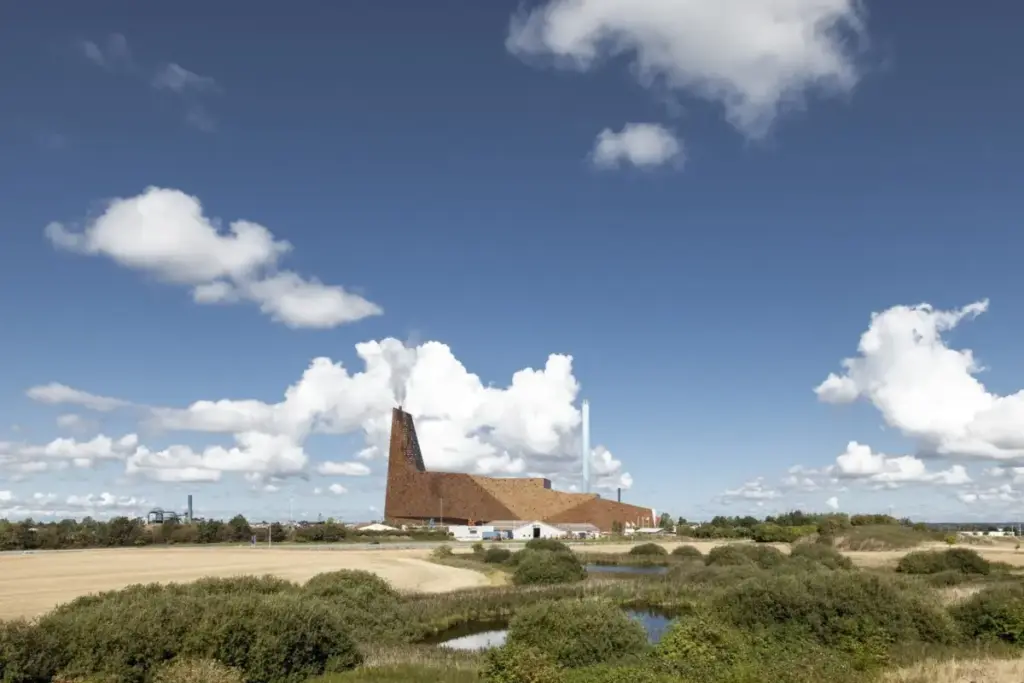
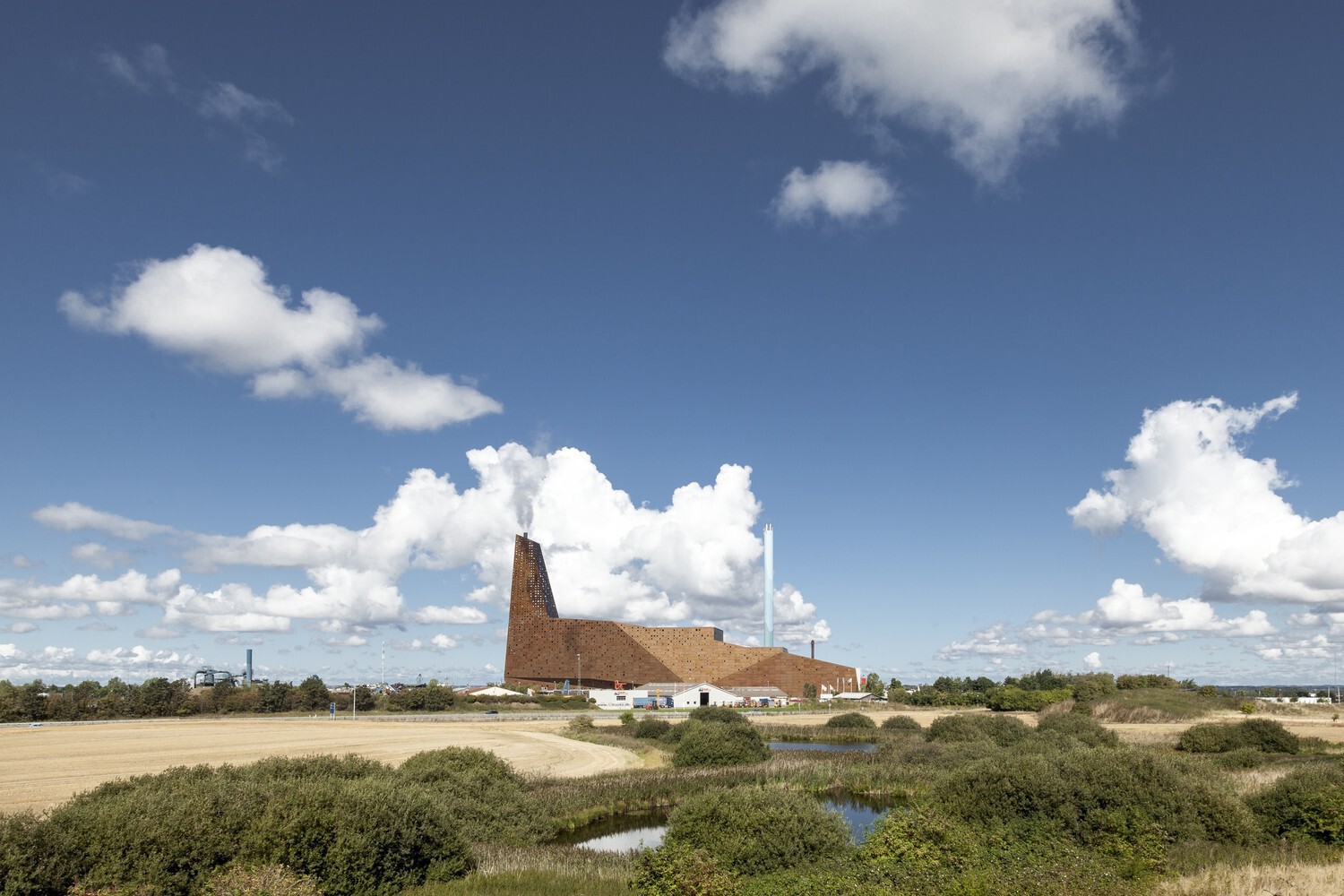
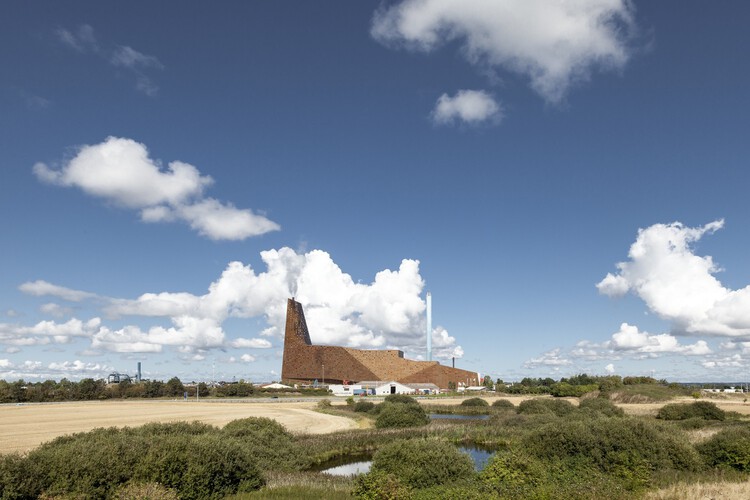
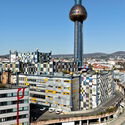
Throughout history, architecture’s role in addressing these realities has occasionally been to make these consequences visible to the public. Notable examples include Munich’s Olympiapark, whose artificial hills were constructed using the literal debris of wartime destruction; Lisbon’s Parque das Nações, built upon an oil refinery decommissioned in the 1980s and revitalized for Expo ’98; and Copenhagen’s CopenHill waste-to-energy plant, which challenges the convention that waste infrastructure must be relegated to distant peripheries by integrating an active power plant with an urban recreation center and ski slope. Despite their distinct approaches, these projects illustrate that architecture can be a deliberate decision about cultural memory, rather than merely a manipulation of physical material.
According to the World Bank’s What a Waste 3.0 report, global waste generation is projected to surge from 2.56 billion metric tonnes in 2022 to 3.86 billion metric tonnes by 2050—representing a staggering fifty percent increase under business-as-usual scenarios. The fastest growth is anticipated in sub-Saharan Africa and South Asia, precisely the regions currently least equipped to manage the influx. Already, thirty percent of all waste generated worldwide remains improperly managed. Meanwhile, wealthy nations, accounting for sixteen percent of the global population, continue to produce thirty-four percent of the world’s total waste.
For the architectural profession, this trajectory implies a future defined by more landfills, more incineration plants, more transfer stations, more contaminated landscapes, and more vulnerable communities asked to host what affluent populations produce elsewhere. Whether architecture’s future response will focus on designing better, more transparent infrastructure, or on fundamentally questioning the socioeconomic systems that demand such facilities in the first place, remains an open question that each individual project will address differently, and none will answer completely.