The global art landscape is currently defined by a confluence of high-stakes auctions, transformative institutional leadership transitions, and significant architectural expansions. From the anticipated record-shattering sale of a long-hidden Vincent van Gogh masterpiece to the shifting guard at major museums in New York, Los Angeles, and Rotterdam, the cultural sector is experiencing a period of profound evolution.
In the Spotlight: The $450 Million Collection and Institutional Change
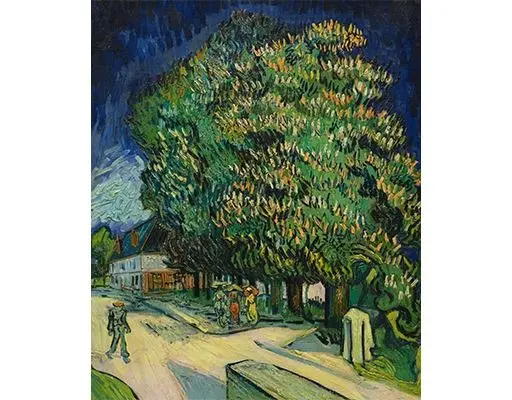
The art world’s attention is firmly fixed on New York this fall, where Sotheby’s is preparing to auction a rare Vincent van Gogh painting. The work, Châtaigniers en fleurs (1890), has been largely absent from public view for half a century. Its reappearance on the open market has sent ripples of excitement through the collecting community, with auction house specialists estimating that the piece could fetch upwards of $180 million. Should it reach or exceed this valuation, the painting is poised to set a new auction record, underscoring the enduring appetite for blue-chip Impressionist and Post-Impressionist works. This offering is part of a broader $450 million collection that includes significant works by Paul Cézanne, further positioning this sale as a watershed moment for the fall auction season.
Simultaneously, the institutional sphere is navigating a significant changing of the guard. At the Museum of Modern Art (MoMA) in New York, Ann Temkin, the long-standing head of the painting and sculpture department, has announced she will be stepping down from her current role. Temkin, a deeply influential figure who has spent her career reshaping how the museum presents its foundational collection, will transition to a new capacity as the institution prepares for its 100th-anniversary celebrations. Her tenure has been marked by a rigorous rethinking of modernism, including pivotal exhibitions on artists like Marcel Duchamp and Jasper Johns, leaving a lasting legacy on the curatorial standards of the institution.
In Switzerland, the Fondation Beyeler in Riehen has unveiled a major architectural expansion featuring three new buildings designed by the Pritzker Prize-winning architect Peter Zumthor. Known for his contemplative, material-focused approach to design—and currently recognized for his work on the new David Geffen Galleries at the Los Angeles County Museum of Art (LACMA)—Zumthor’s addition to the Beyeler campus is expected to enhance the museum’s ability to display its world-class collection. The project represents a significant investment in the intersection of contemporary architecture and the museum-going experience.
Auctions & Market Dynamics
Beyond the headline-grabbing van Gogh sale, the market is bracing for another high-profile event involving JMW Turner. His celebrated work, Rome, from Mount Aventine, often described as a "great love letter" to the city, is making a brief, poignant return to Rome. The painting serves as a centerpiece for global interest, with a tour scheduled through Hong Kong and New York before it heads to auction in the United Kingdom. Experts anticipate that the work will command a record-breaking price, reflecting the ongoing global demand for historical masterpieces of such provenance and caliber.
The market’s appetite for rarity extends into the world of attributed works as well. In Spain, speculation is building around a painting believed to be by Francisco de Goya, which is slated for inclusion in a 2028 exhibition at the Museo del Prado. The potential authentication and public debut of a Goya work represent a high-stakes moment for researchers and curators, highlighting the continuous process of discovery and validation that drives the museum sector.
Meanwhile, in the UK, the Turner Prize continues to serve as a vital barometer for contemporary creative energy. Galleries hosting the nominees’ work have described the event as a "centre of the creative universe," emphasizing the prestige associated with the award and the significant platform it provides to emerging and established artists alike.
Leadership transitions are not limited to New York. The Museum of Contemporary Art (MOCA) in Los Angeles has appointed Jonathan Abbott as its next director. Abbott joins the institution following a distinguished 15-year tenure as the chief executive of GBH in Boston. His background in public media is expected to bring a new perspective to the museum’s community engagement and institutional strategy.
In Europe, the Museum Boijmans Van Beuningen in Rotterdam has named Stephanie Rosenthal as its new artistic director. Rosenthal, the former director of the Gropius Bau in Berlin, steps into the role following her work on the launch of the Guggenheim Abu Dhabi. Her appointment is viewed as a strategic move to bolster the museum’s international standing and curatorial vision.
Recognizing Excellence: Awards and Grants
The intellectual and artistic vitality of the current moment is also reflected in the latest round of prestigious awards. The MacArthur Foundation has announced its 2026 "Genius" grants, a $800,000 prize awarded to individuals who have shown exceptional creativity and promise. Among the twenty recipients are four notable artists: Christine Sun Kim, known for her innovative work exploring sound and sign language; Rodney McMillian, whose practice spans sculpture, painting, and installation; Vincent Valdez; and Chip Thomas. These grants provide the recipients with the freedom to pursue their work with renewed resources, marking a significant milestone in their respective careers.
In Canada, the visual arts community is celebrating Steven Shearer, the recipient of the 2026 Audain Prize. The $100,000 award, which honors significant achievement in the visual arts in British Columbia, highlights an artist whose work uniquely bridges the gap between art-historical traditions and contemporary youth subcultures. Shearer, who is famously private, remains an influential voice in Canadian art, and the prize serves as a recognition of his consistent contribution to the national discourse.
As these developments unfold—from the high-velocity world of international auctions to the quieter, deliberate work of curatorial shifts and artistic recognition—it is clear that the art world remains in a state of constant, dynamic movement. The upcoming months will undoubtedly test the market’s resilience and the museums’ ability to adapt to a changing global audience, marking a definitive chapter in the story of 2026.