In a compelling intersection of art history and market provenance, Bonhams is currently hosting a significant public exhibition at its flagship gallery at 111 West 57th Street, featuring a rare late-career masterpiece by Andy Warhol. The exhibition, which remains open to the public through October 8, centers on the artist’s iconic 1986 Self-Portrait. This striking canvas, consigned by MutualArt, serves as a focal point for a broader showcase of Post-War and Contemporary art, drawing collectors and scholars alike to the historic cultural corridor of Manhattan’s 57th Street.
The exhibition has already garnered attention for its thoughtful curation, which places the 1986 Self-Portrait in direct dialogue with earlier, transformative works by the artist. Specifically, the presentation includes two companion portraits of Miriam Davidson, executed in 1965. By exhibiting these works side-by-side, Bonhams offers viewers a rare, tangible timeline of Warhol’s artistic evolution, contrasting the experimental, vibrant energy of his mid-1960s Factory period with the solemn, introspective gravity of his final year.
A Reflection on Mortality and Identity
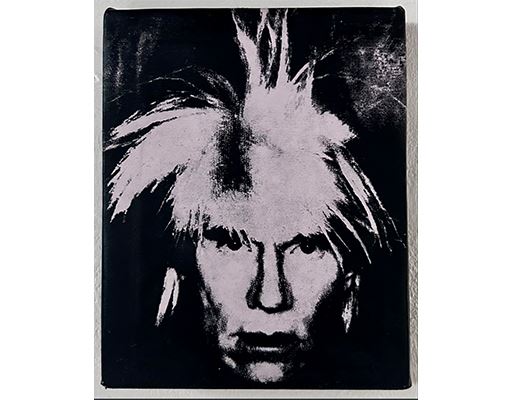
The 1986 Self-Portrait is widely regarded as one of the most haunting and reflective pieces in Warhol’s extensive body of work. Executed in synthetic polymer paint and silkscreen ink on canvas, the piece captures the artist at the height of his fame, yet simultaneously shrouded in a sense of vulnerability. It features the now-legendary "fright wig" motif—a wild, disheveled mop of silver-white hair that became the visual shorthand for Warhol’s final public persona. Created just months before his unexpected death in early 1987, the work acts as a profound meditation on the nature of celebrity, aging, and the construction of identity.
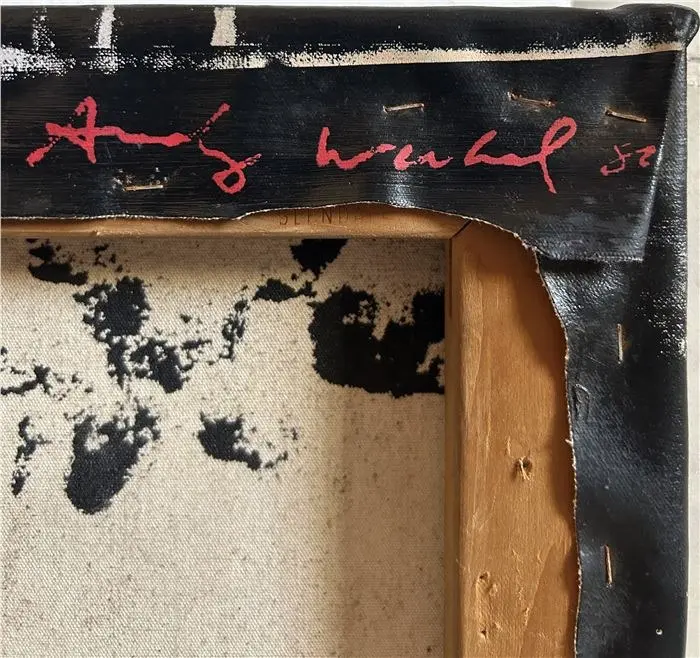
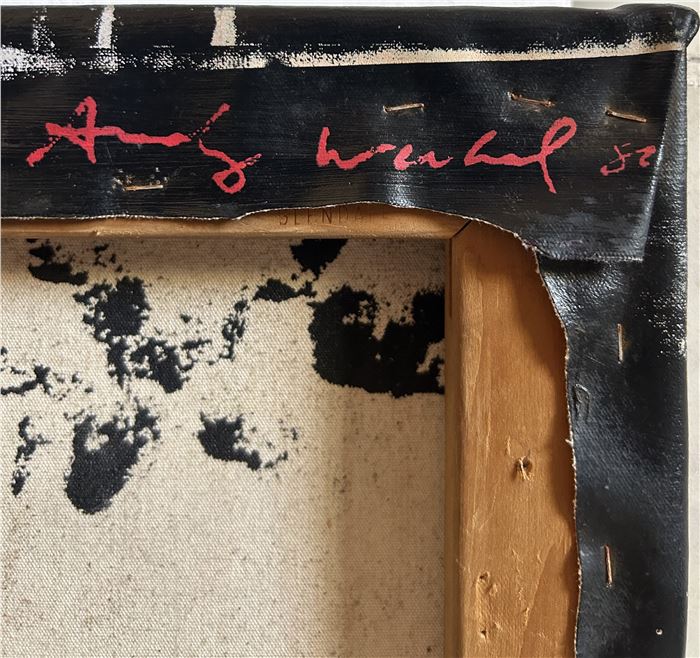
The provenance of this specific canvas adds an additional layer of intimacy to the work. It was acquired directly from the artist and his long-time assistant, Ronnie Cutrone, in New York in 1986. Cutrone, who worked closely with Warhol at the Factory during some of its most productive years, was instrumental in the creation of many of the artist’s most celebrated silkscreens. The fact that the work moved from the studio directly into the hands of a trusted associate provides a unique connection to Warhol’s inner circle, elevating the piece beyond a mere commodity and framing it as a personal artifact of the artist’s final chapter. A reverse view of the canvas, which reveals the artist’s signature on the fold, further emphasizes the physical, intimate connection between the creator and the final product.
Two Decades of Warhol’s Vision
The inclusion of the 1965 Miriam Davidson portraits serves as a vital historical counterpoint. While the 1986 Self-Portrait is defined by its stark, somber palette and the psychological weight of a man facing the end of his life, the 1965 works—depicting Davidson in acrylic spray paint and silkscreen ink on linen—represent a different era of Warhol’s career. During the mid-1960s, Warhol was deeply engaged in the mechanisms of the portrait commission, turning the faces of socialites, stars, and acquaintances into mass-produced icons.
When viewed alongside the 1986 Self-Portrait, the 1965 pieces highlight the consistency of Warhol’s fascination with repetition and image-making, even as his technique and thematic preoccupations shifted. The contrast is palpable: where the 1965 portraits feel clinical and detached, the 1986 self-portrait feels raw and deeply personal. Together, they provide a panoramic view of two crucial decades that defined the course of American Pop Art, offering visitors a rare opportunity to witness the arc of Warhol’s career from the explosive, frenetic energy of the 1960s to the quiet, introspective stillness of the 1980s.
The Historic Significance of 57th Street
The exhibition at 111 West 57th Street is not merely a collection of high-value works; it is also a nod to the location’s storied legacy within the international art market. Long before the rise of Chelsea as the city’s preeminent gallery district, 57th Street served as the epicenter of New York’s cultural and commercial art world. It was here that the foundational institutions of the 20th-century art market took root, including the Art Students League and the legendary Carnegie Hall.
Pioneering dealers like Paul Durand-Ruel, Betty Parsons, Sidney Janis, and the Pace Gallery established their influence in this neighborhood, creating a hub that attracted the world’s most significant collectors. By hosting this exhibition in the heart of this historic district, Bonhams acknowledges the lineage of the site, positioning the Warhol canvases within a tradition of prestigious art exhibition.
Beyond the Warhol pieces, the Bonhams gallery is currently showcasing a suite of masterworks by some of the 20th century’s most influential artists, including Georgia O’Keeffe, Marc Chagall, Roy Lichtenstein, Pierre Bonnard, and Tamara de Lempicka. The presence of these artists creates a competitive and intellectually stimulating environment, where the works of Warhol engage with the broader narratives of Modernism and Post-War abstraction.
A Rare Opportunity for Collectors
For collectors and enthusiasts, the current exhibition represents a unique window into a pivotal moment in art history. The Post-War and Contemporary Art Department at Bonhams has curated this display to emphasize not only the aesthetic power of these pieces but also the importance of provenance and historical context in the acquisition of major works.
The 1986 Self-Portrait, in particular, remains a sought-after piece because it encapsulates the final crystallization of Warhol’s aesthetic. As the art market continues to place a premium on works that carry personal or intimate histories, the 1986 canvas—with its clear, documented link to Ronnie Cutrone—stands as a premier example of high-value, high-provenance art.
The exhibition provides a moment of pause for the public to engage with these works outside the high-pressure environment of a live auction. By allowing visitors to observe the canvases in a gallery setting, Bonhams facilitates a deeper appreciation for the technical mastery Warhol employed in his final years—the interplay of synthetic polymer paint and the tactile nature of the silkscreen ink on the raw canvas.
As the October 8 deadline approaches, the exhibition remains a focal point for the New York art community. Whether one is a seasoned collector or a student of art history, the chance to view such a significant assembly of works—anchored by the poignant, final-year self-reflection of Andy Warhol—is an experience that highlights the enduring power of his legacy. Those interested in viewing the exhibition are invited to visit the 57th Street gallery, where the works remain on view, serving as a silent yet powerful testament to the artist’s lifelong obsession with the intersection of image, identity, and the passage of time.
Correction: A previous version of this article incorrectly stated that the two 1965 Miriam Davidson portraits were consigned by MutualArt. MutualArt has in fact consigned Andy Warhol’s 1986 Self-Portrait, which is currently on view alongside the Miriam Davidson canvases at Bonhams’ 57th Street gallery. We sincerely regret the error.