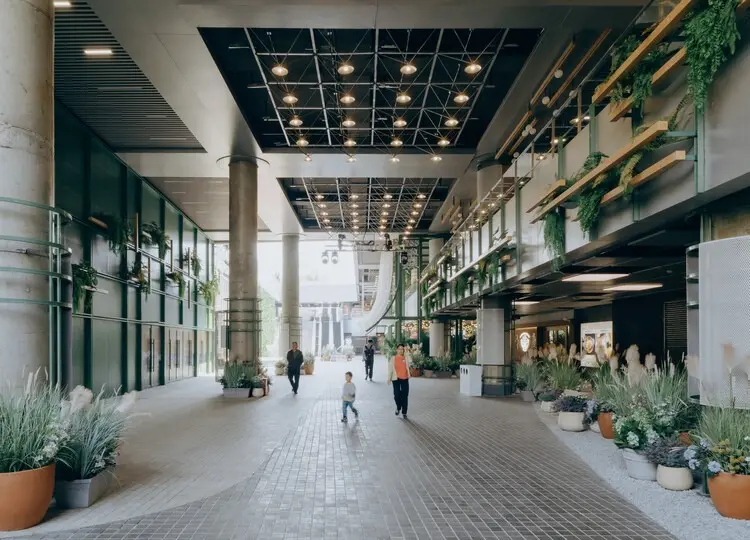
In the landscape of contemporary corporate architecture, tech campuses are frequently designed around principles of hyper-efficiency, rational zoning, and smooth operational workflows. Yet, as these massive developments expand, they often struggle to transcend their purely functional roots, leaving employees and visitors with environments that can feel sterile and detached from everyday human life. Addressing this challenge within a high-profile corporate ecosystem requires a delicate touch—one that prioritizes community, warmth, and shared experiences over rigid commercial programming.
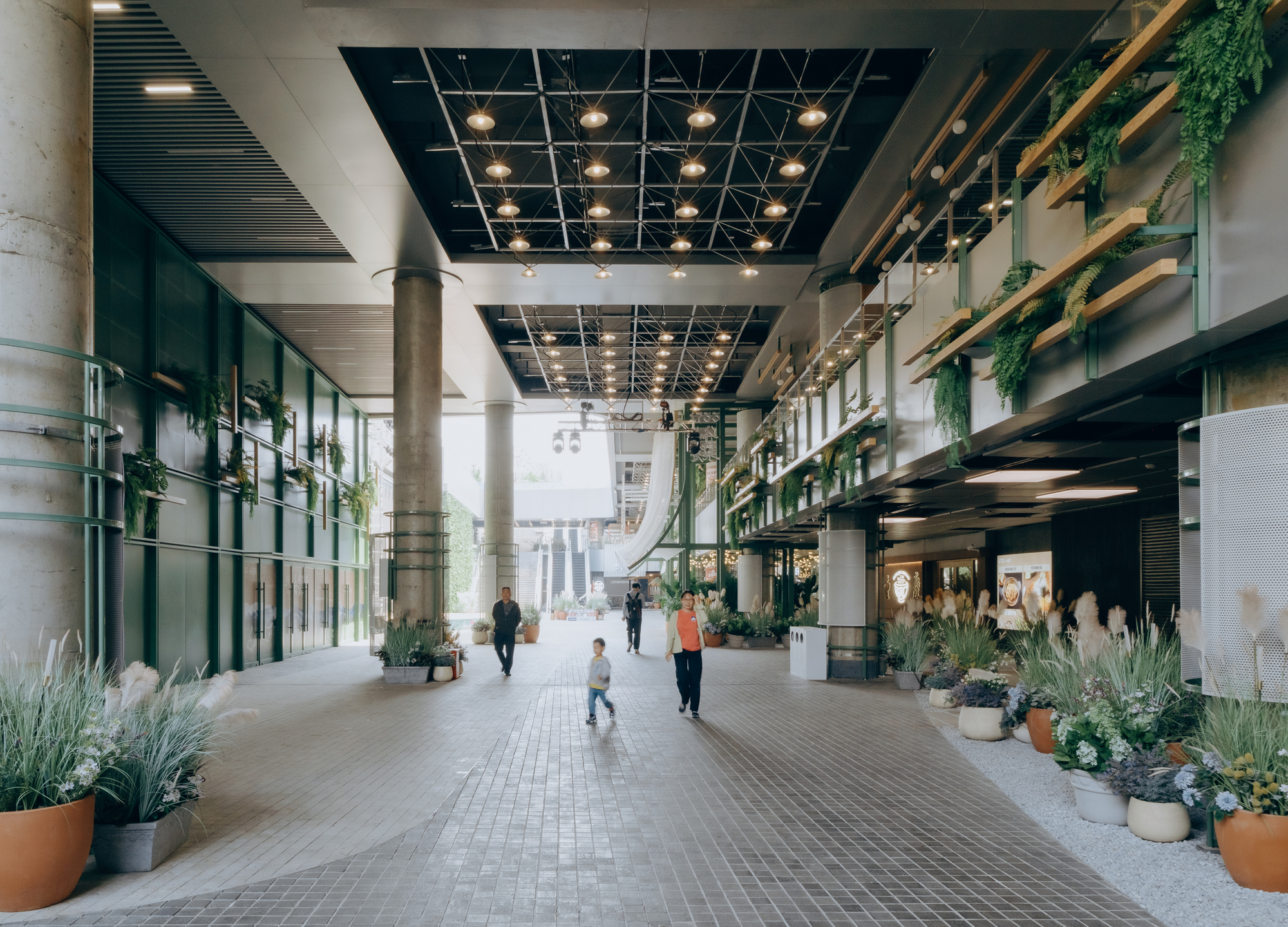
The Beijing 1733 Public Space Renovation project directly confronts this spatial dilemma. Undertaken by XU Studio, the initiative introduces a strategy of lightweight architectural intervention to revitalize a sunken commercial space and its surrounding interior themed zones associated with ByteDance. Captured through the lens of photographer Yumeng Zhu, the completed project demonstrates how minimal, targeted design choices can fundamentally alter the psychological and physical experience of a corporate campus, shifting the paradigm from isolated office blocks to vibrant, engaging urban micro-environments.
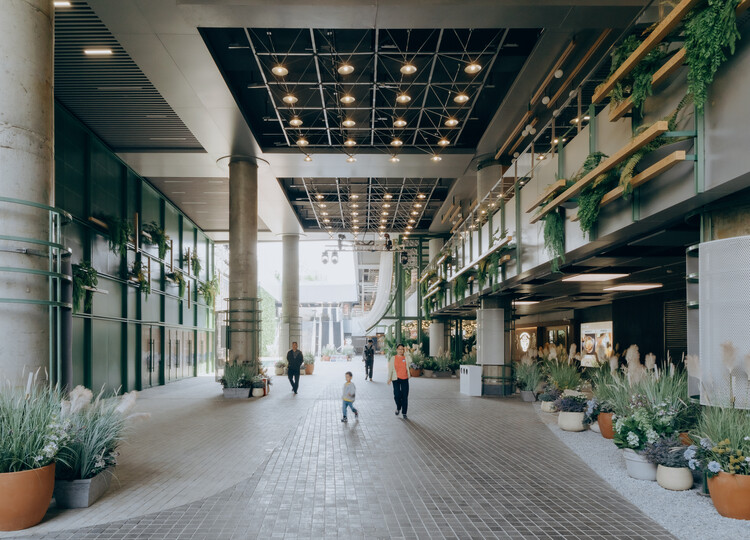
Modern corporate parks face a recurring spatial paradox. While designed to foster collaboration and innovation, their internal retail and public areas often function merely as transactional amenities rather than destinations in their own right. Xu Studio’s approach to the Beijing 1733 commercial project sought to dismantle this conventional boundary. By integrating architectural elements, weaving natural landscape features into subterranean and interior zones, and entirely reshaping commercial usage scenarios, the design team breathed new life into an underperforming sunken plaza.
At the core of the intervention is a philosophy rooted in open interfaces, the integration of natural elements, and a diverse curation of commercial programs. Rather than imposing a heavy-handed restructuring that would disrupt the daily rhythms of the campus, the architects opted for lightweight, precise interventions. These subtle architectural adjustments work in concert to soften the otherwise restrained and rigid structural environment of the campus, transforming it into a dynamic public realm that encourages lingering, casual encounters, and a heightened sense of community well-being.

The spatial strategy particularly focuses on the sunken commercial space, a notoriously difficult typology to activate successfully. Sunken plazas frequently suffer from a lack of visibility, poor natural light infiltration, and a disconnect from the primary pedestrian flows of a campus. XU Studio addressed these constraints by reimagining the interface between the interior spaces and the surrounding exterior landscape. By breaking down visual and physical barriers, the design invites natural light deeper into the subterranean levels while establishing seamless visual connections with greenery and outdoor elements.

Inside the themed commercial zones, the transformation continues through a careful orchestration of materials, circulation paths, and human-scaled details. The architects avoided overly ornate decoration, opting instead for clean lines, tactile surfaces, and spatial configurations that support a variety of social gatherings. Whether serving as a casual dining space, a quiet corridor for informal meetings, or an energetic venue for campus events, the newly renovated areas adapt fluidly to the shifting needs of the ByteDance community throughout the workday.
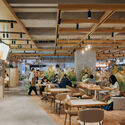
Through this comprehensive yet restrained renovation, the Beijing 1733 commercial project offers a compelling model for future tech campus developments. It illustrates that commercial spaces within highly operational corporate parks do not need to rely on excessive scale or loud architectural gestures to make an impact. Instead, by prioritizing human comfort, natural integration, and porous boundaries, designers can successfully turn functional amenities into lively, shared environments that inject genuine warmth and vitality into the everyday workplace experience.