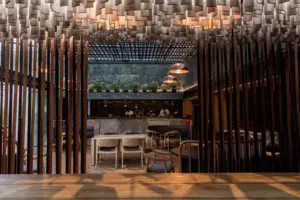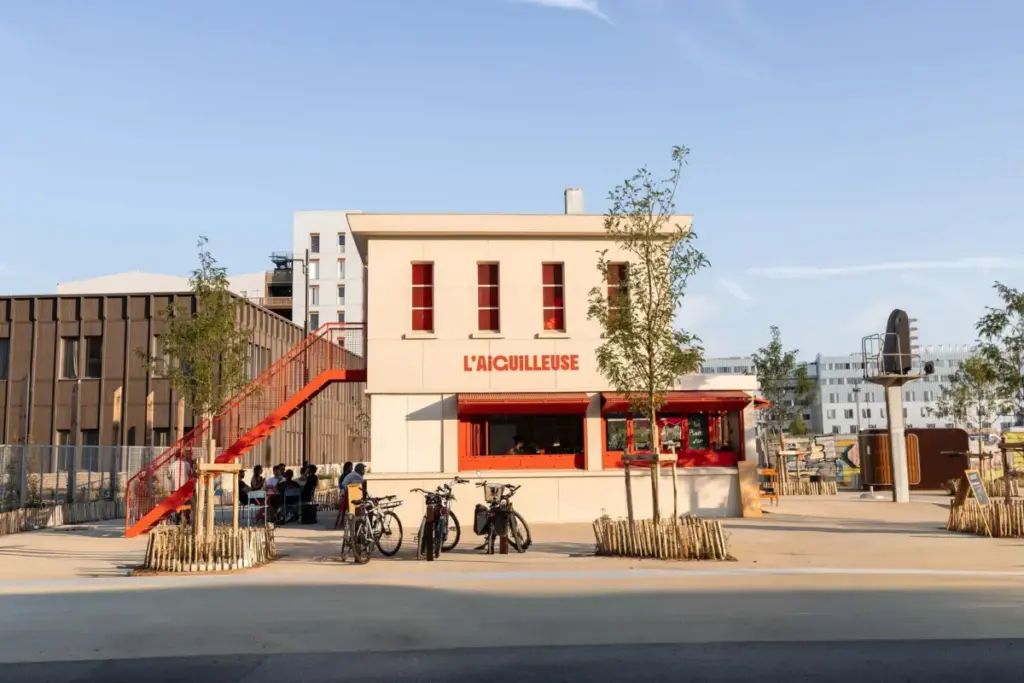
In the heart of the Jardins de l’Estuaire, a newly established public park on the Île de Nantes in France, a remarkable piece of architectural transformation has taken shape. Known as "L’Aiguilleuse," a former 1960s railway signal box has been thoughtfully revived and repurposed into a vibrant local kiosk-bar. Designed by Studio Téré, the project represents a thoughtful approach to urban renewal, breathing new life into a forgotten industrial relic while seamlessly integrating it into a contemporary green public space for the local community and visitors to enjoy.
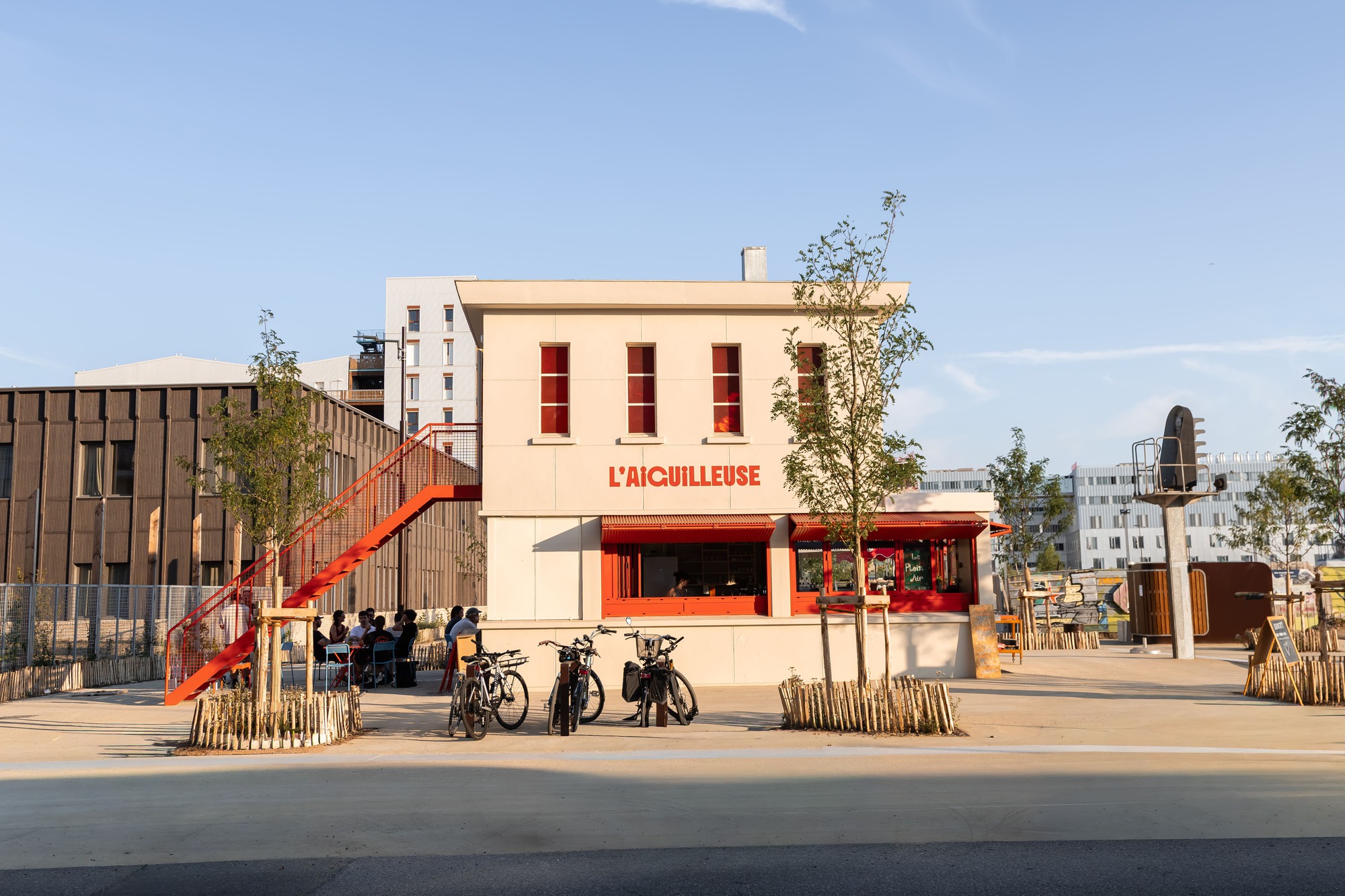
Originally constructed as an integral part of the Nantes-État railway infrastructure, the small building once served a vital operational purpose. During its active years, railway workers used the structure to control train movements entering the station, managing the intricate network of tracks and switches that defined the area’s industrial identity. However, as transportation networks evolved, urban planning priorities shifted, and the surrounding railway landscape gradually disappeared, the signal box was left behind. Stripped of its original function, it remained as a modest yet highly distinctive standalone fragment of the site’s rich industrial heritage, standing as a quiet testament to the Île de Nantes’ past.
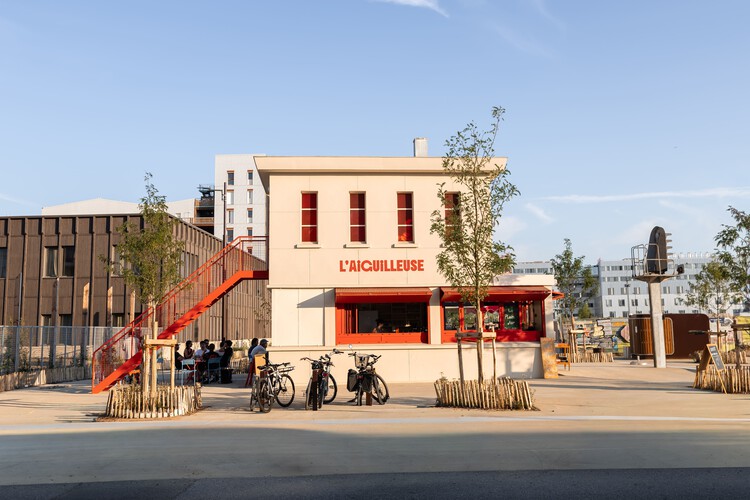
Rather than erasing this piece of local history to make way for completely new construction, the master plan for the Jardins de l’Estuaire embraced the structure, setting the stage for its adaptive reuse. Studio Téré took on the challenge of converting the compact, utilitarian structure into a welcoming public amenity—a kiosk-bar that now acts as a social anchor within the park. The architectural intervention respects the building’s historic character, preserving its distinctive scale and material presence while carefully updating its interior and exterior to meet modern public hospitality standards.
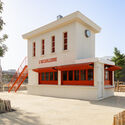
The transformation of L’Aiguilleuse highlights a growing trend in contemporary architecture and urban design: the preservation and adaptive reuse of minor industrial architecture. While large-scale factories and warehouses are frequently celebrated and converted into cultural hubs or museums, smaller operational structures like signal boxes, toll booths, and utility stations are often vulnerable to demolition. By turning a redundant piece of railway infrastructure into an accessible, everyday destination, Studio Téré demonstrates how modest historical elements can be leveraged to enrich the spatial experience of modern public parks.

As visitors wander through the green expanses of the Jardins de l’Estuaire, L’Aiguilleuse offers a tangible connection to the Île de Nantes’ working-class and industrial roots. The project successfully bridges the gap between the site’s past and present, offering a functional gathering space that honors the architectural memory of the railway while serving the contemporary recreational needs of the city.