In the realm of modern filmmaking, where green screens and computer-generated imagery frequently dominate the visual landscape, the art of practical production design remains a vital anchor for reality. Few professionals understand this delicate balance between physical craftsmanship and digital enhancement quite like veteran production designer Christopher Glass. Having recently wrapped work on the visually ambitious feature film I Love Boosters, directed by idiosyncratic American filmmaker Boots Riley and starring an ensemble cast featuring Keke Palmer, Demi Moore, and Eiza González, Glass has once again pushed the boundaries of what physical sets can achieve on the silver screen.
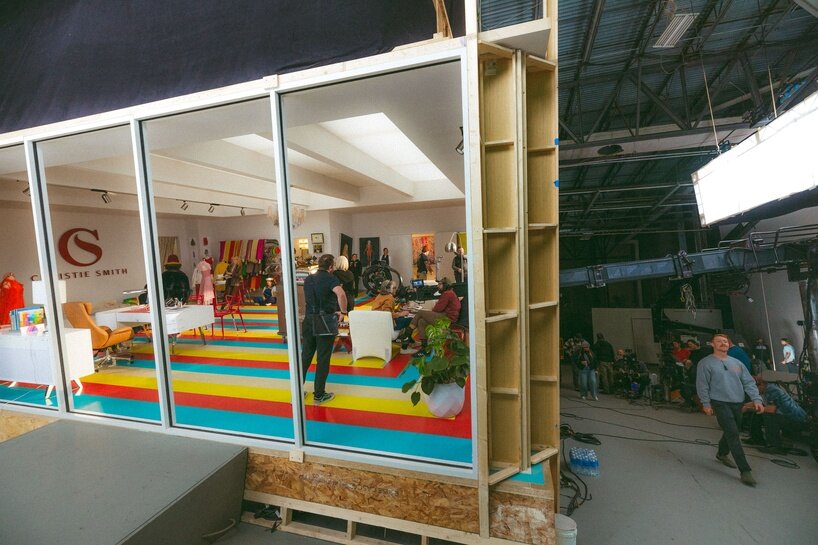
In I Love Boosters, Moore takes on the role of Christie Smith, a salacious and eccentric fashion designer whose professional headquarters are housed within a fictionalized version of San Francisco’s real-life Millennium Tower. Known colloquially in the real world for its unfortunate structural settling, the luxury skyscraper serves as the punchline and physical hazard in Riley’s film, where it has continued to sink and tilt into the ground at an alarming rate. To capture this architectural catastrophe on camera, Glass and his art department designed and constructed a physical office set built entirely at a striking 15-degree angle—a compromise from the script’s even more extreme demand for a 45-degree slope.
The resulting environment is both visually arresting and functionally chaotic. Complete with scattered sketches, overflowing clothing racks, and hyper-saturated design accoutrements, the egregiously slanted workspace actively disrupts the laws of gravity for anyone who steps inside. Actors must constantly slip, slide, and struggle to maintain their footing or even manage to pull a door shut, bringing a tangible, physical comedy and discomfort to the scene that pure digital effects would struggle to replicate.
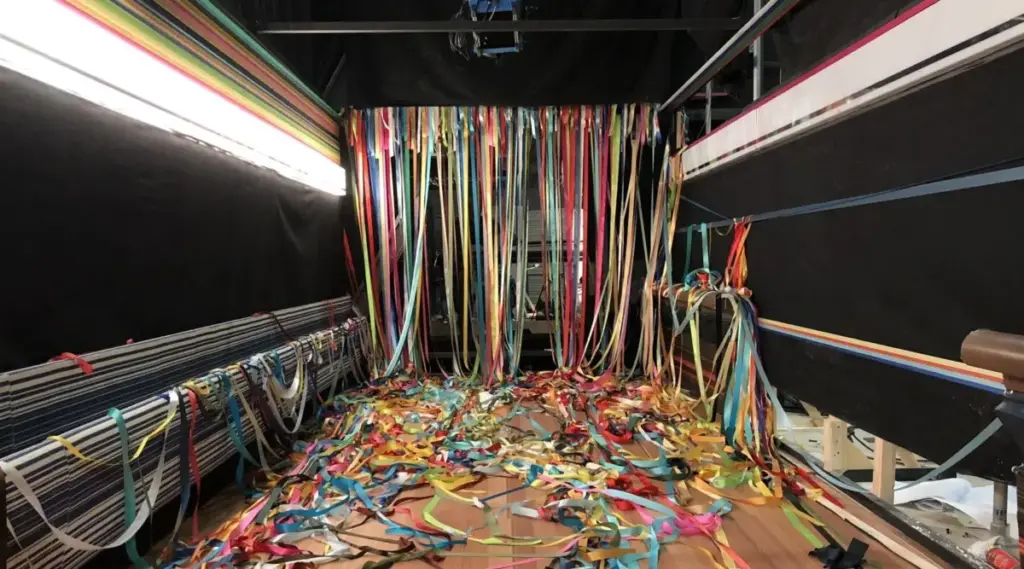
Behind this architectural illusion lies a deep commitment to practical effects, a hallmark of Glass’s longstanding collaboration with directors who dare to dream outside conventional box constraints. Rather than relying entirely on post-production visual effects, Glass and his team engineered a series of tactile spectacles for I Love Boosters. Among these is a menacing, giant ball of discarded junk and clothing that relentlessly rolls down miniature models of San Francisco’s famously steep, sloping streets, tracking the film’s protagonist like an urban avalanche. In another memorable sequence, Keke Palmer’s character, Corvette, wears a striking dress designed so that its plaid pattern dramatically explodes off the textile. Opting to bypass computer-generated graphics entirely, Glass utilized his previous experience working with ribbons, sourcing pre-cut, long-length materials that could physically burst outward on command.
Designing Within the Boots Riley Universe
Stepping into a production led by Boots Riley requires an embrace of the wonderfully bizarre. Riley’s cinematic world-building is renowned for blending miniatures, traditional puppets, stop-motion animation, and avant-garde costuming into a singular, cohesive aesthetic. Yet, despite the presence of surreal elements—such as skinless characters or a stalking mountain of trash—Glass emphasizes that the director’s stories are fundamentally anchored in relatable human truths.
The creation of the cinematic trash ball, for instance, required a painstaking blend of miniature scale-modeling and old-school cinematic wizardry. By building diminutive replicas of the Bay Area’s topography, Glass’s team could safely choreograph the movement of the debris monster as it loomed large over the narrative stakes. Balancing these eclectic concepts into a single feature film presented a continuous creative marathon for the production designer, who frequently found himself inventing novel physical solutions for abstract narrative beats.
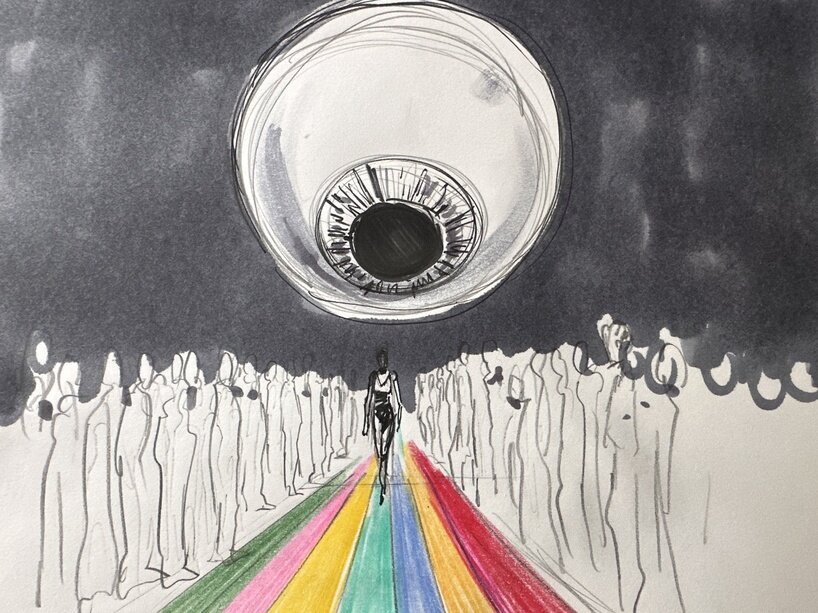
From conceptualizing Demi Moore’s chaotic runway shows to sketching the initial blueprints of the leaning penthouse, Glass approaches each project with a hands-on mentality that bridges the gap between raw artistic expression and cinematic engineering. His early concept sketches and storyboards reveal a meticulous attention to texture, color, and spatial geometry, ensuring that every absurd premise put forward by the script feels startlingly tactile and lived-in.
From High-Stakes Blockbusters to Experimental Commercial Spaces
While feature films offer sprawling canvases for world-building, Glass’s extensive portfolio extends far beyond the traditional cinema screen. His mastery of spatial transformation is perhaps nowhere more vividly demonstrated than in his commercial work, most notably his collaboration with director Spike Jonze on the 2018 Apple HomePod commercial, Welcome Home.
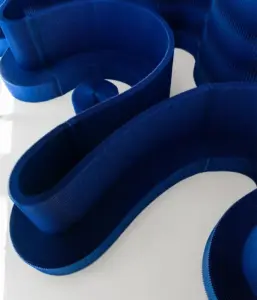
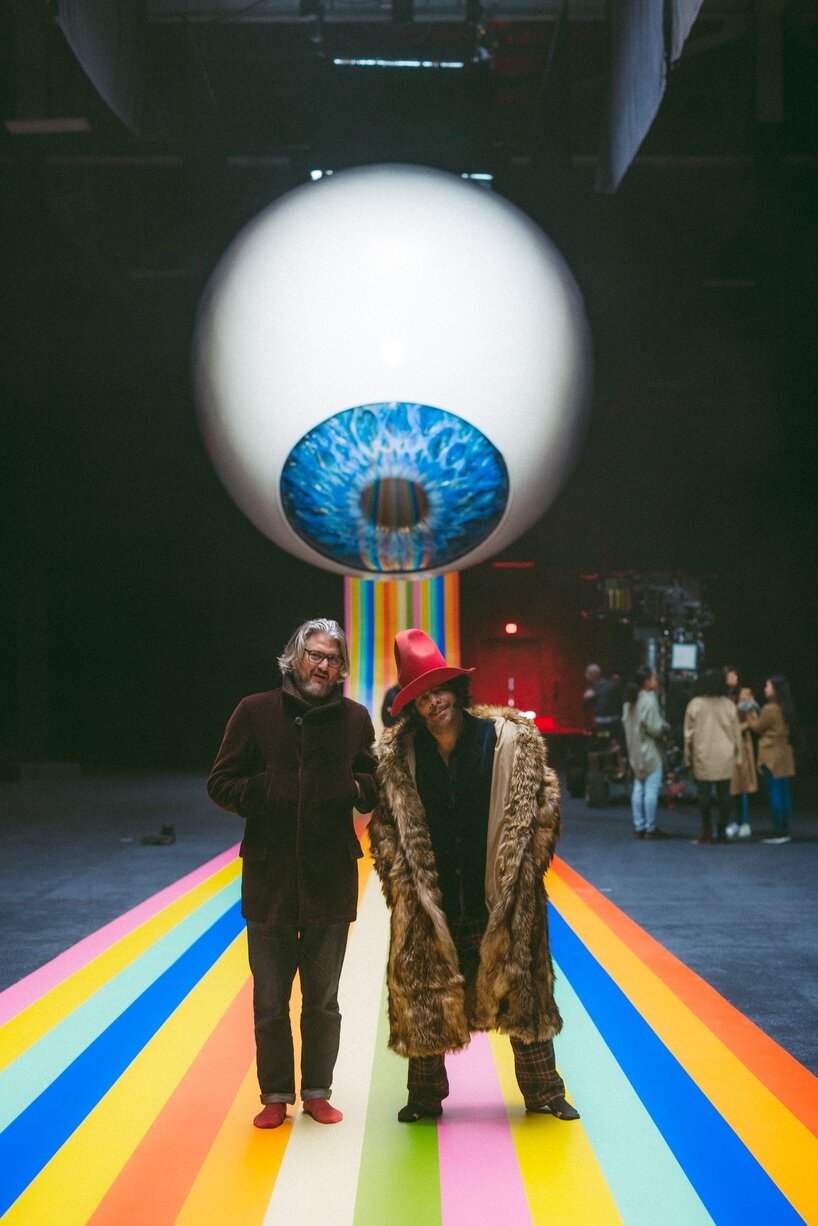
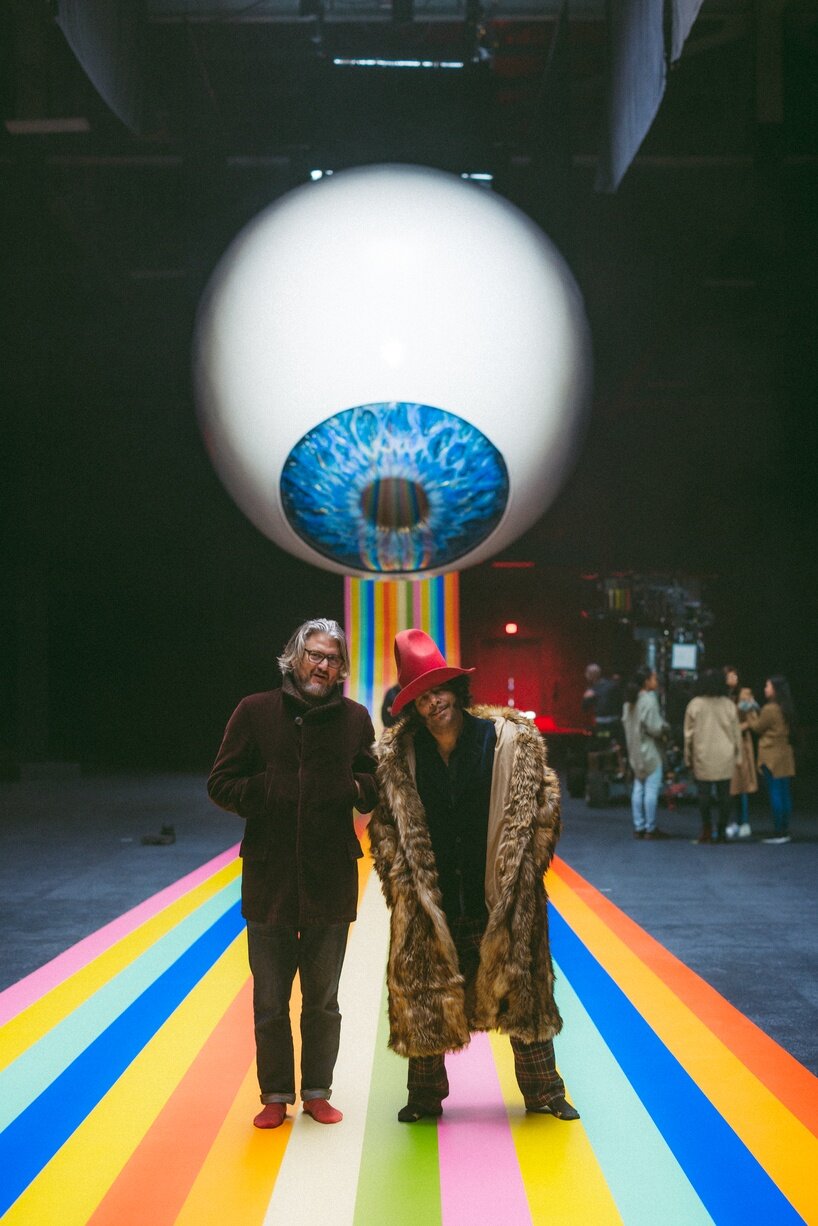
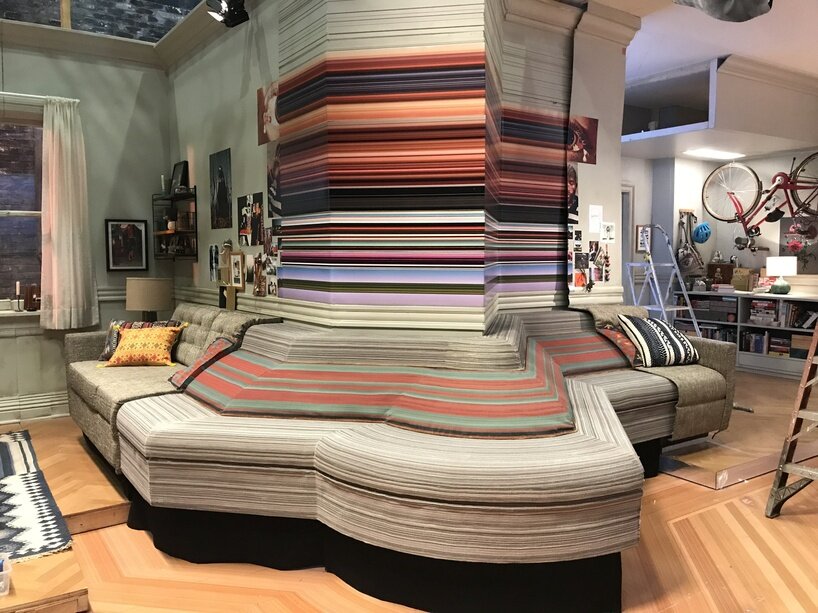
Starring artist FKA Twigs as a weary commuter returning home from a monotonous nine-to-five job, the commercial follows her character as she asks Siri to play a track, instantly triggering a mind-bending sequence where her apartment dramatically expands, bends, and stretches in a vibrant flurry of rainbow-hued stripes. Realizing this vision demanded an extraordinarily complex series of practical, moving set pieces. The production utilized mechanical walls that would spin open on cue, narrow hallways lined with densely bound ribbons, and intricate choreography involving both FKA Twigs and a dedicated body double.
The technical hurdles were immense, leading Glass to harbor genuine anxieties during the physical construction phase. Looking back on the grueling technical demands, Glass admits he momentarily feared the project might spell the end of his career if the massive moving sets failed to operate smoothly on camera. Instead, the visually striking advertisement resonated globally, ultimately earning a prestigious Grand Prix award at the Cannes Lions International Festival of Creativity.
Glass notes that the commercial advertising sector has historically provided a unique incubator for experimental and high-risk visual ideas. Because brand-driven creative campaigns often prioritize emotional aspiration over direct product features, designers are granted a rare playground to test radical, risky visual concepts that might never fly within the conservative budgetary structures of traditional studio films. Over the course of his career, Glass has leveraged this commercial sandbox to build an expanding house for French home improvement retailer Leroy Merlin, construct an oversized corporate world for a giant financial adviser ad with Experian, and craft a moody, noir-inspired universe for a Jim Beam commercial featuring actor Willem Dafoe.
Navigating the Boundary Between Real and Digital Worlds
Beyond independent features and high-concept commercials, Glass’s design expertise has navigated the vast, green-screened expanses of major superhero franchises, including Marvel’s Ms. Marvel and DC’s Batgirl. However, his work on Disney’s 2015 live-action adaptation of The Jungle Book—directed by Jon Favreau—stands as a watershed moment in his career regarding the integration of physical sets with cutting-edge computer graphics.
Following in the footsteps of James Cameron’s Avatar, which fundamentally shifted the paradigm for merging live-action performances with digital environments, The Jungle Book presented a unique logistical challenge. The film featured a single human actor, a young child portraying Mowgli, who had to interact naturally with a completely digital jungle populated by CGI animals. Consequently, almost every physical element the young actor touched, leaned against, or manipulated had to be built by Glass and his team in the real world.
From intricate groupings of jungle leaves and fallen logs to the sloughing snakeskin the young protagonist pulls up from the forest floor, the physical props were painstakingly crafted to match the digital environment. Depending on the specific action required by the scene, the physical pathways and foliage were dynamically scaled; some pathways were built narrow to restrict movement, while others were widened to ensure the actor’s physical shadow fell correctly across the virtual terrain.
Despite holding the title of production designer, Glass remains fundamentally hands-on throughout the physical realization of his sets, frequently diving into the tactile details of painting and prop dressing. Reflecting on his time working on 12 Strong, a gritty war-action drama starring Chris Hemsworth, Glass recalls rolling up his sleeves to personally assist with the battlefield dressing, scattering dark ash across the terrain and positioning simulated props for explosive sequences. For Glass, staying intimately connected to the physical labor of filmmaking is not merely a job requirement, but a genuine passion for the medium that prevents him from feeling detached from the creative process.
As part of designboom’s ongoing Spectator and Spectacle chapter—which examines how wonder is engineered and how mystery can be reintroduced into an increasingly measured world—Glass’s body of work stands as a testament to the enduring power of physical design in cinema. Through skewed skyscrapers, exploding plaid textiles, and expanding living spaces, his creations continue to turn onlookers into active participants, altering perception and thoroughly disrupting the everyday.