A Barbie doll that has spent years relegated to the dark corners of a closet or forgotten at the bottom of a toy chest could soon find a second life in your living room—this time, as a functional, high-end Bluetooth speaker or a sleek portable power bank.
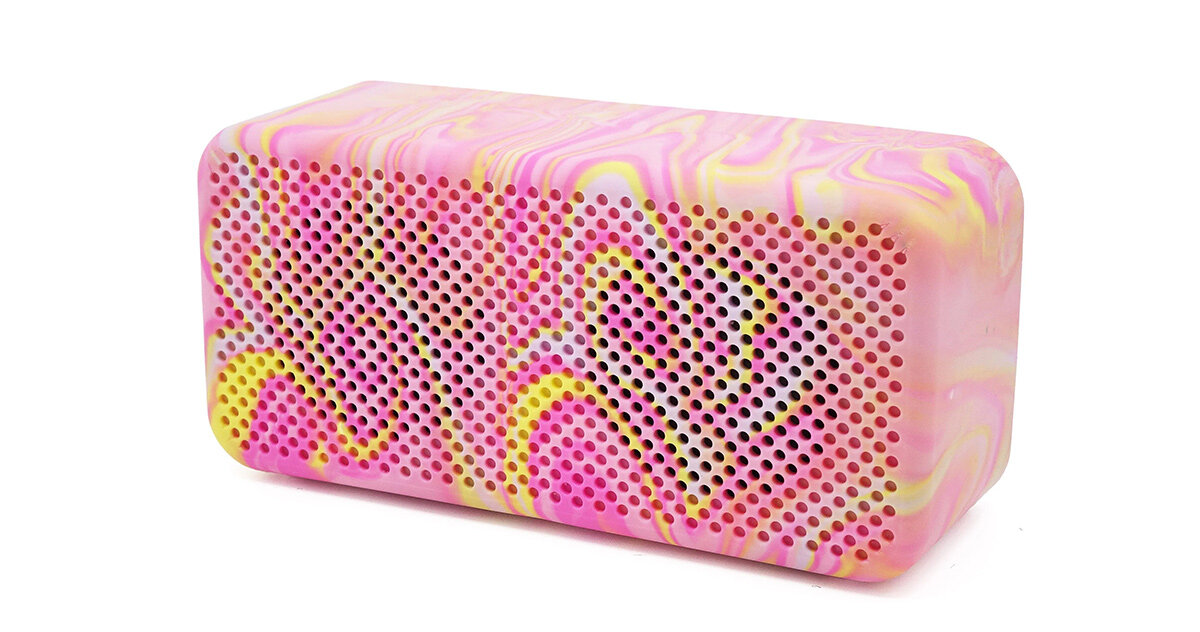
In a novel intersection of circular design, nostalgic pop culture, and modern consumer electronics, the Brighton-based creative design studio gomi has announced an unconventional collaboration with Barbie. Titled the "Childhood Memories Collection," this limited-edition series of tech accessories is crafted in part from discarded dolls and toy accessories that have reached the end of their playing days. By taking the iconic, candy-colored plastics historically associated with the world’s most famous fashion doll and melting them down into swirling, marbled surfaces, the studio is rewriting the lifecycle of children’s toys while keeping the tangible history of those objects visible on the exterior of everyday technology.
The collaborative project begins with public participation and material collection. Studio gomi is actively inviting individuals to gather up Barbie and Ken dolls they no longer use, play with, or need, and send them directly to the studio’s workshop in Brighton, England. Once the toys arrive, they undergo a meticulous processing phase. The recovered plastic is meticulously sorted, broken down, and blended with another notoriously difficult-to-manage waste stream: discarded plastic bags. Because everyday household recycling programs frequently leave out soft plastic bags, gomi’s methodology intercepts a vast volume of material that would otherwise head straight to local landfills or incineration facilities.

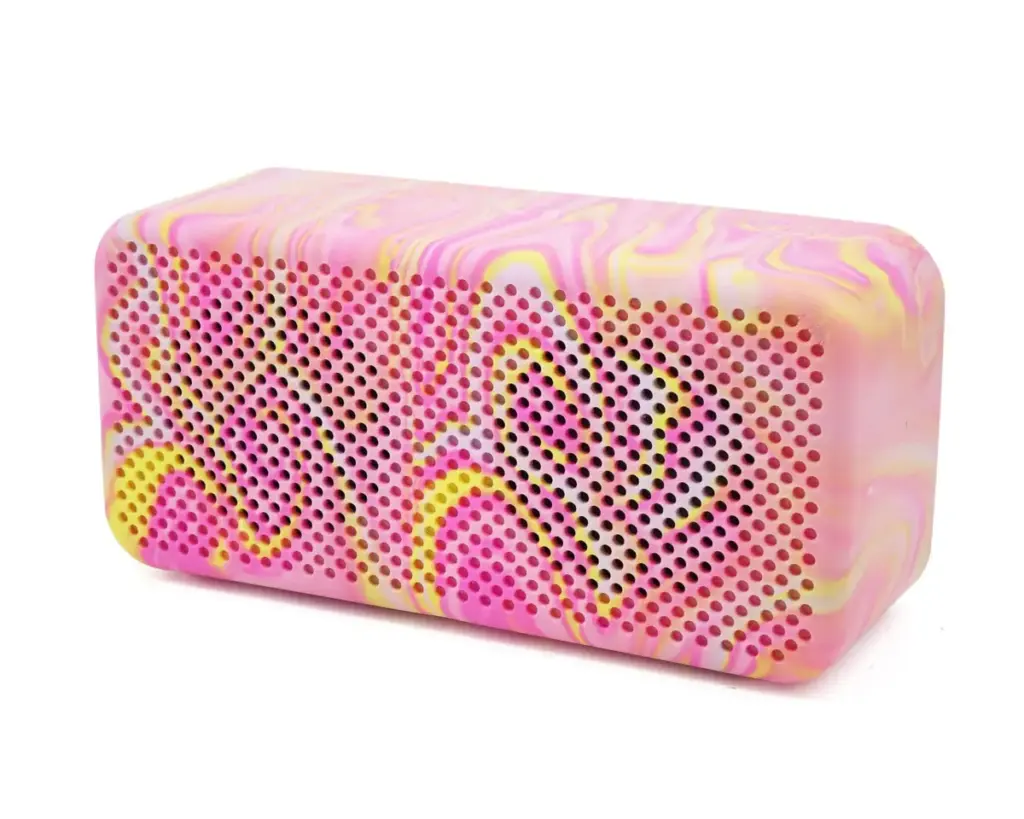
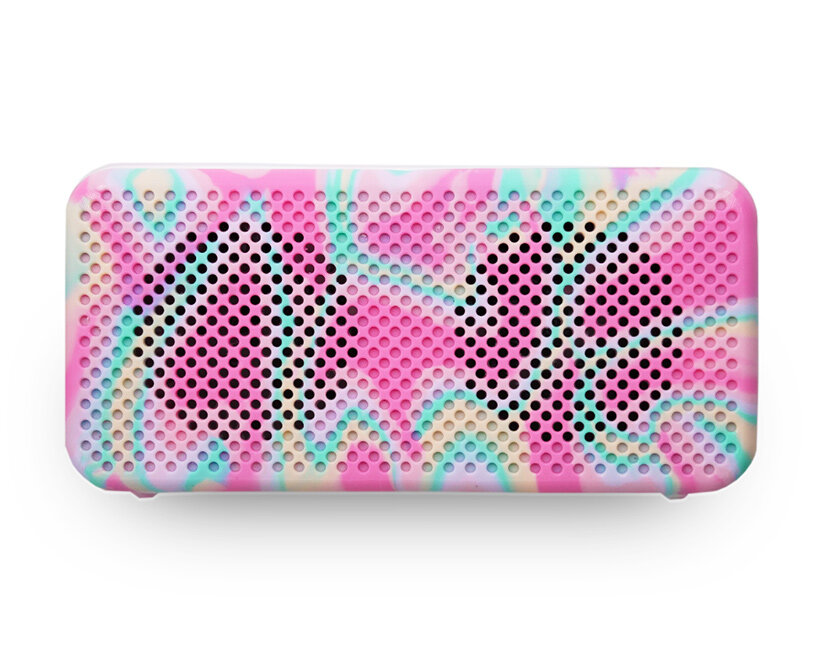
When these disparate plastics are melted together and pressed into gomi’s signature housing molds, they create striking, unpredictable patterns. The dense saturated pinks, stark whites, pale blues, and vibrant accents of the original dolls fuse with the swirling matrix of the melted bags. Because every batch yields its own unique color distribution and fluid geometry, no two manufactured tech housings come out looking identical. This inherent irregularity ensures that every consumer electronic item produced in the workshop functions as a standalone piece of functional art, carrying a distinctive visual signature born directly from its constituent waste materials.
There is a profound, almost poetic symmetry in taking an object designed for imaginative childhood play and transmuting it into the physical casing of a durable household electronic device that adults might keep around for years. Rather than attempting to mask or disguise the recycled nature of the materials—a common practice in mass-market electronics that rely on virgin plastics and uniform chemical dyes—gomi leans heavily into the material’s past life. The subtle, speckled flecks of bright pink and pastel hues weaving across the matte surfaces establish the primary visual character of the collection. The design philosophy honors the history of the plastic rather than erasing it, turning the remnants of childhood nostalgia into a conversation piece for contemporary interiors.
This commitment to sustainability extends far beneath the exterior aesthetic of the collection. Inside each device, gomi maintains the same rigorous environmental ethos by utilizing repurposed e-bike batteries, significantly reducing the demand for newly mined lithium and raw energy storage components. Furthermore, the structural engineering of the housings avoids the industry-standard shortcut of permanent chemical adhesives. Instead, gomi assembles the speakers and power banks using standard screws.
By opting for mechanical fasteners rather than glues, the studio ensures that the electronics can be easily opened up, serviced, repaired, and upgraded as individual components age or wear out over time. To close the loop entirely, gomi has structured future-facing plans that include comprehensive trade-in and upgrade programs. These initiatives are designed to ensure that internal parts and outer casings can seamlessly transition into subsequent product generations rather than being discarded after a single consumer lifecycle.
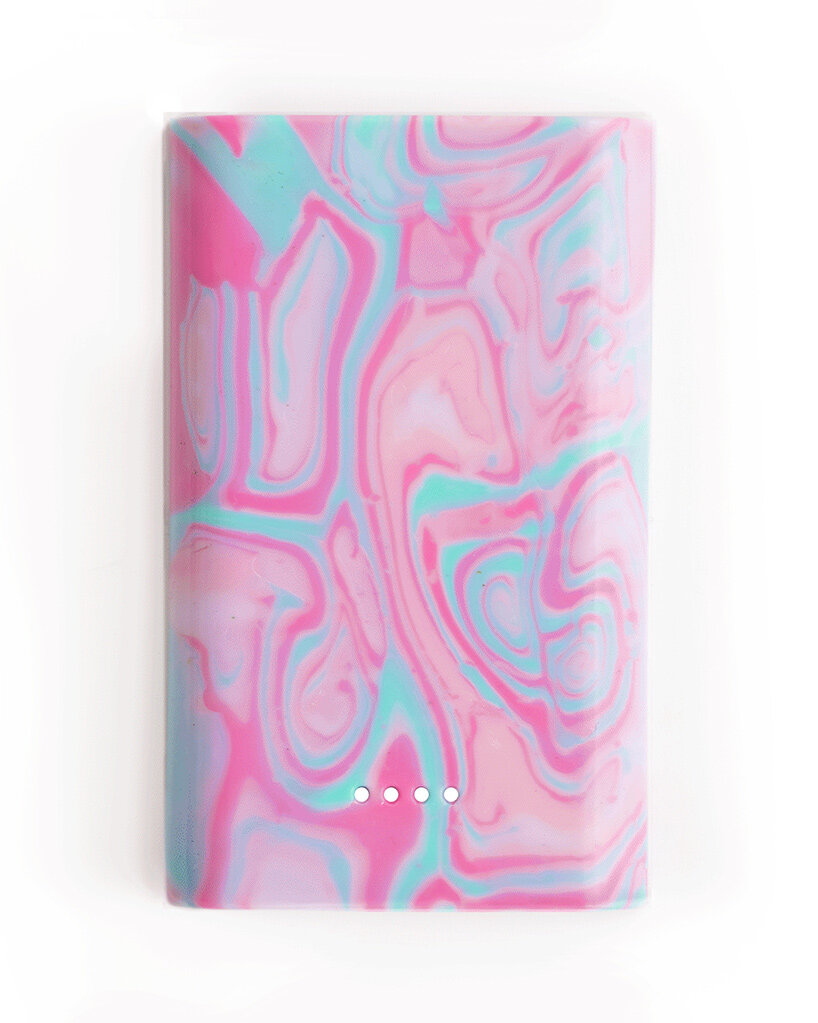
Because every single item in the Childhood Memories Collection is shaped by hand within the Brighton workshop, the production scale mirrors that of a limited fine-art design edition rather than a conventional, high-volume consumer electronics rollout. The collection is slated to arrive through carefully curated monthly limited releases, with the availability and precise aesthetic of each drop dictated entirely by the specific mix of recycled materials entering the workshop at any given time. Two distinct speakers might share the exact same acoustic architecture and physical silhouette, yet their outer shells will display completely different topographies of color, texture, and fragmentary toy remnants.
This heavy reliance on handcrafting and material variability is where the collaboration with Barbie truly distinguishes itself. Many corporate brand partnerships settle for simply stamping a licensed logo onto an existing, mass-produced product or spraying a standard pantone color onto a standard plastic mold. In contrast, gomi’s approach bypasses surface-level branding by integrating the actual brand artifact into the raw material supply chain. A plastic doll, manufactured years ago for an entirely different purpose, is fundamentally broken down and reborn. It moves from a toy box into a speaker grille or a charging accessory, remaining bright, colorful, and subtly recognizable in fragmented abstract patterns, even as its fundamental utility shifts completely.
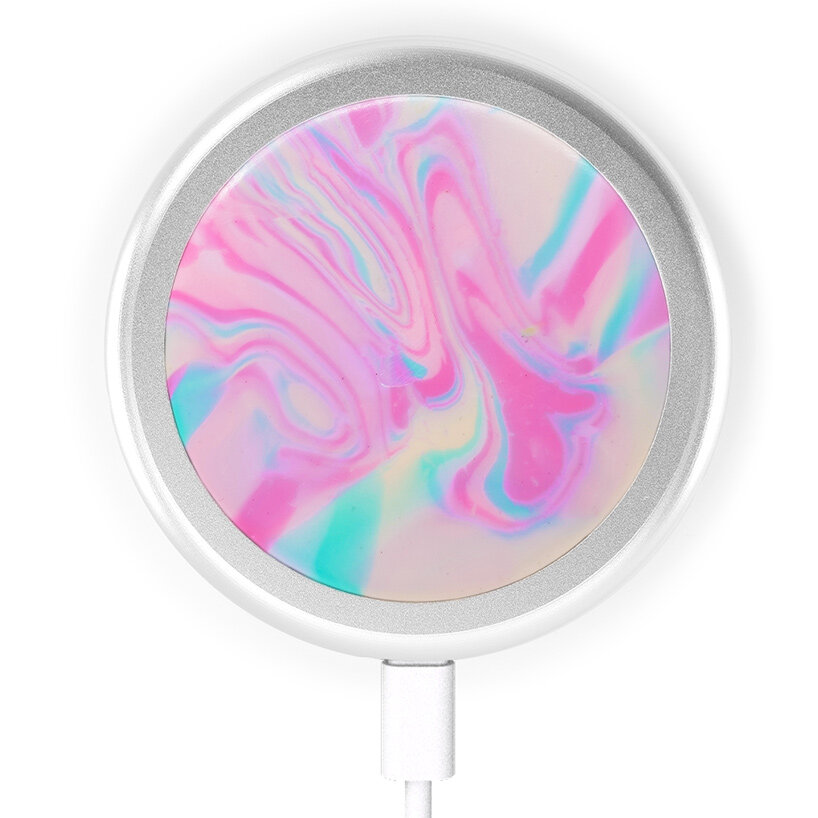
The process bridges two seemingly incompatible worlds: the mass-produced, highly commercialized universe of global toy manufacturing and the localized, artisanal sphere of independent circular design. By collecting old dolls and processing them alongside neglected municipal soft plastics, gomi demonstrates how waste streams can be elevated into desirable consumer goods without losing the narrative of where those materials came from. The shifting bands of pink, white, and multicolored plastics that ripple across the handmade housings serve as a constant reminder that our material culture is enduring, and that yesterday’s playthings can find meaningful, long-term utility in the digital age.
As the Brighton studio prepares for its upcoming monthly releases, the initiative offers a compelling blueprint for how independent designers can rethink the relationship between nostalgia, waste reduction, and consumer technology. By inviting the public to contribute directly to the raw material pool, gomi has turned a localized recycling effort into a shared creative endeavor. The resulting devices stand as tangible proof that thoughtful engineering and circular manufacturing can rescue discarded plastics from obscurity, transforming the artifacts of childhood into durable, repairable tools for everyday life.