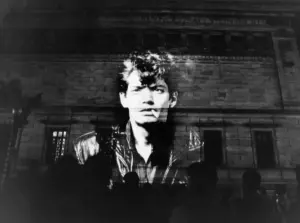
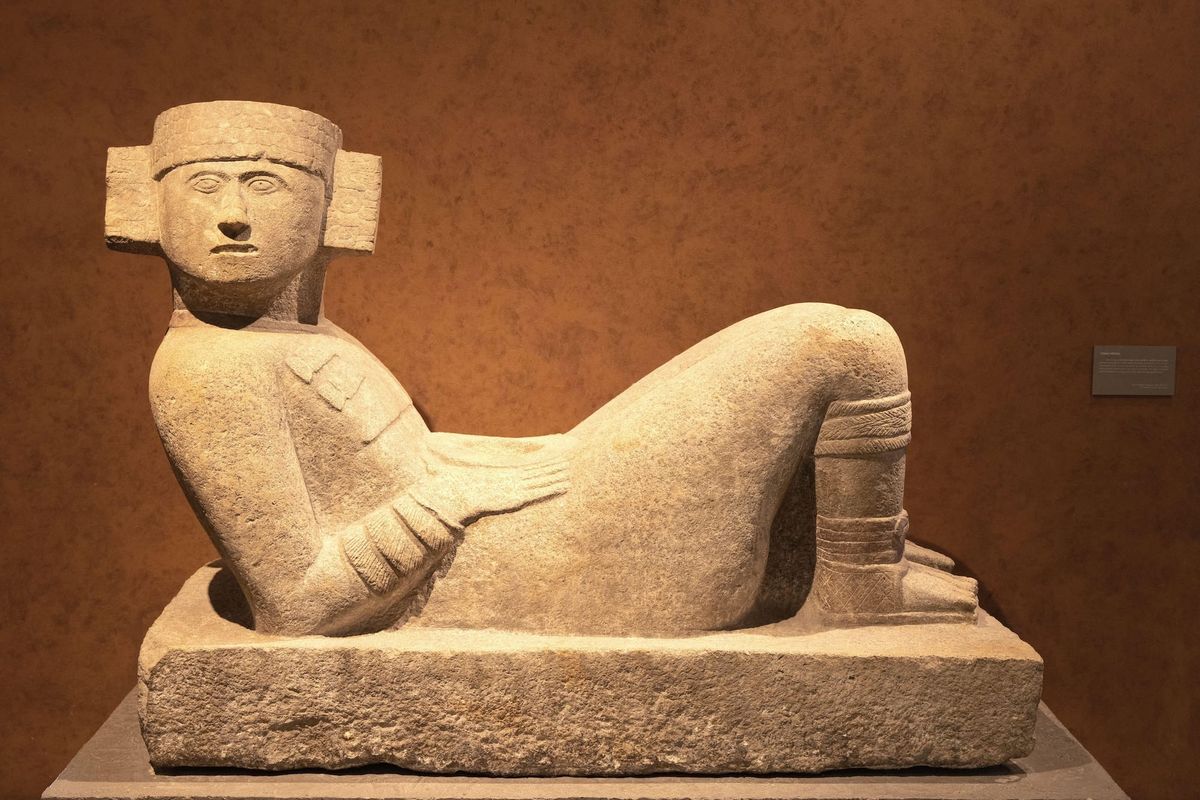
In a striking 1940 photograph captured by the legendary Man Ray, Academy Award-winning actor Teresa Wright poses with a soft, misty-eyed gaze alongside an ancient Chacmool sculpture. The reclining figure, featuring a distinctively carved stone body with its head dramatically contorted toward the viewer, represented far more than an ancient relic of a bygone civilization. To Hollywood’s elite, cultural tastemakers, and a rapidly expanding clientele of collectors and major institutions eager to acquire pre-colonial art from ancient Mesoamerica, the sculpture offered a fresh, avant-garde vision of modernity.
The allure of these objects quickly translated into serious institutional acquisitions. In 1947, for example, the Minneapolis Institute of Art boldly purchased a "King Chak Mool" for the substantial sum of $10,000. Capitalizing on its growing prestige, that very sculpture toured Europe as part of a high-profile international exhibition from 1958 to 1960, quickly cementing its place as a cornerstone of the museum’s permanent collection. Yet, just a decade later, a specialist examining the piece made a stunning and dreaded discovery: The celebrated ancient masterpiece was an elaborate forgery.
This cautionary tale of glamour, deception, and illicit antiquities trade sits at the heart of Artifacts to Art: Collecting Ancient America in Midcentury L.A., a new book published in 2026 by researchers Andrew D. Turner, Mary E. Miller, and Khristaan D. Villela. The comprehensive volume explores the complex social, economic, and aesthetic conditions that ultimately shifted the classification of "pre-Hispanic" artifacts from ethnographic items of study typically found in anthropological museums to high-value art objects coveted by elite fine art museums and wealthy private patrons alike.
For the book’s authors and critics examining the institutional history of West Coast culture, the study answers a persistent historical question. As a curator reflecting on the region’s collecting habits notes, it clarifies a long-standing curiosity: Why is so much of the cultural heritage of ancient Central and South America preserved specifically within Los Angeles-area museum collections?
According to Artifacts to Art, the answer lies largely in the operations of the Stendahl Art Galleries, which served as a primary driver behind the illegal looting, rampant smuggling, and aggressive marketing of these archaeological treasures to an eager Los Angeles clientele. The galleries’ extensive and revealing archive is now safely housed at the Getty Research Institute—the very institution that published the new book. This institutional custody has allowed for an unprecedented, deep-seated investigation into the shady dealings of an art dealer who demonstrated remarkably little regard for the complex cultural histories and indigenous communities he actively exploited for profit.

Turner, Miller, and Villela present five years of groundbreaking, meticulous research into the Stendahl archive. Moving through non-chronological chapters, the book details the various systemic forces that collided during the mid-twentieth century to create a lucrative, uninhibited market for these vulnerable objects. The narrative maps a complex web of complicity, describing how revered international museums, glamorous Hollywood actors, and opportunistic looters operating across rural regions in Mexico all fed an insatiable commercial appetite.
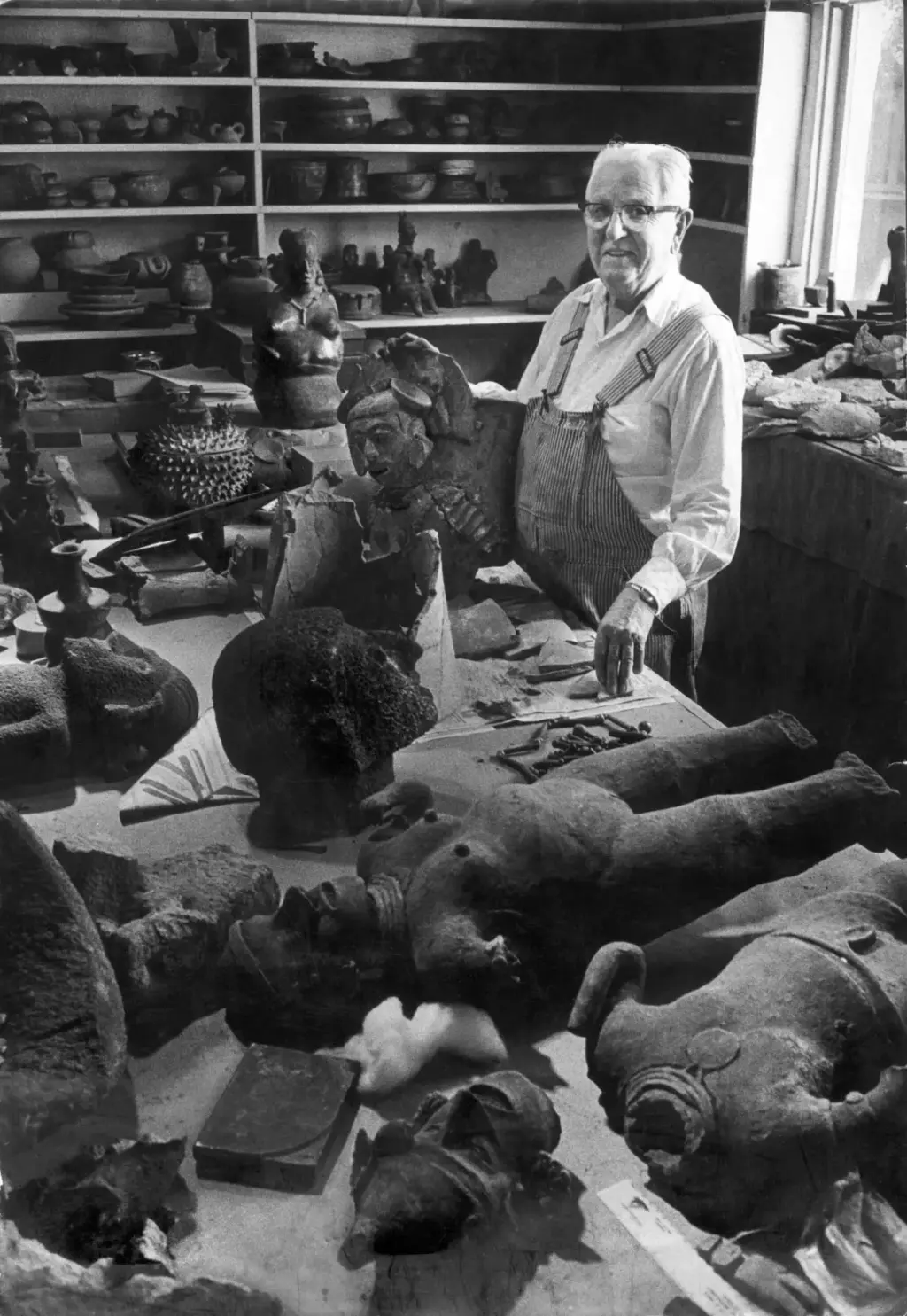
The shadow cast by Earl Stendahl over the mid-century art landscape is central to this historical reckoning. Operating out of his Los Angeles spaces, including his workshop on Hillside Avenue, Stendahl functioned less like a traditional fine art dealer and more like an impresario of the illicit. By packaging stolen patrimony as sleek, modernist decor, he bridged the gap between Hollywood’s golden age and the underworld of international antiquities trafficking.
The publication of Artifacts to Art arrives at a time of intense global reckoning regarding museum provenance, the illicit trade of cultural property, and ongoing repatriation efforts. By laying bare the mechanics of how mid-century institutions eagerly acquired objects stripped from their native contexts—and sometimes purchased expensive fakes in the process—the book offers a sobering look at the foundations upon which many prominent American collections were built.