The 2026 edition of POSITIONS Berlin Art Fair, hosted once again within the historic, industrial expanse of Tempelhof Airport’s Hangars 5 and 6, arrived at a pivotal moment for the European art market. Unfolding against the backdrop of Berlin Art Week, the fair served as a barometer for the health of the continent’s primary market—a landscape currently defined by macroeconomic recalibration and a marked shift toward selective, considered acquisition. As high-level capital and blue-chip international collectors increasingly concentrated their attention on concurrent, high-profile institutional events, POSITIONS asserted its identity as a vital incubator for emerging voices and a dedicated space for regional private collectors and institutional curators.
The atmosphere on the fair floor this year was one of tempered intensity. In a departure from the frenetic pace of previous boom years, the 2026 edition favored a slower, more deliberate rhythm. Exhibitors noted that the impulsive, speculative purchasing behavior that defined the post-pandemic recovery has largely given way to a more discerning approach. Buyers were notably cautious, preferring to engage in long-term dialogues with gallerists rather than making snap decisions. This resulted in a split-rhythm fair experience: the opening days were characterized by a quiet, professional focus, while the weekend brought a surge in concentrated foot traffic, suggesting that while the market is undeniably tighter, the appetite for high-quality contemporary work remains robust.
Dealer Perspectives: Visibility and Strategic Growth
For the mid-tier and emerging galleries that form the backbone of POSITIONS, the fair functioned less as a high-volume transactional hub and more as a sophisticated visibility engine. In the current economic climate, galleries are viewing fair participation as a strategic investment in their brand equity, prioritizing institutional placement and the cultivation of long-term collector relationships over immediate, short-term turnover.
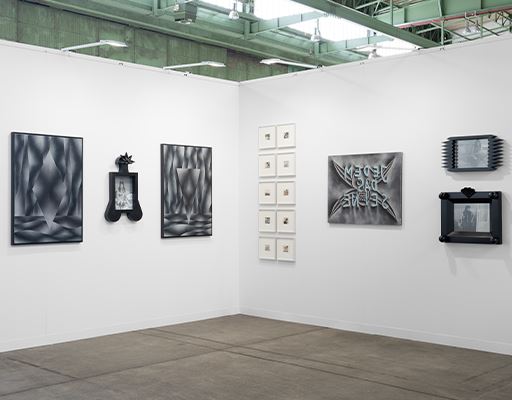
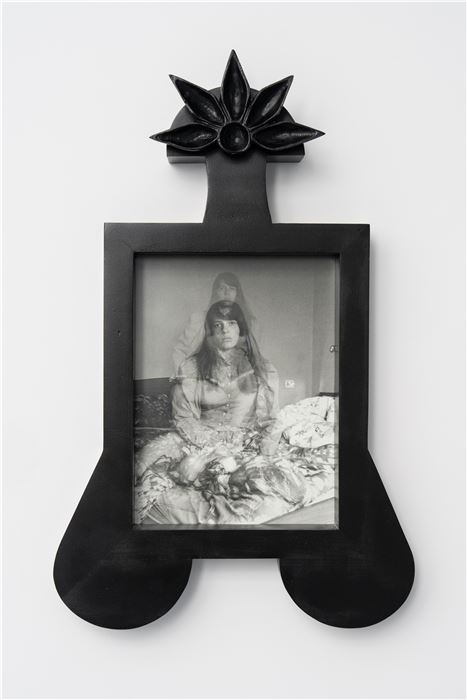
The Bucharest-based ARSMONITOR, marking its inaugural appearance at the fair, perfectly encapsulated this strategic shift. Gallery Director Lina Ērmure utilized the platform to signal the gallery’s intent to cement an international footprint. Her booth was a masterclass in curation, pairing the emerging photographic artist Eva Chapkin with the established painter Gili Mocanu. This deliberate dialogue between generations and mediums proved successful, with Chapkin’s photographic objects—noted for their striking black frames—serving as the booth’s primary commercial catalyst. Mocanu’s monochromatic, structurally dense canvases provided a necessary weight to the installation, grounding the booth’s visual narrative. Despite the broader market trend of a "quieter" fair, Ērmure reported that the depth of engagement from serious German collectors and key institutional contacts validated the gallery’s decision to move into the Berlin market, proving that quality, targeted outreach can circumvent broader economic lethargy.
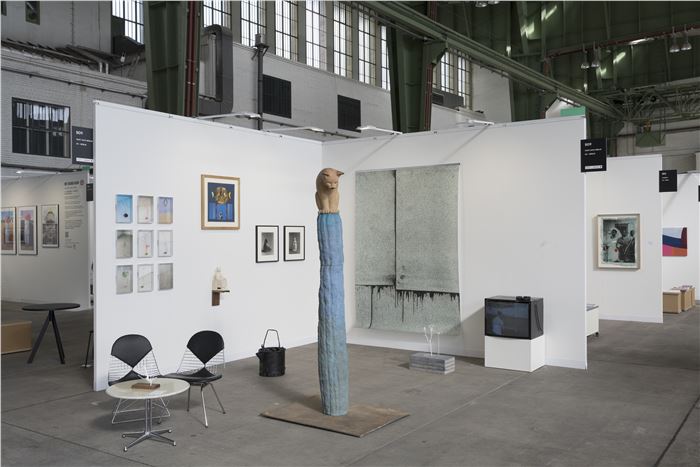
Similarly, the Berlin-based gallery Paint Shop approached its debut as a bridge between its local exhibition space at Hasenheide 12 and the international curatorial community. Partner and Co-Director Lukas Fritze observed a diverse visitor profile, ranging from casual art enthusiasts to seasoned institutional representatives. The booth’s success hinged on its ability to present works with high tactile and visual impact. Anna Herms’ monumental 230-centimeter ceramic sculpture, A Questionable Refuge, which depicts a bobcat perched atop a cactus, functioned as a powerful visual anchor that stopped traffic and facilitated deeper conversations about the nature of contemporary sculpture.
From a sales perspective, Paint Shop found its momentum in the floral-inspired series by Jane Garbert, specifically Anabeki and Allies. These works, utilizing complex boro-glass techniques to render weeds and wildflowers like poppies, thistles, and dandelions, resonated deeply with collectors who possess a penchant for intricate craftsmanship. For Fritze, the commercial traction gained at the fair provides essential momentum for upcoming 2027 solo exhibitions for both artists, illustrating the "post-fair pipeline" that many galleries now rely upon to sustain their annual programming.
Materiality, Innovation, and the Changing Fair Landscape
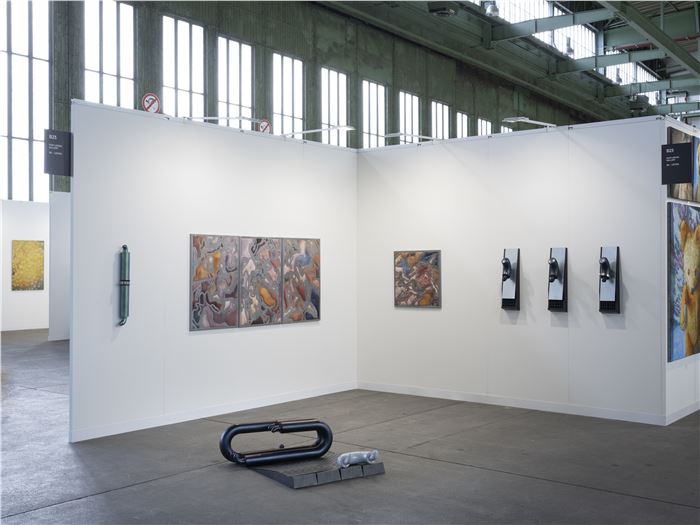
The trend toward material tactility was further evidenced at Raw Lemon Gallery, where the booth curation reflected a fascination with industrial textures and structural design. Manager and curator Lara Popp orchestrated a tight, conceptually driven display centered on the interplay between structural steel and surface treatment. By pairing the works of Emilie Houldsworth with those of Len Bay, the gallery showcased a cohesive vision of contemporary materiality.
Houldsworth’s Liquid Love series—hybrid wall works that blur the lines between digital imagery, velvet, and steel—stood in direct conversation with Len Bay’s toy boy series. Bay’s sculptures, which wittily reconfigure the hyper-masculine aesthetics of automotive tuning into phallic, organic forms, represent a significant success story for the fair’s internal ecosystem. Bay’s transition from the fair’s "Academy Positions" section to full gallery representation on the main floor underscores the vital role POSITIONS plays as an incubator for talent. Popp noted that the enthusiastic reception at the fair has provided a significant boost to the gallery’s visibility, particularly as it manages the transition into a newly expanded 130-square-meter space. This type of growth, supported by successful fair appearances, suggests that for galleries with a strong, distinct aesthetic, the current market remains fertile ground for development.
However, the fair was not without its logistical and competitive challenges. Bernd Reichert, owner of the C&B Reichert Galerie, offered a more critical assessment of the mechanics of Berlin Art Week. While the gallery experienced a notable surge in interest on Sunday—largely due to the influx of younger, fashion-forward audiences attending the concurrent Fashion Positions program—Reichert noted that the sheer volume of satellite events and gallery nights across the city often creates friction.
His booth, which featured the multi-disciplinary installation FLOURISHA by Nena Cermak—a work that combined textiles, sculpture, and live performance—was a standout for public engagement. Alongside this, Matthias Gálvez’s realistic, politically charged painting Ausreisebestimmungen (Exit requirements) drew steady attention from serious collectors. Yet, Reichert observed that his permanent gallery space actually saw higher foot traffic on Thursday than the fair floor itself. This sentiment reflects a broader industry debate regarding the necessity of physical fairs in cities like Berlin, where the density of permanent gallery spaces can occasionally cannibalize the attention of local collectors who prefer the intimacy of a dedicated exhibition space over the bustling, and sometimes overwhelming, environment of an airport hangar.
Outlook: The Future of the Primary Market
The 2026 POSITIONS Berlin Art Fair has provided a clear picture of a market in transition. For the emerging and mid-sized galleries that define this segment of the art world, the physical fair is no longer a guaranteed transactional panacea. Instead, it has evolved into a hybrid instrument of outreach. Success in the current climate is determined by a gallery’s ability to use the fair as a "visibility engine" to secure long-term institutional placements and to seed future collector interest through thoughtful, material-heavy presentations.
As the industry moves forward, the reliance on digital follow-ups and the integration of fair presentations into broader, year-long gallery programming will likely increase. The sustained demand for distinct, tangible craftsmanship—from the boro glass of Jane Garbert to the industrial steel of Emilie Houldsworth—suggests that in an increasingly digital and automated world, collectors are finding solace and value in the physical, the performative, and the labor-intensive.
The primary market, while facing the headwinds of macroeconomic uncertainty and the logistical competition of a crowded art week, is proving to be remarkably resilient. By balancing the necessity of local gallery-space momentum with the strategic, calculated exposition of talent at fairs like POSITIONS, gallerists are successfully navigating the new reality of the art world. As the dust settles on the 2026 edition, it is clear that the galleries that thrive will be those that continue to prioritize the depth of the collector relationship and the distinctiveness of the artistic voice above all else.