The global art market cycle spanning late 2025 into early 2026 has revealed a striking bifurcation in collector behavior, one that reflects a broader recalibration of risk and access. On one side of the ledger, blue-chip secondary market benchmarks continue to demonstrate remarkable institutional durability, with headline-grabbing record prices fueling headlines. Yet, beneath the surface of these high-stakes public auctions, a growing cohort of mid-market collectors is shifting its focus. These buyers are increasingly seeking accessible, reliable entry points into the primary tier, looking to bypass the volatility and premium-heavy environment of the auction room in favor of the curated stability offered by gallery programs.
This divergence is not merely a reaction to rising costs but a strategic pivot. While major international auction houses continue to see robust demand for foundational postwar movements—most notably South Asian Modernism and European Informalism—the secondary market’s often erratic price escalation has left both seasoned collectors and emerging advisors searching for more sustainable channels. The objective is to acquire historically significant or conceptually aligned works without sacrificing the rigorous provenance or aesthetic pedigree that define a serious collection. By bridging the gap between the loud signals of the auction block and the quiet reliability of primary market retail, collectors are finding a path toward long-term value.
The Ascent of South Asian Modernism
The secondary market for South Asian Modernism has reached a series of historic milestones in recent months, fueled by unprecedented momentum that has drawn international attention. Central to this resurgence is the legacy of the Bombay Progressive Artists’ Group, particularly the work of co-founder Francis Newton Souza. In late September 2025, Souza’s market achieved a new level of visibility, highlighted by the sale of his 1962 landscape, Houses in Hampstead, which realized $7.5 million at Sotheby’s London. This was quickly followed by the record-setting performance of his 1955 drawing suite, Six Gentlemen of Our Times, which fetched $2.3 million at Saffronart—a figure that stands as a benchmark for South Asian works on paper.
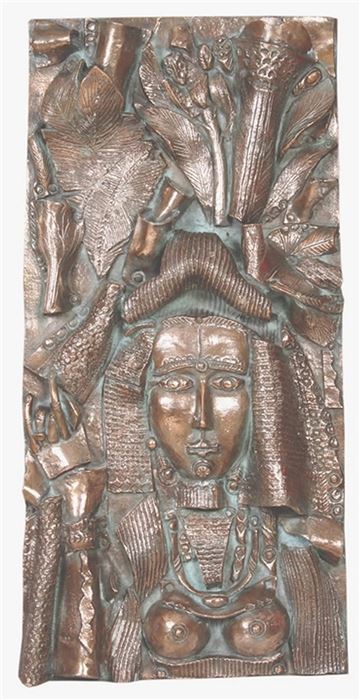
As the spotlight on Souza continues to intensify, the collector base has naturally broadened its scope to encompass the wider canon of modern Indian masters. Among these, K. Laxma Goud, an artist whose roots in rural Andhra Pradesh inform a deeply narrative-driven practice, has emerged as a focal point for those looking to engage with the movement’s living history. Goud’s work, which spans drawing, intricate etching, and bronze casting, is deeply connected to pastoral traditions and local storytelling. His command of line work and his tactile, almost visceral material sensibility place his output in direct aesthetic dialogue with the mid-century pioneers who redefined modernism across the subcontinent.
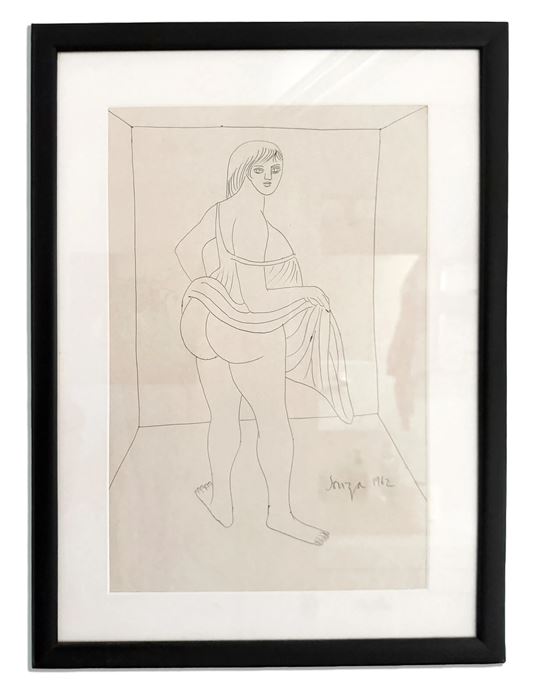
For collectors, the opportunity to acquire Goud’s work through primary channels like Sanchit Art represents a crucial entry point. Sanchit Art has distinguished itself by curating a program dedicated to the preservation and promotion of modern Indian masters. By working directly with the gallery, collectors can bypass the speculative pressures of the auction room. Currently, the gallery’s inventory offers a broad spectrum of accessibility, with works on paper priced from approximately $1,500 and sculptures reaching up to $18,000. This structure allows new and established collectors alike to anchor their holdings in work that is not only historically significant but also directly vetted and supported by an institutional-grade program.
European Informalism and the Legacy of Gesture
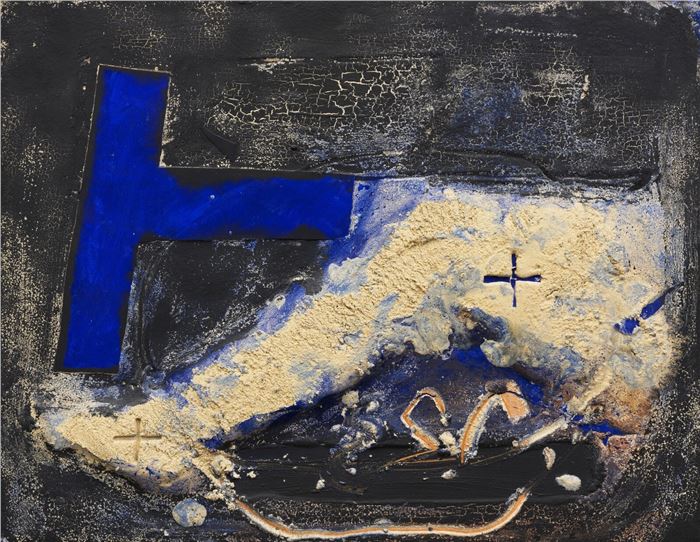
If South Asian Modernism provides one pillar of the current market’s interest, European Informalism remains the other, serving as one of the most institutionally central movements in the history of postwar art. The movement is anchored by the profound materiality of master painter Antoni Tàpies, whose work continues to exert a massive influence on the contemporary imagination. His significance was underscored by a high-profile exhibition at MACBA in Barcelona, which served as a reminder of his enduring relevance. Tàpies’ secondary market performance remains formidable, with a cumulative turnover of $69.4 million recorded since 1998, and an individual record set by Gran ocra amb incisions (1961) at $2.8 million.
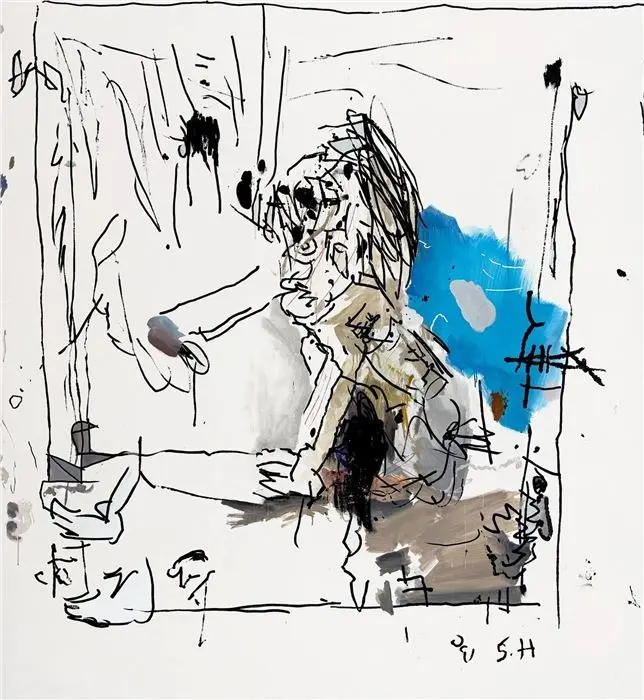
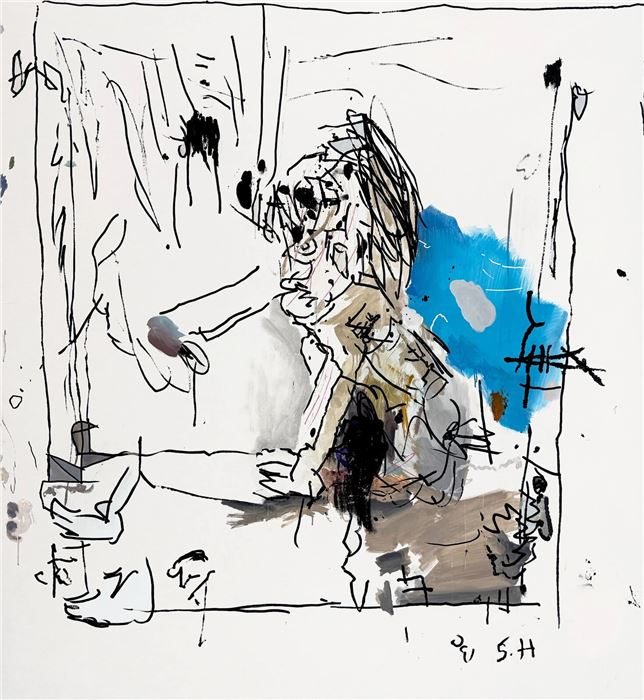
The sustained appetite for Tàpies’ work, supported by his presence in premier collections like the Guggenheim Bilbao, speaks to a broader, enduring collector fascination with "gesture-first" abstraction. This process-driven tradition finds a compelling contemporary successor in the work of Secundino Hernández. Trained in Madrid and working across international hubs such as Berlin and New York, Hernández explores the complex tensions between linear drafting and explosive, layered color. His surfaces are characterized by physical abrasion and the visible, almost violent trace of the painterly act—a direct generational continuation of the material heritage defined by Tàpies.
Represented by Galeria Jordi Pascual, Hernández provides collectors with a living, breathing connection to the postwar masters of the Informalism movement. His work is not merely an homage but a continuation of the same focus on texture, process, and movement that has captivated museums for decades. For those looking to enter this space, the primary inventory at Galeria Jordi Pascual offers a range of price points—currently structured between $12,000 and $60,000—which provides a clear, transparent pathway for acquisition. This allows collectors to engage with high-caliber contemporary abstraction while avoiding the competitive, often opaque dynamics of the secondary market.
The Volatility of Street Art and Editions
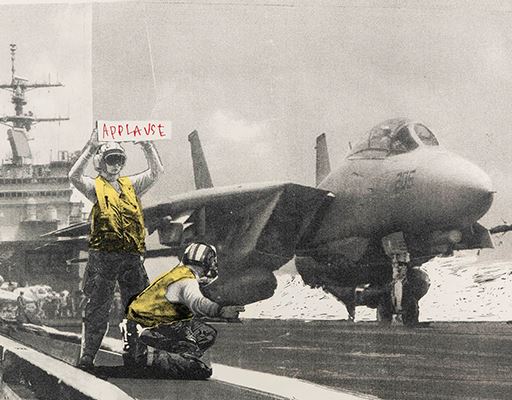
Perhaps nowhere is the divergence between auction momentum and primary market stability more visible than in the market for street art and limited editions. The print and multiples sector frequently experiences sharp, short-term signals that can be difficult for even seasoned collectors to interpret. A prime example occurred during Sotheby’s March 2026 Prints & Multiples sale, where Banksy’s screenprint Applause realized £96,000 (approximately $127,885). This result was roughly three to four times its historical trading range of £20,000 to £30,000, setting a new record for the work. Similarly, a screenprint of Girl With Balloon reached £115,200, significantly exceeding its typical performance range.
While these spikes are often interpreted by the public as indicators of a "new normal," market experts remain cautious. Many commentators have flagged this cluster of sales as a localized momentum signal—a momentary flash of intense interest—rather than a confirmed, durable repricing of the artist’s entire body of work. For the collector, navigating these public sales during moments of high volatility presents distinct risks. The temptation to chase a record price in a competitive bidding war can lead to over-leverage, often at the expense of long-term value and the peace of mind that comes with ironclad provenance.
This is where galleries like Andipa come into play. As one of the longest-established authenticators of Banksy prints, having operated Andipa Editions since 2006, the gallery offers a necessary buffer against the sharp edges of auction speculation. Acquiring a work through such a channel allows a collector to secure a piece that has been fully authenticated and vetted, effectively bypassing the uncertainty inherent in the auction room. With inventory spanning a wide range—from £11,500 to upwards of £500,000 depending on the edition size, signature, and historical rarity—the primary gallery channel provides a level of market expertise that is simply unavailable on the floor of a high-pressure auction.
Ultimately, the structural connection between the secondary market’s momentum and the availability of work through primary gallery channels is a vital piece of the puzzle for any serious collector. Whether one is drawn to the pastoral modernism of K. Laxma Goud, the raw gestural abstraction of Secundino Hernández, or the iconographic, authenticated editions of Banksy, the strategy remains the same: leverage the data provided by public auctions to inform, but not dictate, one’s primary acquisitions. In an era of shifting market dynamics, the ability to engage directly with representing galleries through platforms like MutualArt remains the most effective way to secure provenance, verify pricing, and ensure that a collection is built on a foundation of genuine historical and artistic significance. As the market continues to evolve, those who prioritize direct relationships and expert-vetted inventory are likely to find the most success.