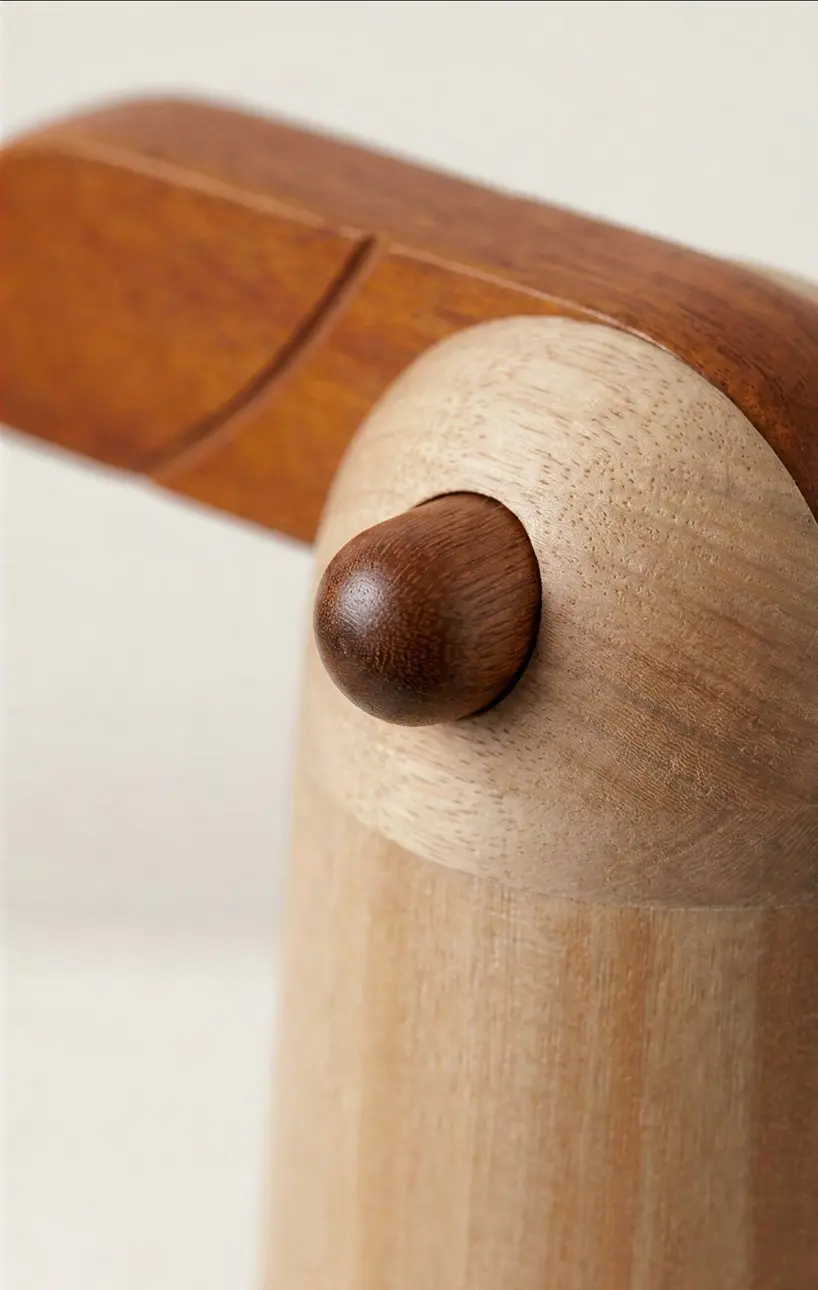
Medellín-based design studio Estudio Gris has unveiled its latest creation, the TUPI table lamp, a lighting fixture carved from solid oak that draws its primary aesthetic inspiration from the quiet stillness of a bird at rest. Led by designers Gustavo Rodríguez and Estefania Agudelo, the studio approaches product design through an intentional lens they describe as "introverted design." Rather than commanding attention or dominating a space, TUPI is conceived as a subtle, contemplative presence meant to reveal its character slowly through tactile materials, precise proportions, and a warm, carefully directed glow.
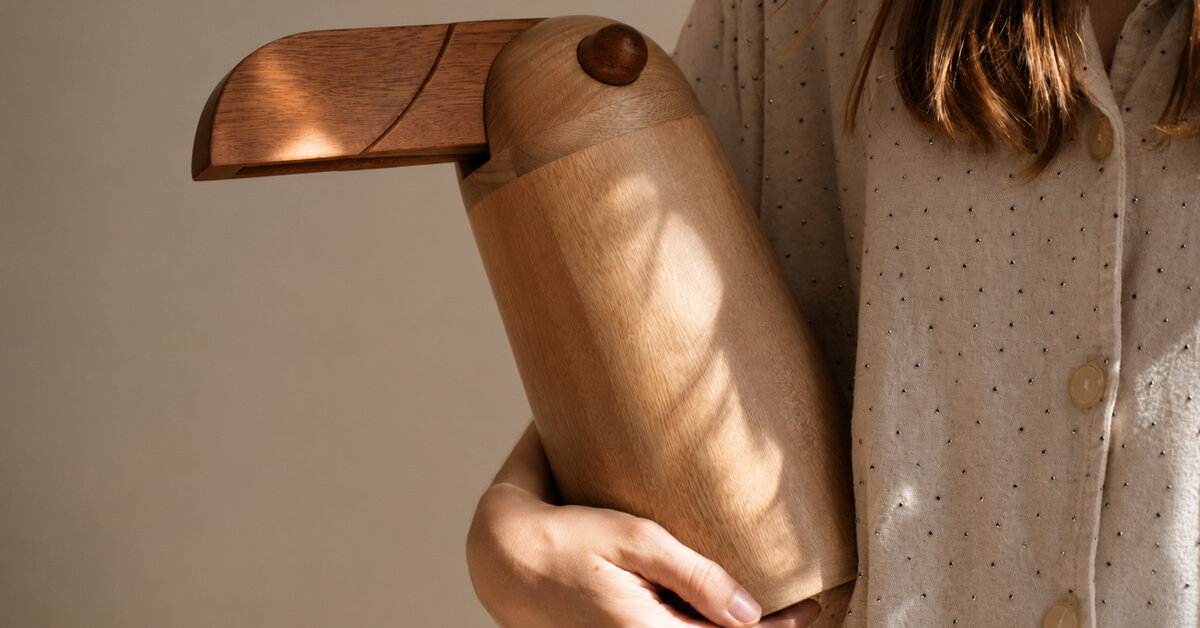
The genesis of the TUPI table lamp lies in a singular, organic observation: that precise moment when a bird pauses its movement and simply observes its surroundings. Translating this fleeting image into a functional domestic object required a careful balance of sculpture and utility. The lamp’s body is turned from a single piece of solid oak within a local workshop located in Medellín, Colombia, ensuring that regional artisanal expertise remains at the heart of the manufacturing process. Following the turning process, each lamp is meticulously assembled by hand, emphasizing the natural material qualities and unique textures inherent in solid timber.
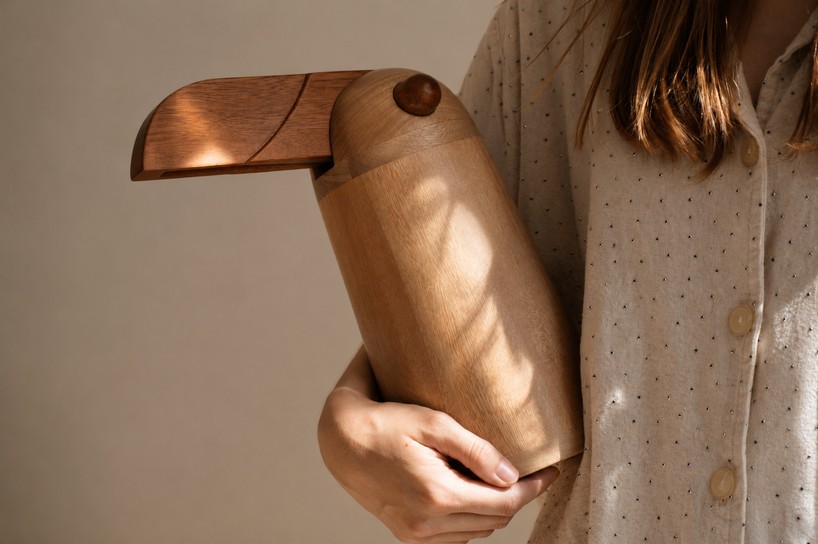
Sculptural Silhouette and Dual-Tone Wood Craftsmanship
The silhouette of the TUPI table lamp begins with a tapered, organically contoured body that rises gracefully to a rounded head. To complete the avian likeness, a darker wooden beak extends forward from the head, accompanied by a small, precisely turned eye detail. Beyond its sculptural role, the contrasting dark wooden beak serves a crucial functional purpose: it acts as the lamp’s integrated shade.
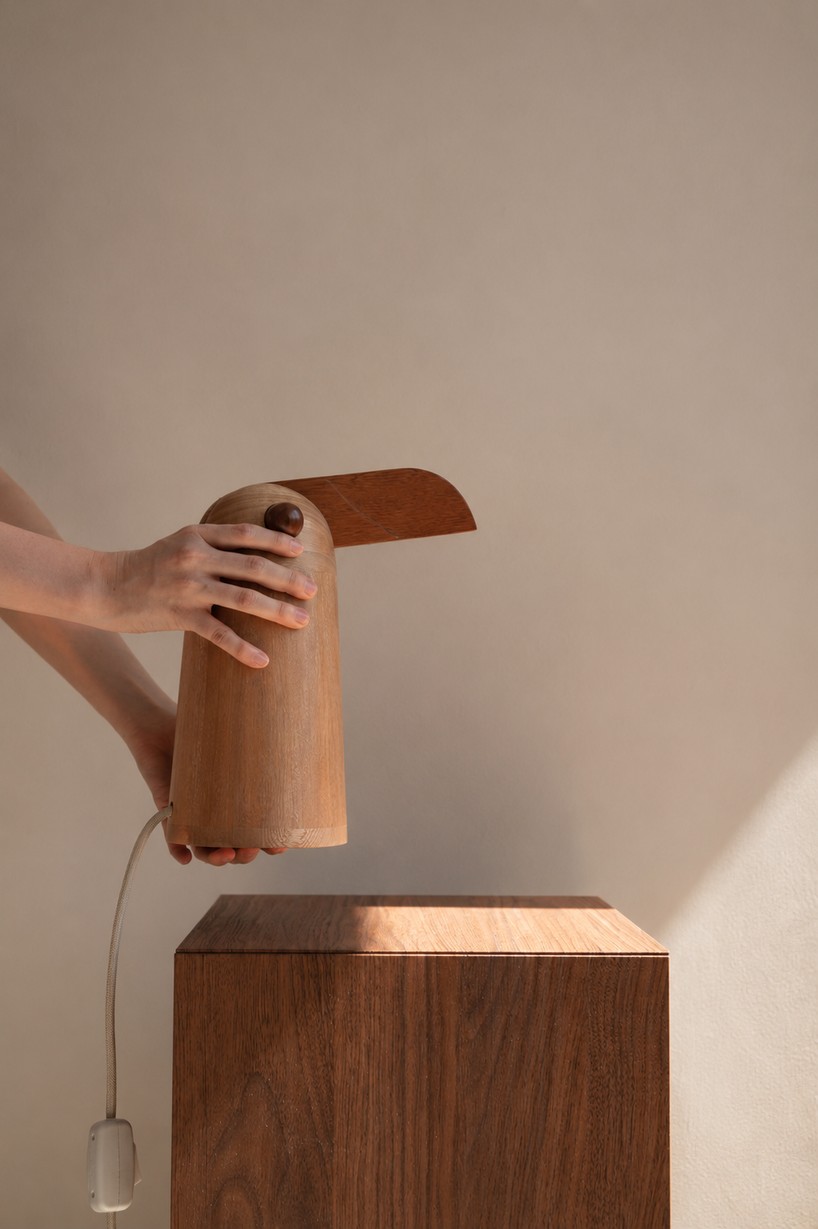
The light source is cleverly concealed directly beneath this protruding dark wooden beak. As a result, instead of casting an unshielded glare outward into the room, the illumination projects in a warm downward glow. This light washes softly over the tapered oak body below, accentuating the natural grain texture of the timber. When the lamp is switched on, the interplay between the light and the wood grain transforms the raw material into an active component of the illumination, highlighting the natural imperfections, patterns, and warmth of the solid oak.
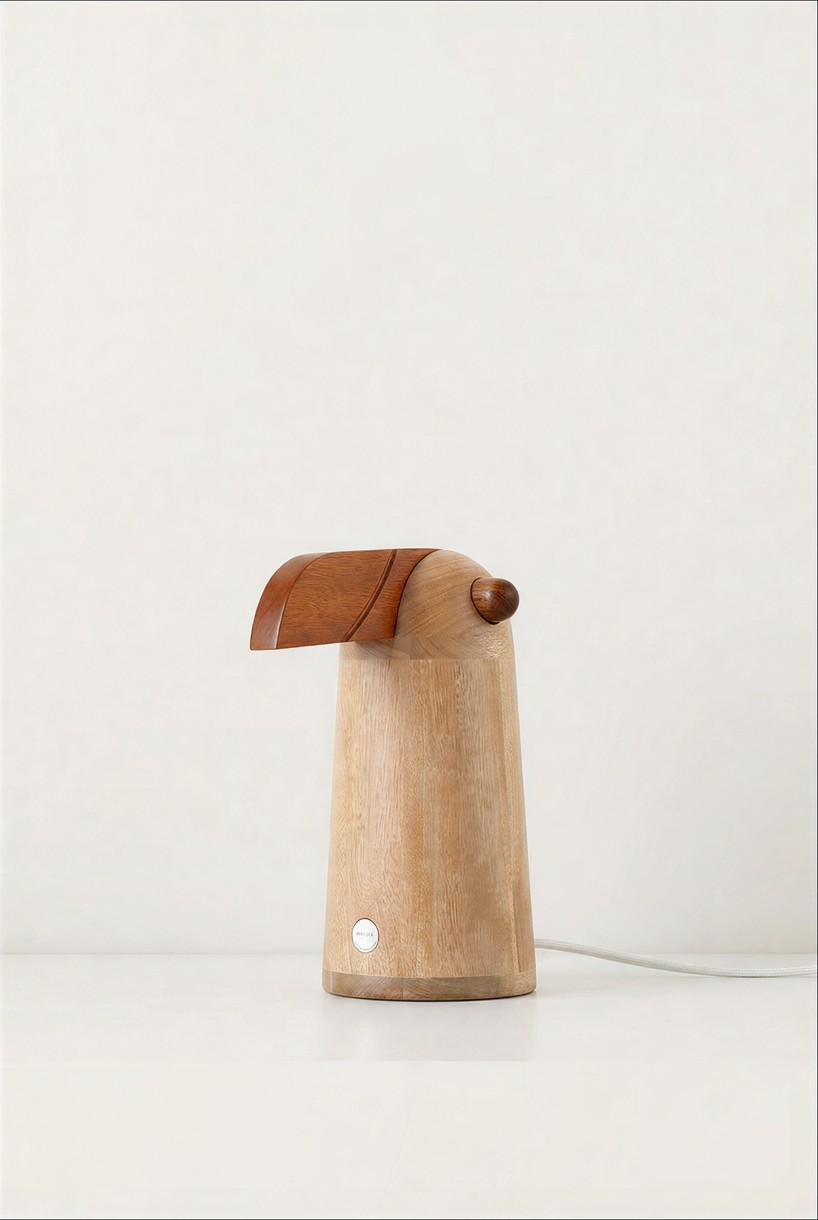
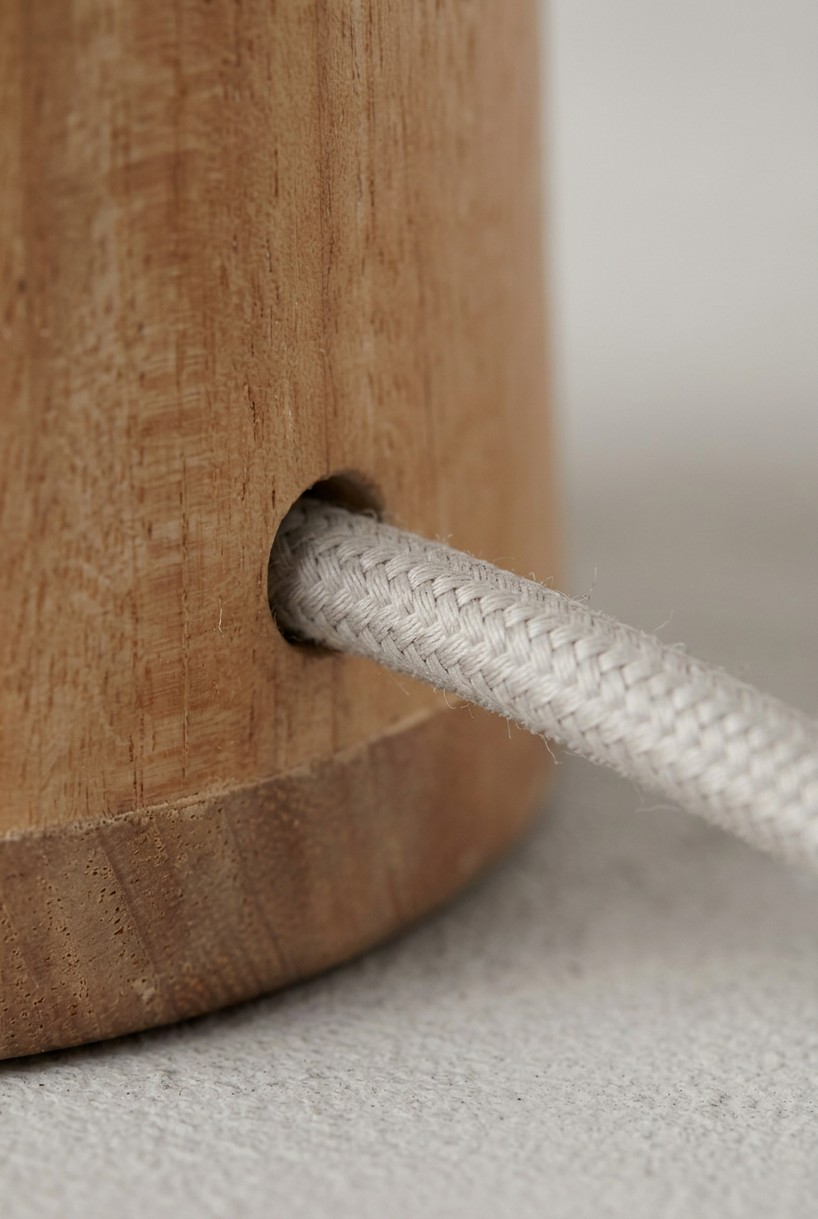
The material palette is kept intentionally restrained and natural. Alongside the dual-tone wood species used for the body, beak, and eye, Estudio Gris incorporated subtle modern hardware details that blend seamlessly into the design. A minimalist power switch is set flush into the base of the lamp, preserving the uninterrupted purity of the sculptural form. A beige fabric-covered cable extends from the fixture, rounding out a cohesive material language that prioritizes tactile warmth and organic authenticity.
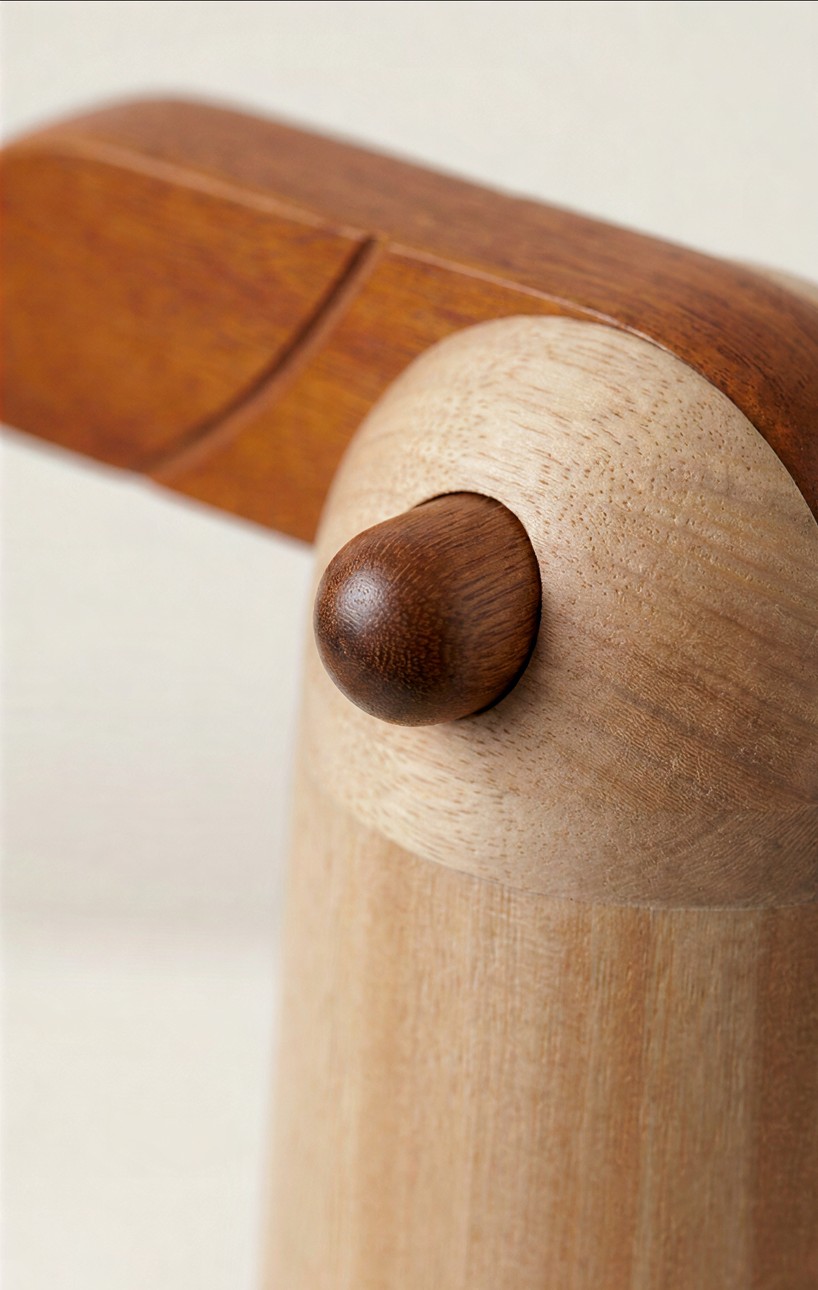
Because each TUPI lamp is made to order and crafted by hand in Medellín, no two pieces are entirely identical. Minor variations in the wood grain, coloration, and tone ensure that every individual lamp carries its own distinct character and visual identity. Measuring 25 by 15 by 15 centimeters and weighing approximately one kilogram, the compact fixture is proportioned to sit comfortably on a variety of domestic surfaces, including a desktop, a bedside table, or a living room shelf.
The Philosophy of Introverted Design
The design philosophy guiding Estudio Gris reflects a deliberate counterpoint to overly loud or aggressively modern industrial design. By embracing an introverted approach, Rodríguez and Agudelo prioritize objects that invite quiet contemplation rather than demanding immediate visual dominance. The TUPI table lamp embodies this ethos completely, relying on the quiet strength of its natural materials, the precision of its handmade assembly, and the soft, indirect quality of its illumination to create a soothing atmosphere within interior spaces.
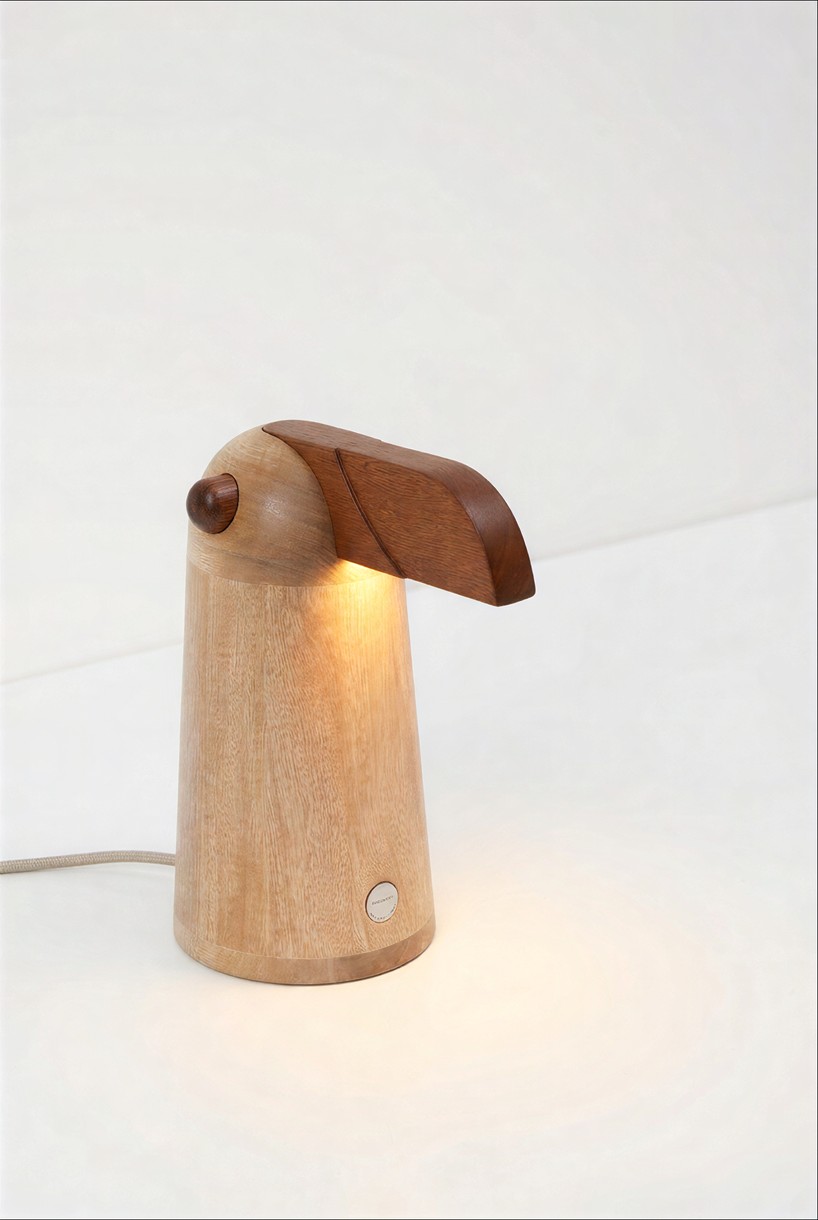
The technical specifications of the lamp further reinforce its functional elegance. Designed specifically to emit a warm light, the fixture is equipped with a 100-centimeter beige fabric-covered cable that complements the warm tones of the solid timber structure. Photographed by Simón Restrepo, the project highlights how traditional woodworking techniques and modern aesthetic sensibilities can merge to create functional art pieces rooted in local craftsmanship. Through TUPI, Estudio Gris continues to explore the intersection of nature, material honesty, and thoughtful domestic design, offering a quiet companion for modern interiors.