In our increasingly fragmented, digital world, it is a rare phenomenon to find common ground. The readers of any given article today likely represent a spectrum of divergent opinions on everything from the nuances of geopolitical strategy to the subjective nature of aesthetics. Democratic nations have historically thrived on this diversity of thought; it is the friction of competing ideas that often sparks innovation and progress. Yet, looking back over the last two and a half centuries, the American experiment, for example, often resembles a runaway train perpetually teetering on the edge of a cliff. As citizens of this climate, we have never been a monolith, but lately, our internal conflicts have begun to leak out into the global stage with unprecedented intensity.
Despite these deep-seated divisions, there is one observation that most Americans and international observers share: society has become undeniably, profoundly weird. A pervasive sense of uncertainty hangs in the air, manifesting as a collective inability to even speculate on the nature of our reality. We find ourselves trapped in a cycle of circular questioning: Are we currently navigating the depths of a recession, or have we been stagnating in one for years without realizing it? Is the heralded artificial intelligence bubble destined to burst, dissipate into the ether, or has it already vanished into a quiet, technological graveyard? Are we genuinely engaged in a principled battle against government overreach, or have we already surrendered our last vestiges of privacy at the altar of convenience and perceived safety?
Many individuals express a shared anxiety that our primary sources of information—our news cycles, public opinion polls, and social media feeds—have become uniformly biased and, consequently, useless. Perhaps the most corrosive element of this environment is the constant, high-octane exposure to fear, anger, and moral outrage. Over time, this conditioning leads us to reflexively suspect anyone whose beliefs—or, more accurately, whose algorithms—have slotted them into a "different box." While this phenomenon is certainly not a uniquely American problem, the United States has, for various reasons, become its unfortunate epicenter.
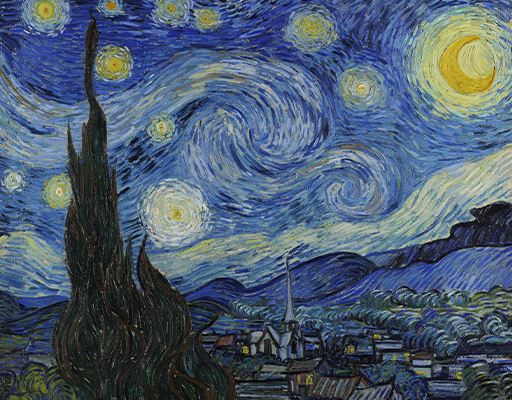
The world is growing stranger by the day, and for those coming of age in this era, it is the only reality they have ever known. Yet, this cultural malaise has inadvertently sparked a renaissance of art appreciation. Setting aside the noise of political reactionism, the arts remain a fundamental mechanism for human connection. The films we watch, the music that soundtrack our commutes, the literature we consume, and the creators we follow act as bridges. They either induct us into a community of like-minded individuals or, perhaps more importantly, encourage us to engage with alternative perspectives in a low-pressure, contemplative environment.
However, the world of fine art possesses a distinct characteristic that separates it from other creative media: the art market. While collectors of vinyl records, rare manuscripts, or first-edition books certainly exist, those media are inherently designed for reproduction. Their power lies in their ubiquity; they can be enjoyed in their "true" form on a massive scale by thousands of people simultaneously. Fine art, by contrast, operates on the principle of scarcity. With rare exceptions, only one person can own an original painting, sculpture, or charcoal sketch at any given time. Because of this, these works often cannot be fully appreciated or understood without the physical, in-person experience of standing before them.
For the past few centuries, this temporality and physicality have been viewed as obstacles to be overcome. The democratic ideal, at least in the modern sense, has sought to liberate these treasures from the private collections of wealthy aristocrats so that they might be enjoyed by the "common man." This mission gave rise to the modern museum—a triumph of cultural infrastructure dedicated to the purchase, preservation, and display of our collective treasures. The work these institutions perform in the realms of research, restoration, and education is objectively invaluable. They ensure that great works of art remain accessible to the public, preserving the cultural memory of humanity.

Yet, there is one critical aspect of the historical artistic process that even the most well-funded museum cannot replicate: the active, intimate practice of cultivating a collection. Throughout history, the act of commissioning or procuring art was the domain of the social elite. Today, that connection has been severed. The behemoth investments made by institutional players have become increasingly divorced from the tastes of the general public—and, at times, even divorced from reality itself.
This discordance—our enjoyment of art in museums, our confusion regarding market speculation, the parasocial relationships formed via algorithms, and the occasional catharsis of finding something beautiful at a discount home goods store—is a primary driver of why younger generations are showing a renewed interest in historical art over their contemporary counterparts.
Consider the difference between the works of Michelangelo or Rembrandt and those of Vincent van Gogh or Claude Monet. The former group thrived during a period of relative social stability, where traditional patronage allowed them to perfect their craft within the constraints of society’s expectations. Michelangelo’s David or a Rembrandt self-portrait carry a weight of cohesion that feels fundamentally different from the Impressionist movement. Van Gogh and Monet lived during the slow, painful decline of the old aristocracy, a time when the patronage that had sustained their predecessors was drying up. While these later artists flourished in a period of unprecedented creative freedom and diverse perspective, that blossoming came at the cost of the older social cohesion that had previously bound the artist to the patron and the public.
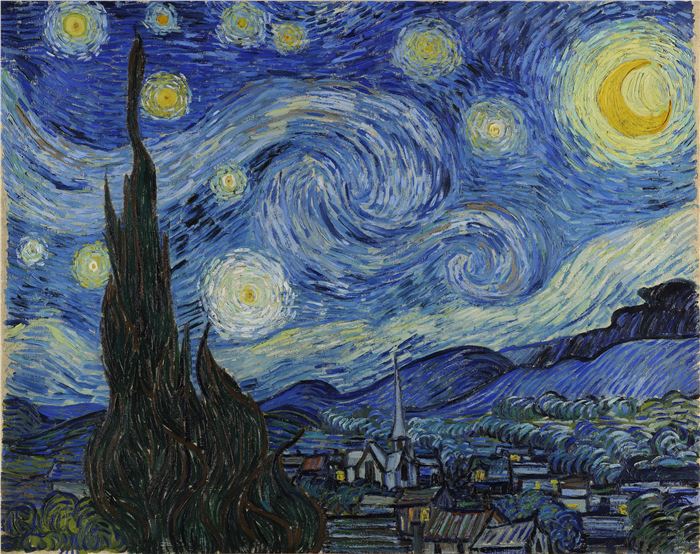
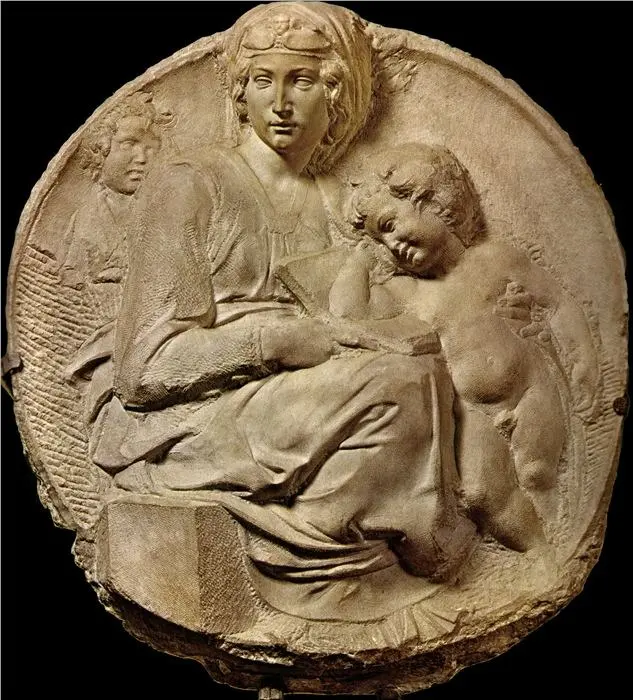
Before the seismic shifts of the French Revolution, it was standard practice for an artist to pursue their craft under the direct support of a wealthy patron. These patrons frequently commissioned specific works with exacting, often rigid, specifications. This is why history is replete with paintings of obscure historical figures or endless iterations of the "Madonna and Child." While the work of a mediocre artist under such constraints could be stiflingly dull, a genius like Michelangelo possessed the rare ability to not only push back against his patrons but to transform their rigid constraints into masterpieces of human expression.
Over the ensuing centuries, the system of patronage relaxed. By the twentieth century, the commission process had become so vague that it relied almost entirely on the artist’s individual freedom and subjective vision. While this was a necessary reprieve from the stifling standards of the past, it also transformed artistic creation into a solitary, hermetic pursuit. It effectively excised the patron as a representative of society without providing a replacement. While this shift was beneficial for the pursuit of pure, unadulterated creativity, it proved alienating for a large segment of the population who lost their primary, if occasionally flawed, mouthpiece for connecting with the concept of "genius."
Today, we have arrived at a juncture where the high-end art market is effectively unattainable for all but the ultra-wealthy. The contemporary system is arguably indistinguishable from historical patronage, yet it is far more aloof from the art itself. It is possible for a piece of art to be both a portfolio investment and a cultural cornerstone, but today, it is almost exclusively relegated to the former. For an artist, it might arguably be a more fulfilling fate to paint a thousand variations of a "Madonna and Child" to satisfy a patron’s request than to have one’s entire life’s work locked away in a climate-controlled warehouse in the hope that it will return six percent annually for an anonymous investor.

Ultimately, while diversity remains a cornerstone of creativity, the reality of our current societal "weirdness" is rooted in division. We are more disconnected and distrustful than ever, and the very forms of communication that should bring us together—art, dialogue, and shared experience—are becoming increasingly disjointed.
However, there is a path forward. In discussions with artists, enthusiasts, and novices alike, it has become clear that the modern art market is suffering from a lack of true "patrons." The word "patron" stems from the Latin for "father," and it gestures toward a fundamental truth about the role. A patron may not be the one who births the work of art, but their genuine enthusiasm for, and commitment to, a project is often the catalyst for its success. Even if a patron’s taste is not always perfect, their presence is vital to a flourishing artistic ecosystem.
The ultra-wealthy seem to have largely abandoned this role, and perhaps that is for the best. We have the opportunity to take up the mantle ourselves. There is no more direct or profound way to support an artist, whether living or deceased, than by purchasing their work and stewarding it with care.
.Jpeg)
There are countless ways to begin, accessible at a vast range of price points. From discovering hidden gems at regional craft fairs and collecting antique prints to visiting local galleries and commissioning custom furniture, the apparatus to connect us personally to the talent around us already exists. By choosing to curate our own collections—regardless of their size—we can begin to foster the kind of culture we want to inhabit. In doing so, we may finally start to bridge the gaps and reconnect the scattered, fractured pieces of our community.